November 12, 2026 - 0 comments
New natural winemakers to discover on Raisin – November 2026
From the steep slate slopes of the Mosel to the volcanic soils of Sicily and southwestern Poland, November brings ten new natural winemakers to discover on Raisin.
This month's selection brings together a fascinating mix of winegrowing traditions and approaches. There are family-run estates, independent winemakers developing their own projects and producers exploring ways to work more closely with the land around them.
Across Germany, France, Italy and Poland, each has a different story to tell, but all offer something worth discovering. Here are the new natural winemakers joining Raisin this November.
🍇 Discover all natural winemakers on Raisin.
📍 Publish your winery on the Raisin map.
Wein Goutte – Emily Campeau & Christoph Müller
Franconia, Germany
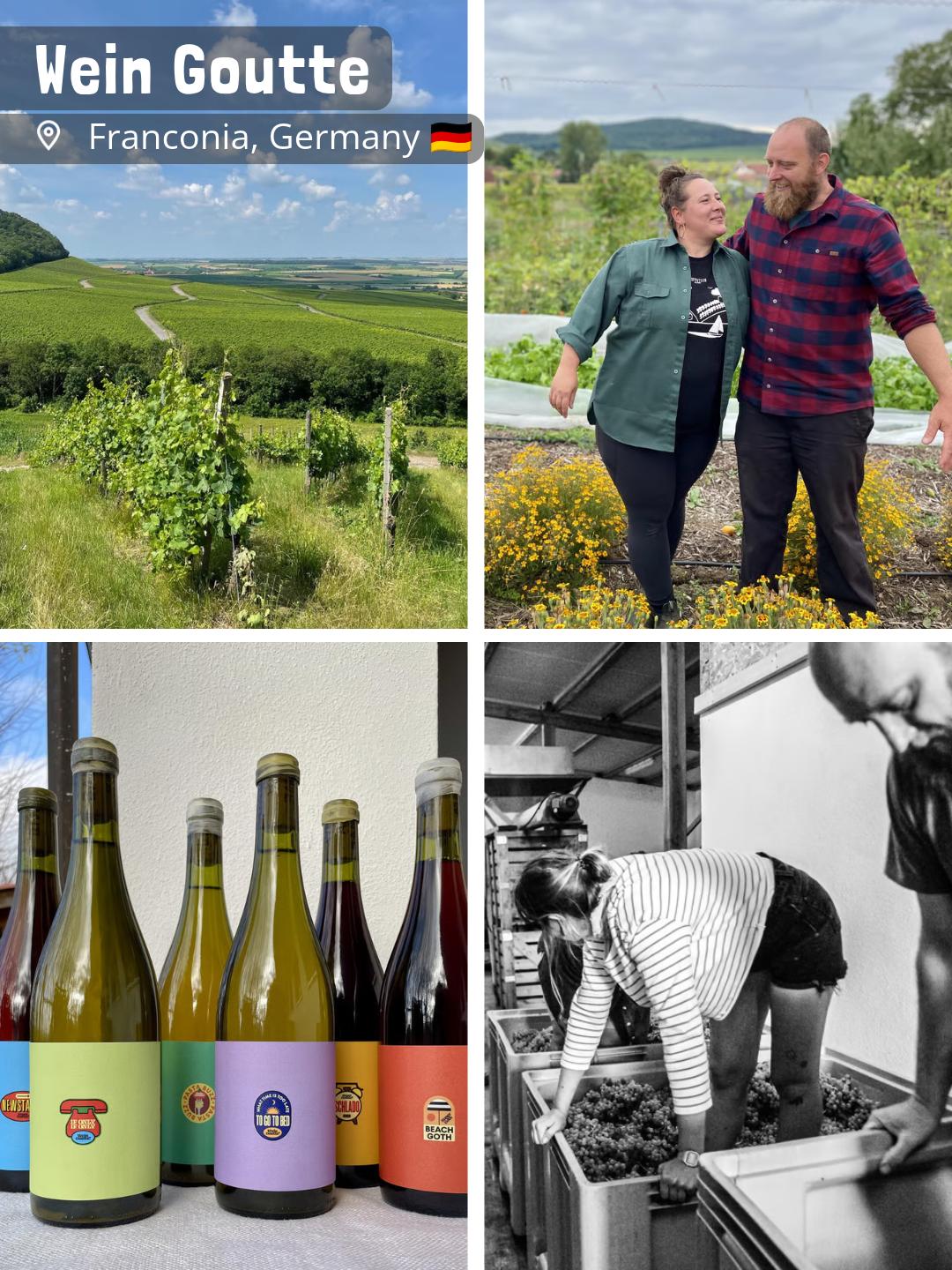
Emily Campeau and Christoph Müller first met during the 2018 harvest in Burgenland, Austria. Both originally worked in professional kitchens before deciding to dedicate themselves to wine. Emily was previously Wine Director at Restaurant Candide in Montreal, while Christoph studied oenology and viticulture in Neustadt and gained experience working with Clemens Busch and the Austrian estate Weninger.
Their first vintage was produced in Austria in 2019. In 2021, they moved to Franconia, Germany, where they now work four hectares alongside Linda and Erhard Haßold at Weinhof am Nussbaum.
The vineyards have been farmed organically for more than 30 years, and the team shares the work in the vines and during harvest. Beyond wine, Emily and Christoph also grow vegetables and fruit, making their own preserves from the produce.
Their wines explore a wide range of grapes and styles, including Silvaner, Pinot varieties, Müller-Thurgau and several other traditional and newer varieties.
Peter Kozma – Peter Kozma
Mosel, Germany
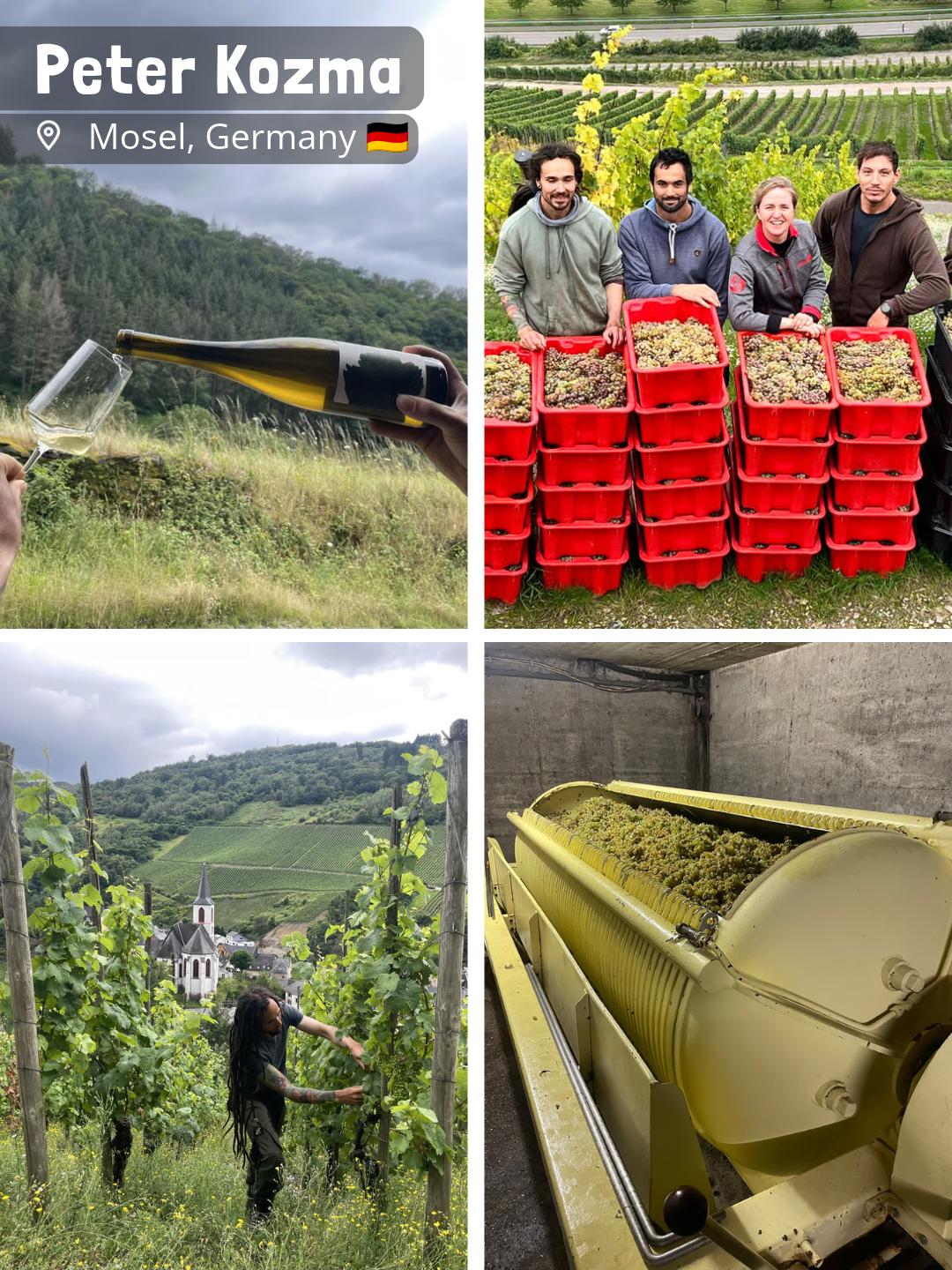
Peter Kozma works with just one hectare of vines on the steep slopes of the Mosel, focusing exclusively on Riesling.
His approach is hands-on, with all vineyard work carried out manually and the grapes harvested by hand to select the best fruit. The wines are aged in used oak barrels, with Peter allowing them the time they need before deciding when to bottle.
In the cellar, the philosophy is straightforward: no filtration and no additives. Working with the character of the grapes and giving each wine the time it needs are central to his approach.
A small-scale project with a clear focus on Riesling and the distinctive slate soils of the Mosel.
Grandbois Wines – Tanja & Philippe Grandbois
Mosel, Germany
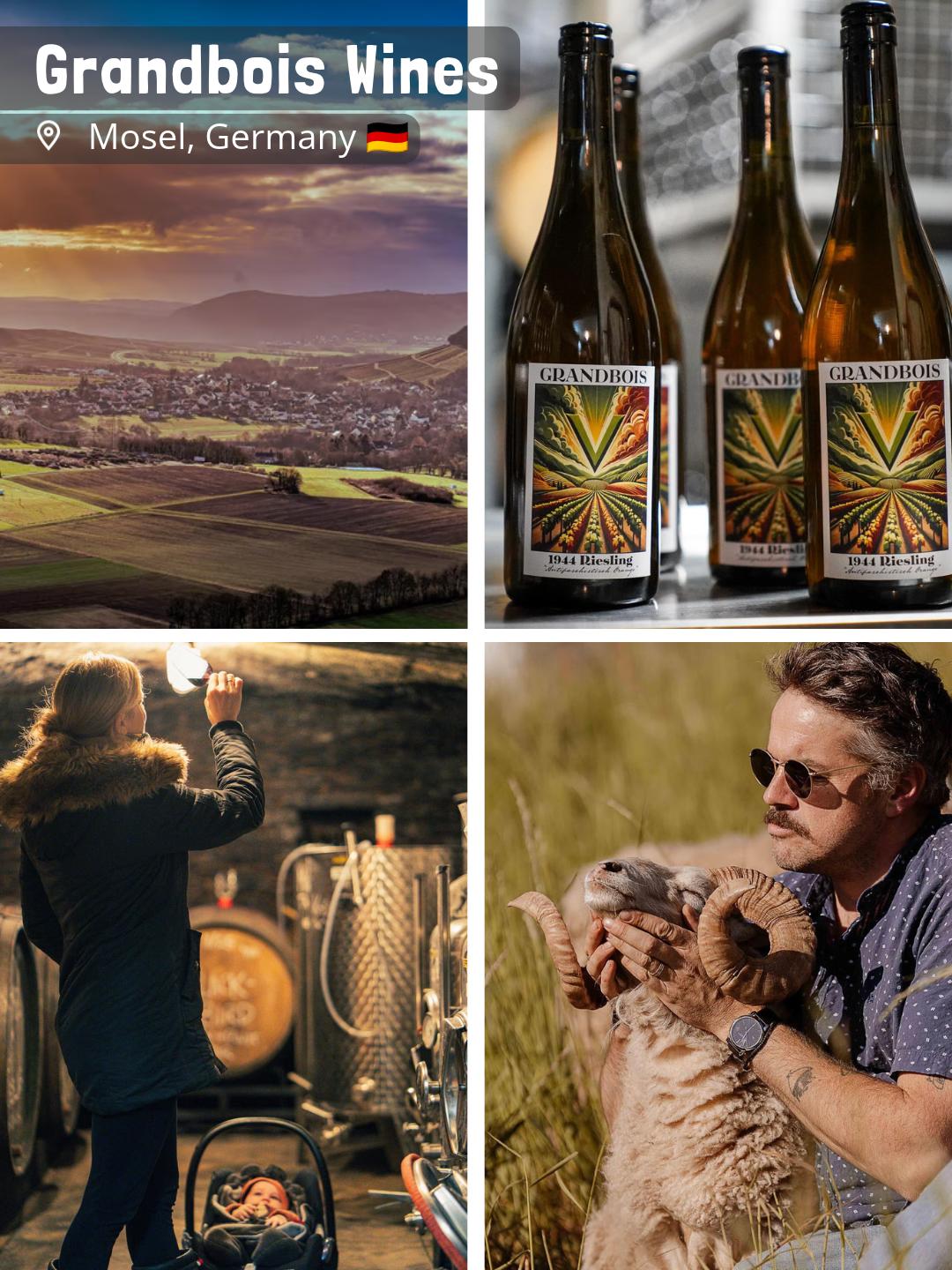
Tanja and Philippe Grandbois run their natural winery in Maring-Noviand, in the heart of Germany's Mosel Valley. Having both previously worked in the hotel and restaurant industry, the couple decided to dedicate themselves fully to wine, founding Grandbois Wines in 2021.
They cultivate 2.3 hectares on the steep slopes of the Mosel, working with Riesling, Pinot varieties and Piwi grapes. Their approach combines regenerative organic farming with a strong focus on soil health and the surrounding environment.
In the cellar, they follow a particularly hands-off philosophy. Fermentations are spontaneous, and nothing is added or removed from fermentation through to bottling.
Their aim is to present each vintage as honestly and transparently as possible, allowing the character of the grapes and their surroundings to speak for themselves.
Tack&Glou – Elisa Klur
Alsace-Lorraine, France
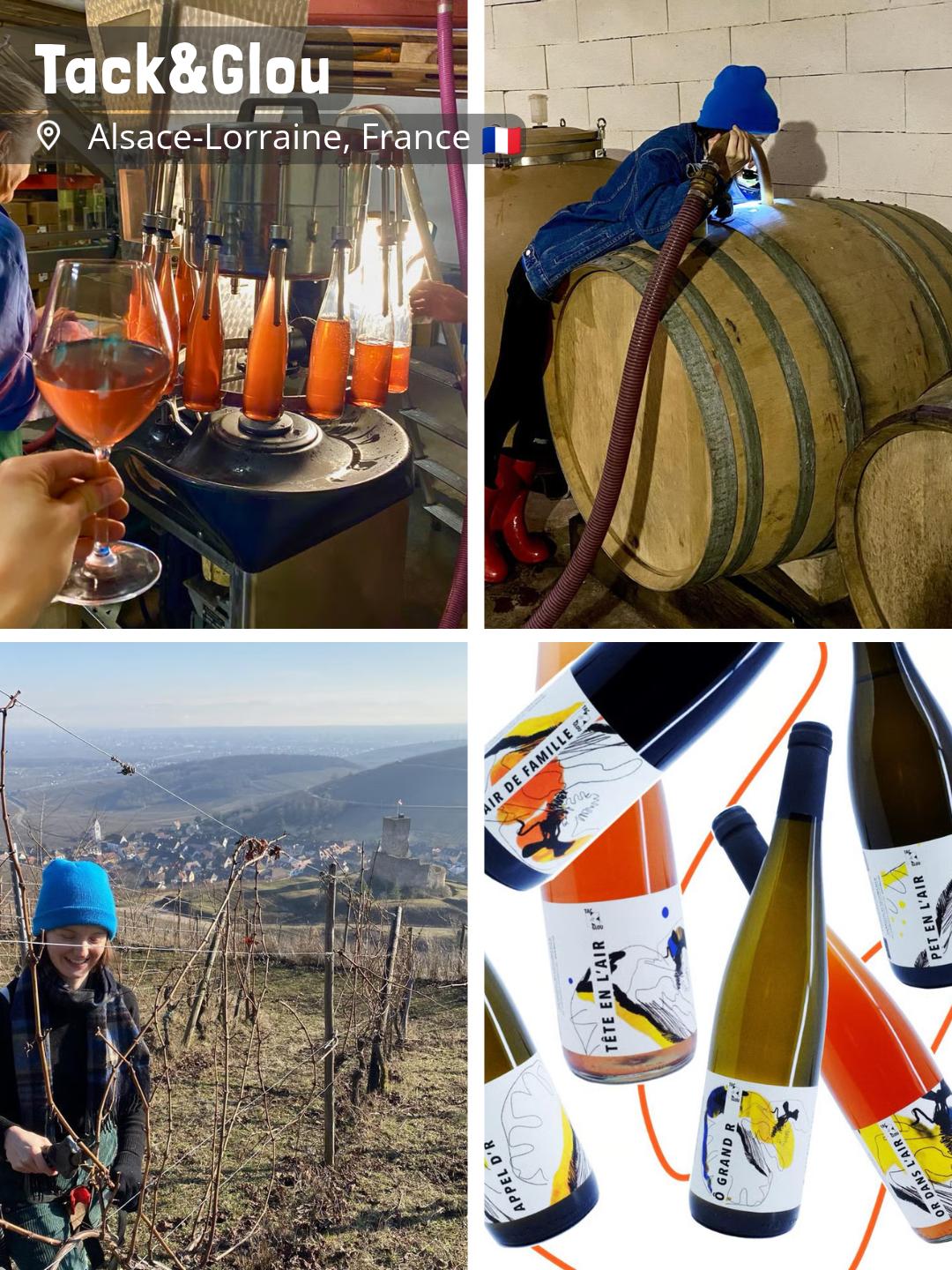
Tack&Glou is Elisa Klur's small-scale project, combining natural winemaking with craftsmanship and the creation of wearable objects.
The name brings together two sounds: "tack", the noise of a hammer in the workshop, and "glou", the familiar sound of wine being enjoyed. It's a fitting reflection of a project that brings together two creative worlds.
Coming from a long winemaking family tradition, Elisa took over her own vines in 2019. The vineyards have been farmed organically and biodynamically since 1999, with Demeter certification.
Covering less than two hectares, the estate produces wines through natural fermentation, without additions or filtration, with a particular interest in skin-macerated wines.
Alongside her work in the cellar, Elisa also explores craftsmanship and object design, incorporating recycled materials, fair-trade materials and elements inspired by fermentation into her creations.
Ça Boit Libre – Damien Bastian Goddard
Savoy, France
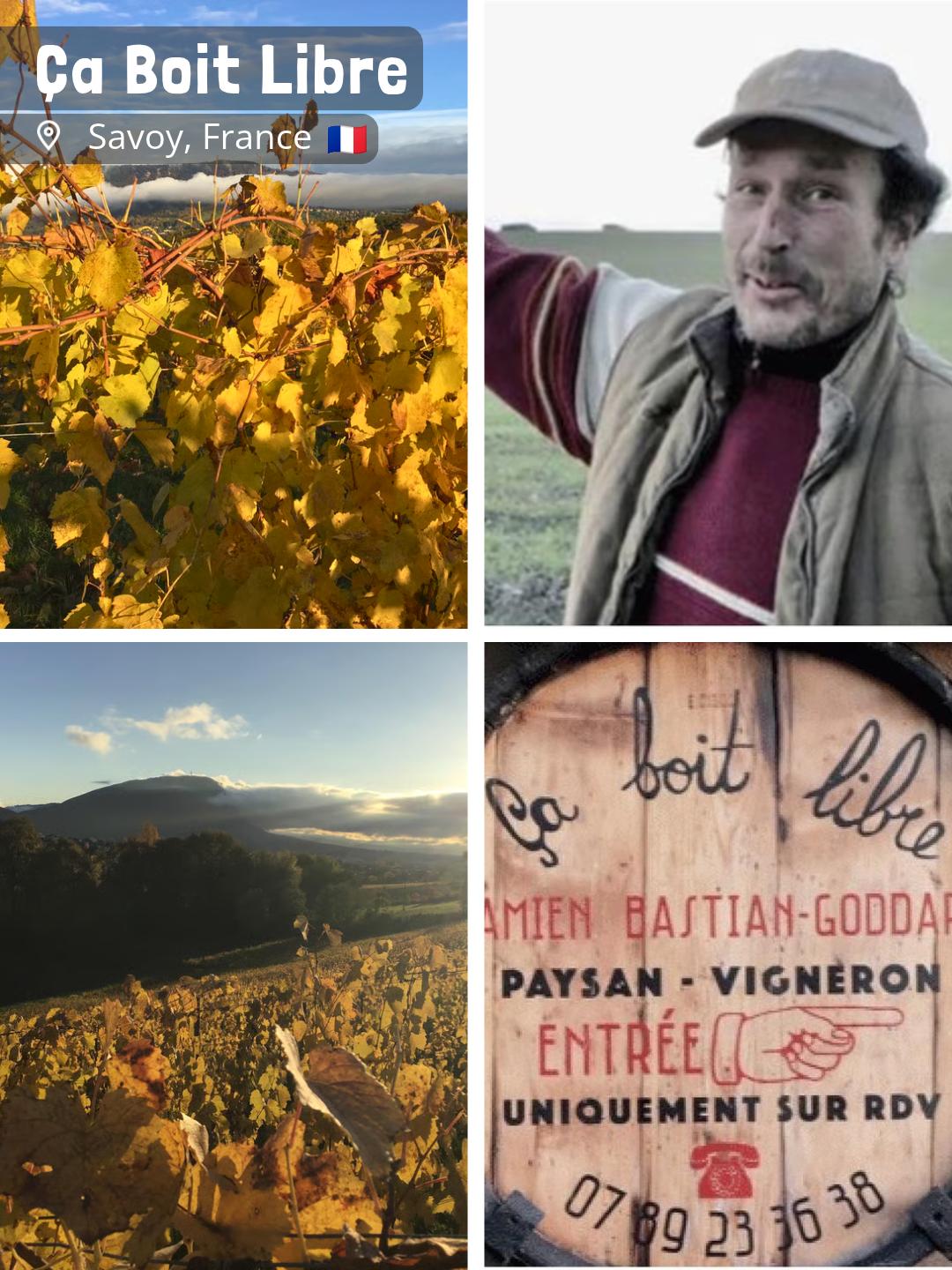
Located in Marignan, in Haute-Savoie, on the French side of Lake Geneva and just a few kilometres from the Swiss border, Ça Boit Libre is the project of Damien Bastian Goddard, who returned to the region after studying agriculture and discovering the world of wine.
He trained with several renowned winemakers in Savoie and the Jura, including Dominique Lucas and Jean-François Ganevat, whose approaches to natural winemaking helped shape his philosophy.
In 2019, Damien acquired his first vineyard plots on land that also has family significance: his grandfather had previously developed an agricultural activity on the same property.
Today, the estate covers approximately four hectares, farmed organically with minimal intervention in both the vineyard and cellar. Fermentations are spontaneous, and the wines are generally bottled unfiltered with very little, if any, added sulphur.
Chasselas is the estate's principal grape variety, alongside Pinot Noir, Gamay, Altesse and Mondeuse. The wines reflect the freshness and minerality of this Alpine winegrowing region.
Domaine Grès Vaillant – Aigline de Causans & Laurent Mafféis
Languedoc, France
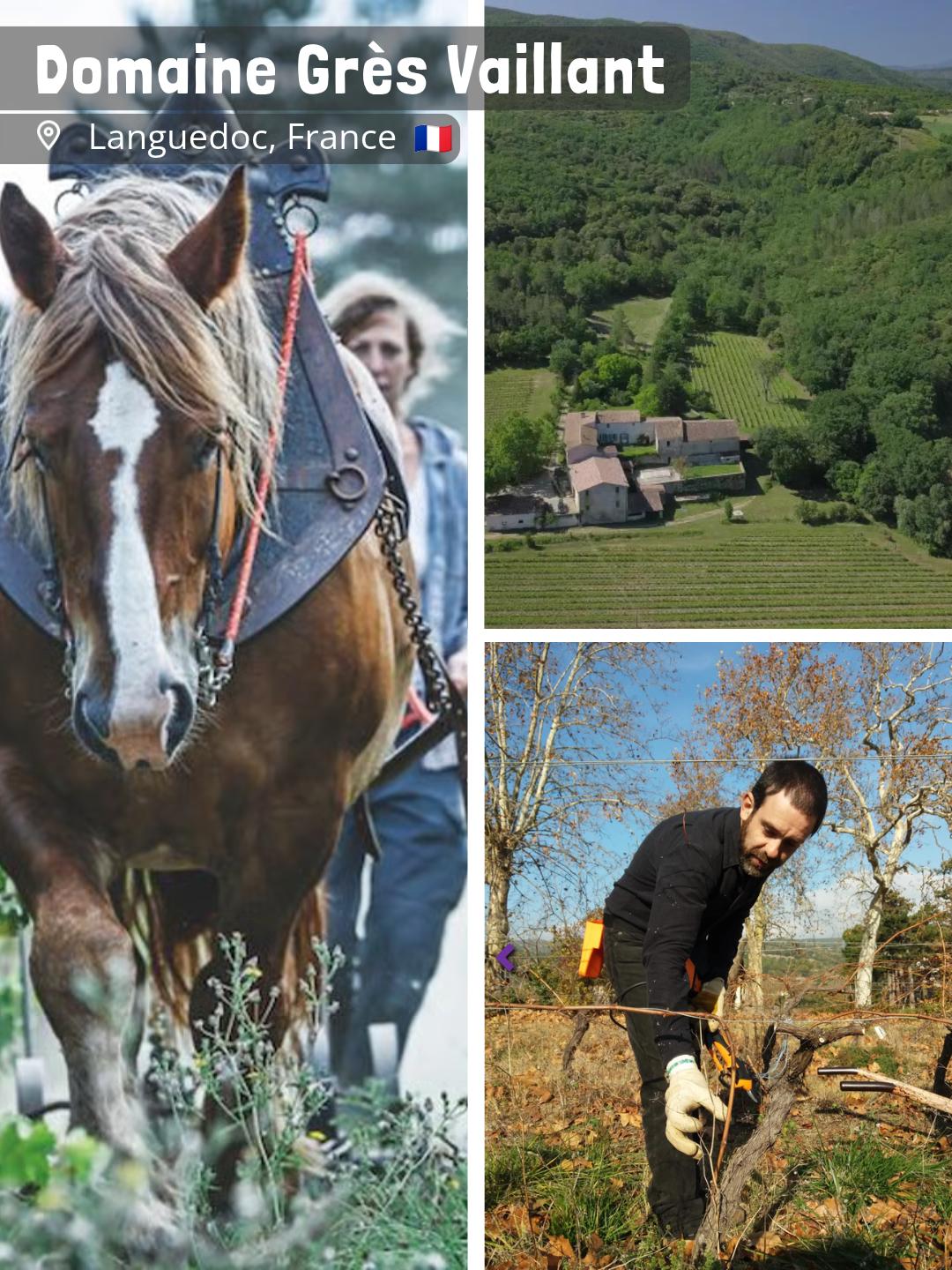
Near Limoux, at the beginning of the Upper Aude Valley, Aigline de Causans and Laurent Mafféis run Domaine Grès Vaillant, an estate where vineyards form part of a much larger agricultural landscape.
The property covers 90 hectares, including eight hectares of vines, 20 hectares of meadows and 60 hectares of forest. The different plots are surrounded by hedgerows, fields and woodland, with a river and stream crossing the estate.
The entire property is certified organic, including the vineyards, meadows and animals. Work in the vines is carried out with the help of three draft horses, while a small flock of sheep grazes the plots during winter. Pruning, shoot thinning and harvesting are all done by hand.
The winery itself dates back to the 18th century and is partly carved into sandstone. Its two-level structure allows grapes to be moved by gravity. Fermentations use natural yeasts, with ageing taking place in stainless steel tanks or large old Burgundy barrels, depending on the cuvée.
A project built around biodiversity, traditional agricultural practices and a close relationship with the surrounding landscape.
Kaffefi Società Semplice Agricola – Tanca Nica – Nicoletta & Francesco Ferreri
Sicily, Italy
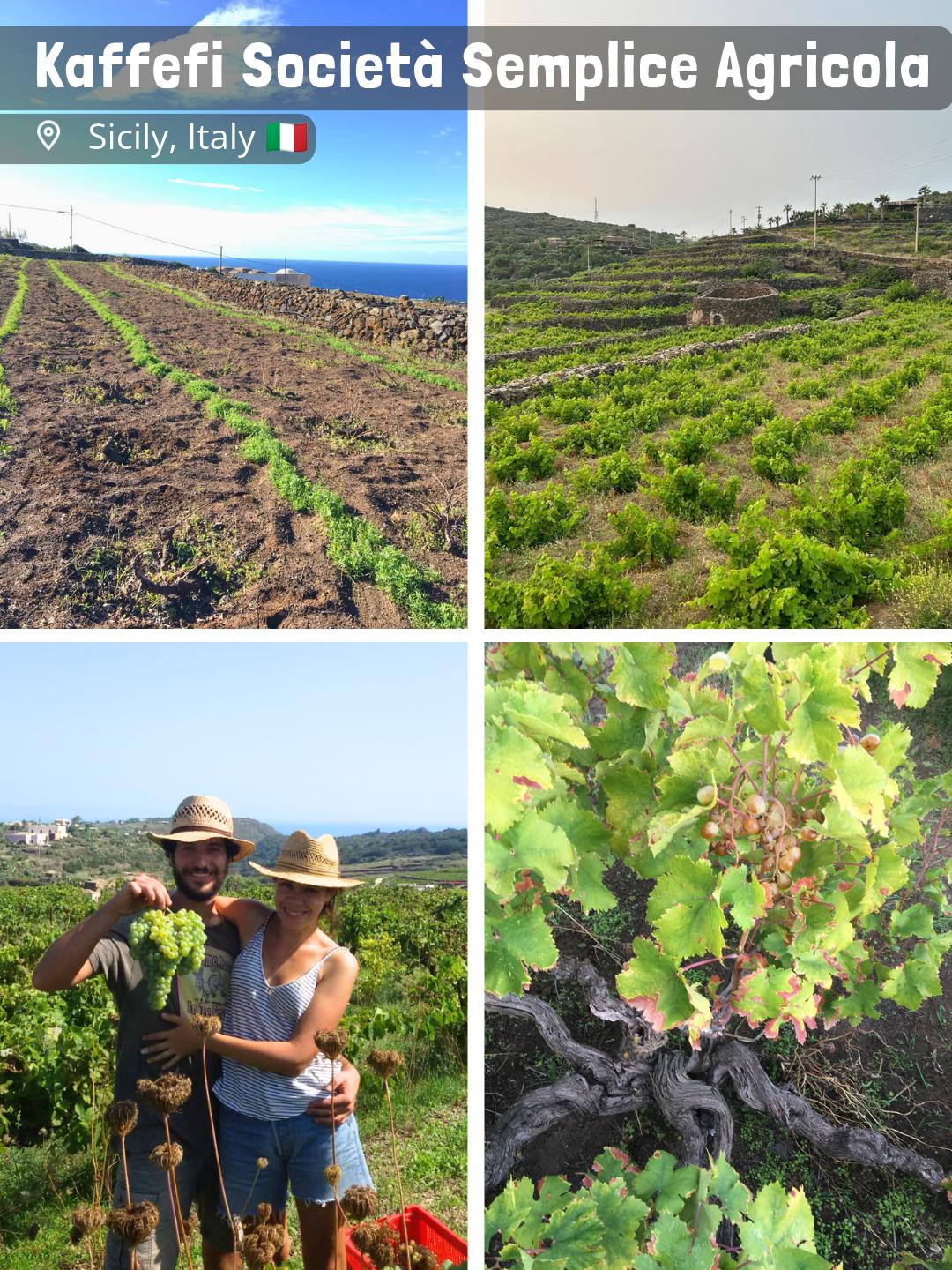
On the island of Pantelleria, Nicoletta and Francesco Ferreri work two hectares of vineyards under their Tanca Nica project.
In the local Pantelleria dialect, Tanca Nica refers to a small cultivated hillside arranged in terraces. It's an appropriate name for an estate where some of the vines are more than a century old and all vineyard work is carried out by hand, using simple tools such as hoes.
The island's constant winds help keep vineyard treatments to a minimum, relying mainly on sulphur and, only occasionally, copper.
The vineyards are planted with Zibibbo, Catarratto, Nivuro Nostrale and Inzolia, varieties well suited to the island's Mediterranean environment.
In the cellar, fermentations are spontaneous and take place in small vats. The wines age in wooden and fibreglass vessels before settling naturally, without filtration or fining.
Bottling takes place in March, following the waning moon, using gravity rather than pumps.
Mas des Escarades – Julien Bertrand
Rhône Valley, France
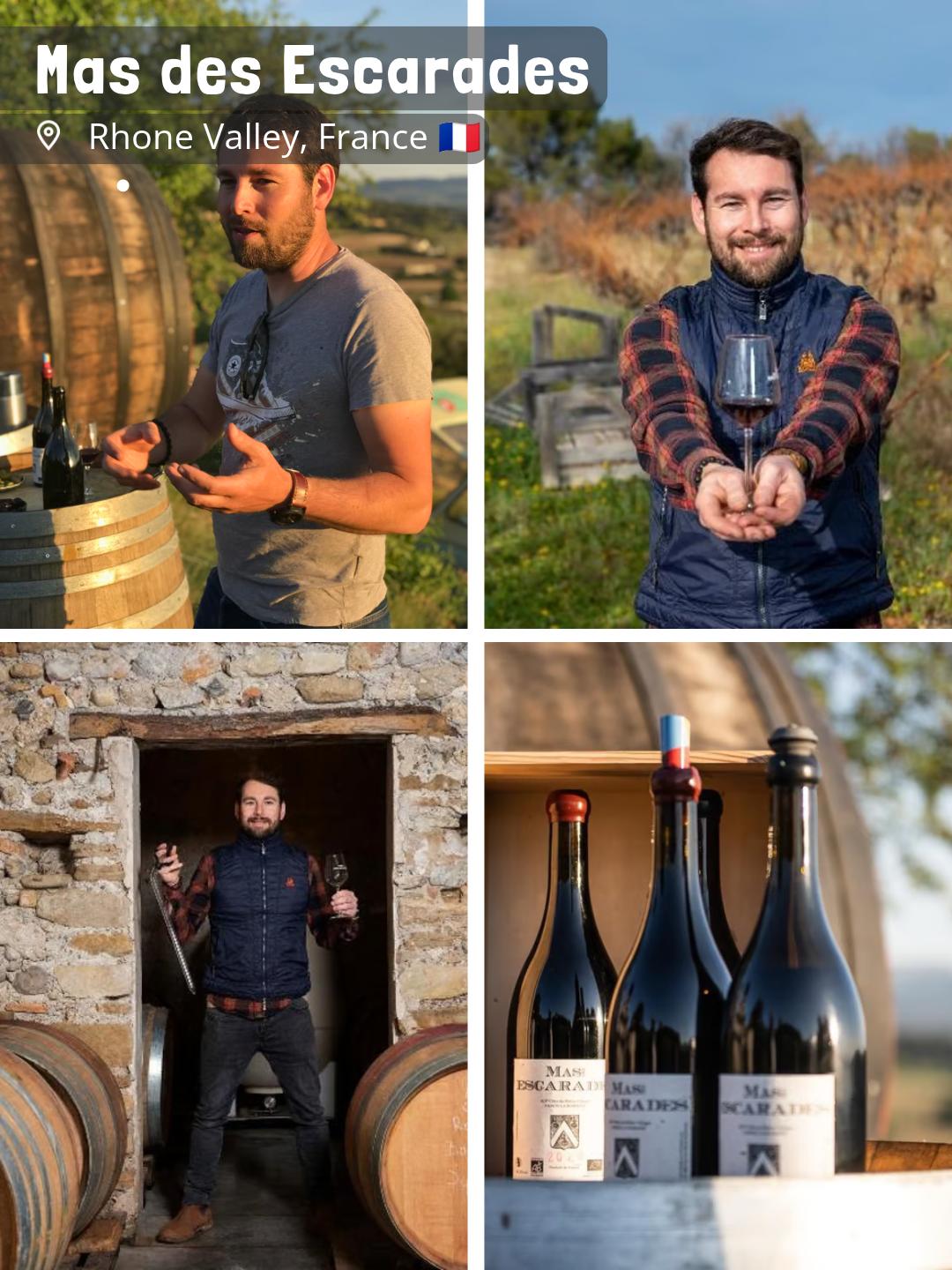
At Mas des Escarades, Julien Bertrand's approach to winemaking is rooted in a family history of organic farming that goes back to 1983, when his father first began changing the estate's agricultural practices.
The estate has been certified biodynamic by Demeter since 2023, with wines carrying the certification from that vintage onwards.
In the cellar, Julien takes minimal intervention even further. No pumps are used, with the movement of wine relying entirely on gravity. Extraction is carried out through manual punch-downs and gravity-fed racking, while pressing uses pneumatic pressure.
No inputs are used during the winemaking process.
The estate also extends its environmental approach to packaging. Julien is working with a bottle-reuse system through "Ma bouteille s'appelle revient", while the labels are made from biodegradable seed paper printed with organic ink. After enjoying the wine, the labels can be planted to grow wildflowers.
Working with Syrah and Grenache, Mas des Escarades brings together biodynamic viticulture, low-intervention winemaking and a thoughtful approach to reducing waste.
Monte dall'Ora – Alessandra Zantedeschi & Carlo Venturini
Veneto, Italy
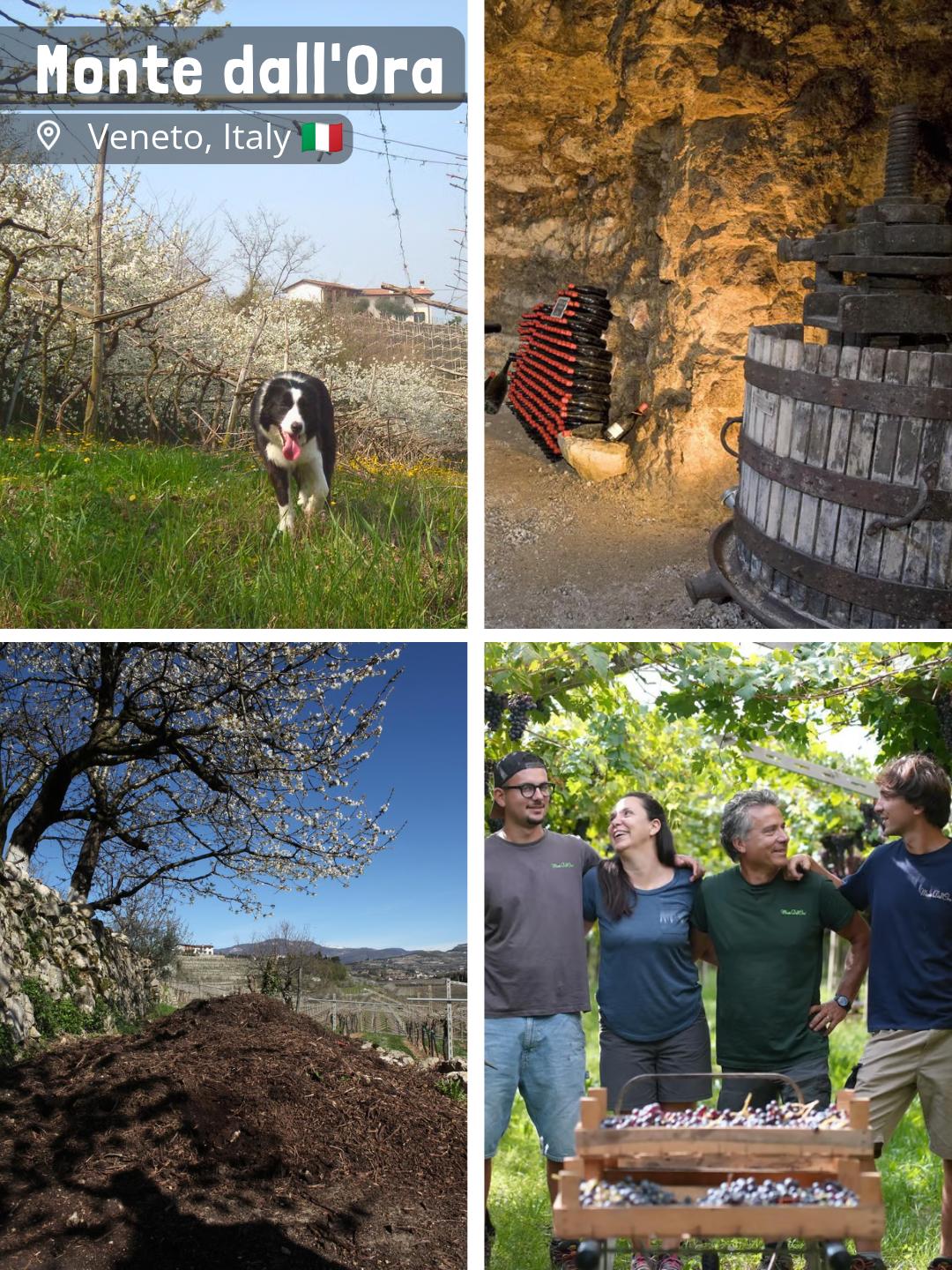
In the heart of historic Valpolicella, Alessandra Zantedeschi and Carlo Venturini have built their family and winery around a special piece of land.
When they first discovered Monte dall'Ora, they were drawn to its landscape and agricultural history. One of their major early projects was restoring the ancient dry-stone walls, known locally as "marogne", which support the area's characteristic terraced vineyards.
The land had previously been left largely wild, with trees and brambles taking over. Alessandra and Carlo worked to restore its vitality, focusing on soil health, biodiversity and the preservation of forgotten grape varieties.
Their farming follows organic and biodynamic principles, with vegetable gardens, olive groves, orchards and animals all forming part of the wider agricultural ecosystem.
In the cellar, fermentations take place spontaneously using only grapes, without pied de cuve. The wines are made with minimal intervention, with small additions of sulphur before ageing or bottling when required.
Working with traditional Valpolicella varieties including Corvina, Corvinone, Rondinella and Molinara, Monte dall'Ora offers a thoughtful expression of this historic winegrowing area.
Bergamuty – Marta Sierota
Lubusz Voivodeship, Poland
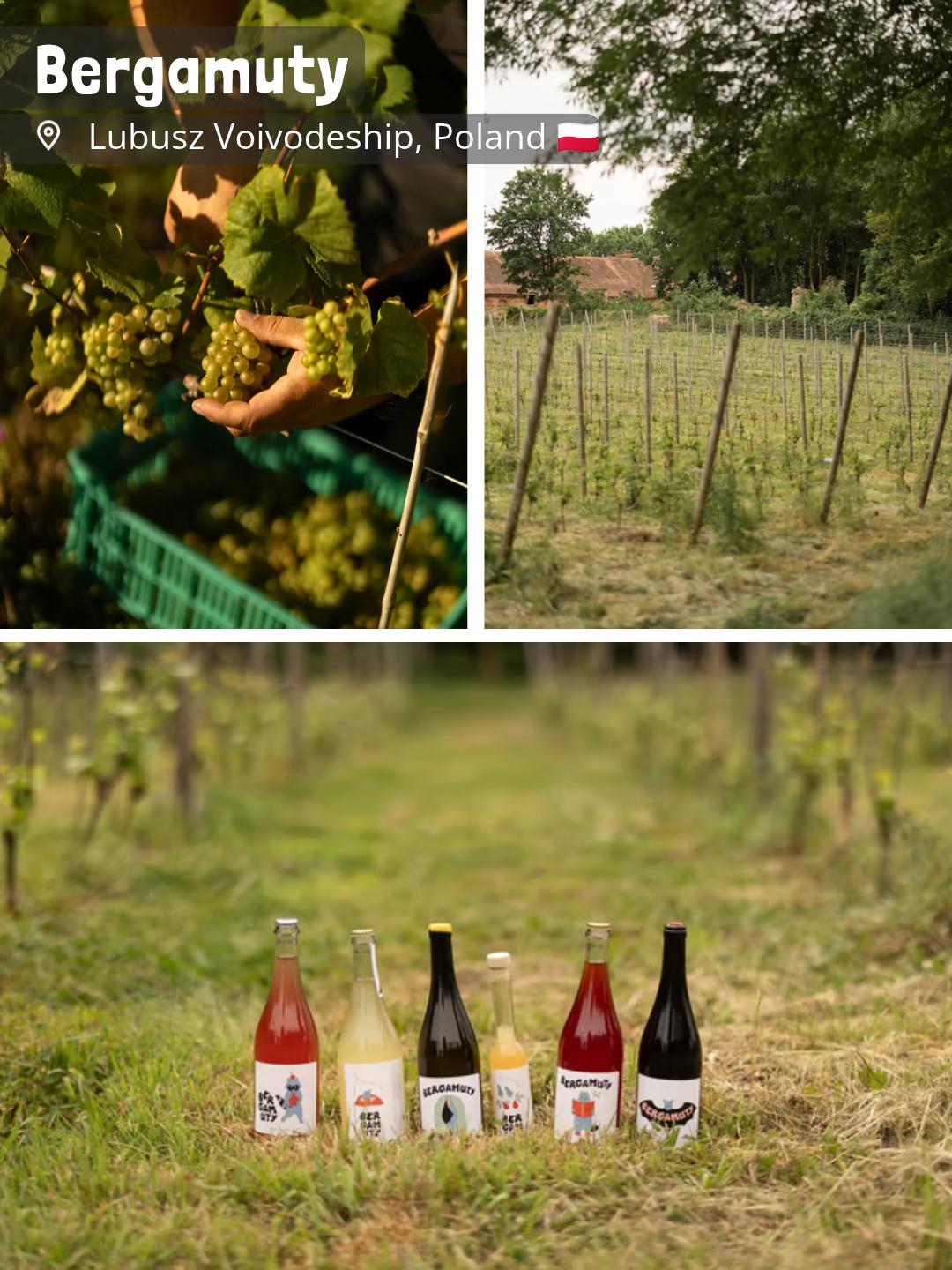
In southwestern Poland, close to the German border, Marta Sierota is developing Bergamuty, a new project connected to her Tuscan estate, Podere Anima Mundi.
The estate covers approximately five hectares, with vineyards planted on predominantly volcanic soils. Farming follows biodynamic principles, with treatments kept to a minimum and based on natural oils and infusions.
The vineyards are planted with Gamay, Pinot Blanc and Pinot Gris, bringing together varieties more commonly associated with other European wine regions in this lesser-known part of Poland.
In the cellar, fermentations are spontaneous, and no sulphites are added unless absolutely necessary. No other substances are added during winemaking.
A new project bringing a biodynamic approach to southwestern Poland, and another interesting addition to the country's growing natural wine scene.