October 13, 2026 - 0 comments
New natural winemakers to discover on Raisin - October 2026
From Tuscany to the steep slopes of the Mosel, through the Minervois, Alsace, Etna and the still little-known wine landscapes of Brandenburg, new winemakers are joining Raisin.
Recent projects stand alongside family estates already deeply rooted in their territories, but they all share the same ambition: working with healthy grapes, preserving life in the soils and intervening as little as possible in the cellar.
Here are the new natural winemakers to discover on Raisin.
🍇 Discover all natural winemakers on Raisin.
📍 Publish your winery on the Raisin map
Vite Ganze - Luca Mangiafave
Tuscany, Italy
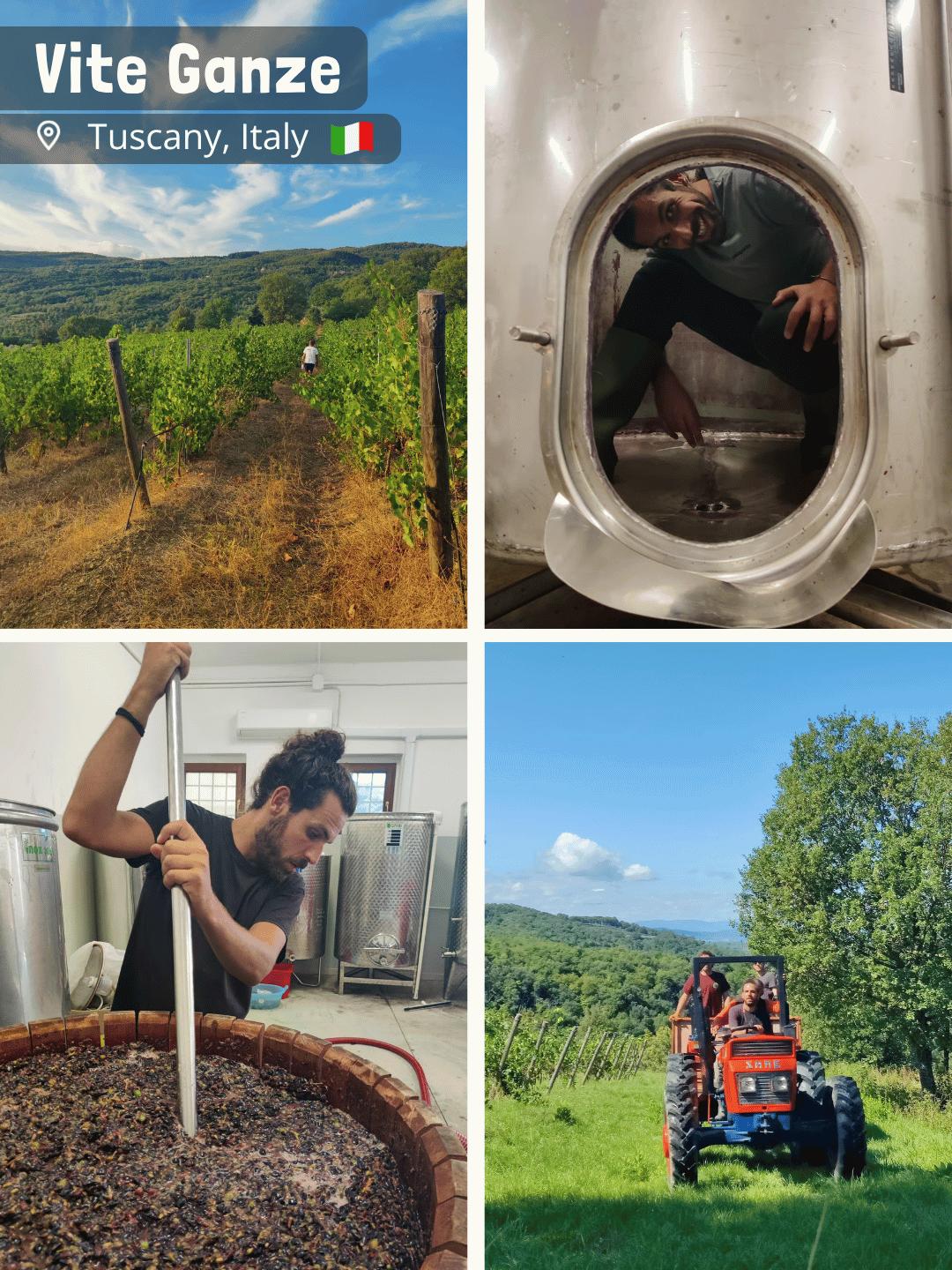
At Vite Ganze, Luca Mangiafave cultivates 2.5 hectares of vines in Tuscany, in a setting surrounded by forest. Planted in 2019, the vineyard includes Merlot, Sangiovese, Prugnolo Gentile, Trebbiano Toscano and Verdea, among others.
Biodiversity lies at the heart of his approach. The ground is largely left covered with vegetation and mechanical intervention is kept to a minimum in order to preserve its natural balance. Each vine is tended by hand, from Guyot pruning to the selection of bunches before harvest.
The cellar is located directly opposite the main vineyard, allowing the hand-harvested grapes to rest quickly before processing. Fermentations are spontaneous, using only indigenous yeasts, and vinification takes place in stainless-steel tanks.
Red wines and some whites are made with skin maceration, while the rosés follow a different approach, including Rosèspierre and the sparkling Holy Moli.
The wines are neither filtered nor made with additives or preservatives. The estate, vineyards, cellar and wines are certified organic.
Domaine d’Abrigeon - Nadia and Julien d’Abrigeon
Rhône Valley, France
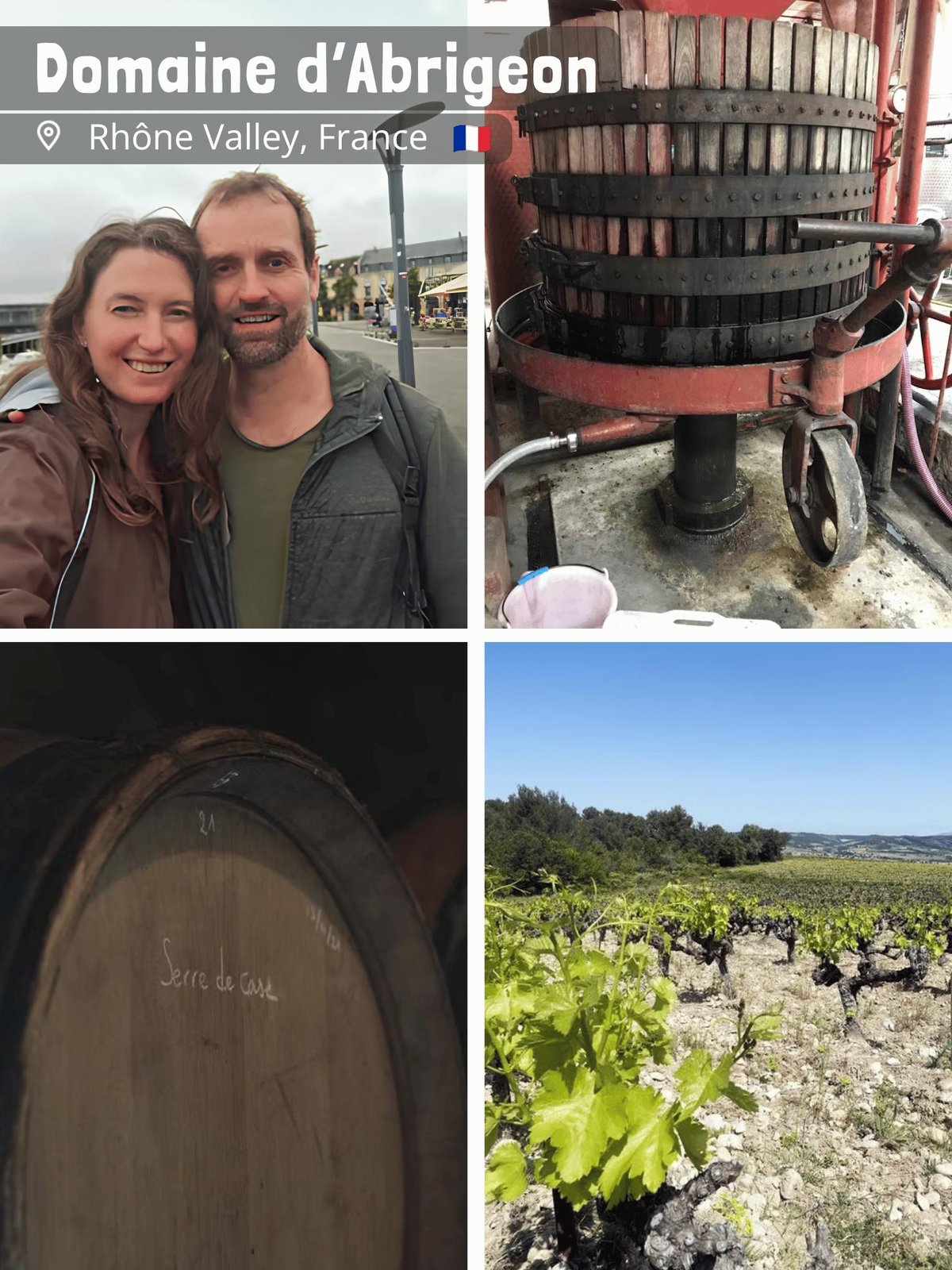
Created in 2021 in Buisson, near Vaison-la-Romaine, Domaine d’Abrigeon is run by Nadia and Julien d’Abrigeon.
The couple cultivates eight hectares certified organic, mainly planted with old Grenache and Syrah vines. Located at around 250 metres above sea level and facing north, the plots lie on ancient alluvial deposits and clayey sands over limestone subsoil.
In the vineyard, Nadia and Julien draw inspiration from biodynamics. The soil is worked mechanically and treatments are complemented with plant preparations, herbal teas and infusions. Harvesting is carried out by hand into small crates.
In the cellar, fermentations rely on indigenous yeasts and intervention remains minimal. Small amounts of sulphur may be added after malolactic fermentation and/or before bottling, which is carried out directly at the estate.
17morgen - Gernot Kleinlein
Brandenburg, Germany
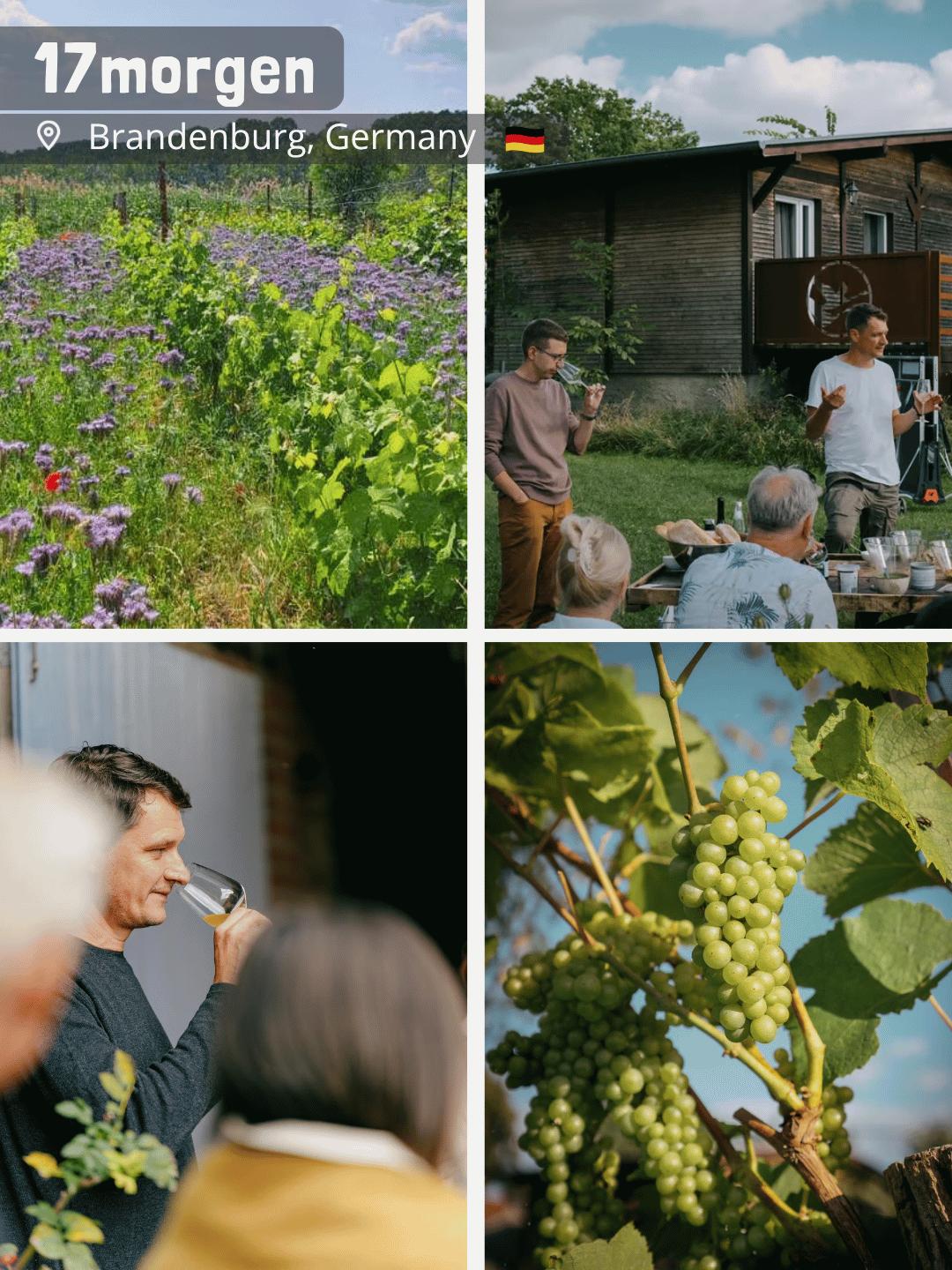
In Dobbrikow, on the shores of the Bauernsee and just a few dozen kilometres from Berlin and Potsdam, Gernot Kleinlein is developing a particularly unconventional vision of German winegrowing with 17morgen.
The first Pinot Blanc and Blauer Zweigelt vines were planted in 2017. Since 2020, the project has expanded thanks in particular to a crowdfunding initiative and the takeover of a small older vineyard.
Today, around half a hectare is planted with a wide diversity of grape varieties. Gernot favours blends and co-fermentation, combining traditional varieties with newer ones such as Souvignier Gris, Cabernet Blanc and Saphira.
The plots are not conceived as monocultures. Sheep and horses contribute to fertilising the soils, while the vines are farmed according to biodynamic principles, without certification. No pesticides are used, not even copper or sulphur.
In the cellar, fermentations are spontaneous and the wines are made without added sulphur. Stainless steel, old wood, a Georgian qvevri and even contact with local pine wood all become fields for experimentation.
A micro-production of around 1,000 bottles that also reflects the revival of viticulture in this part of Brandenburg.
Azienda Agricola Grottafumata - Mauro Cutuli & Mariangela Prestifilippo
Sicily, Italy
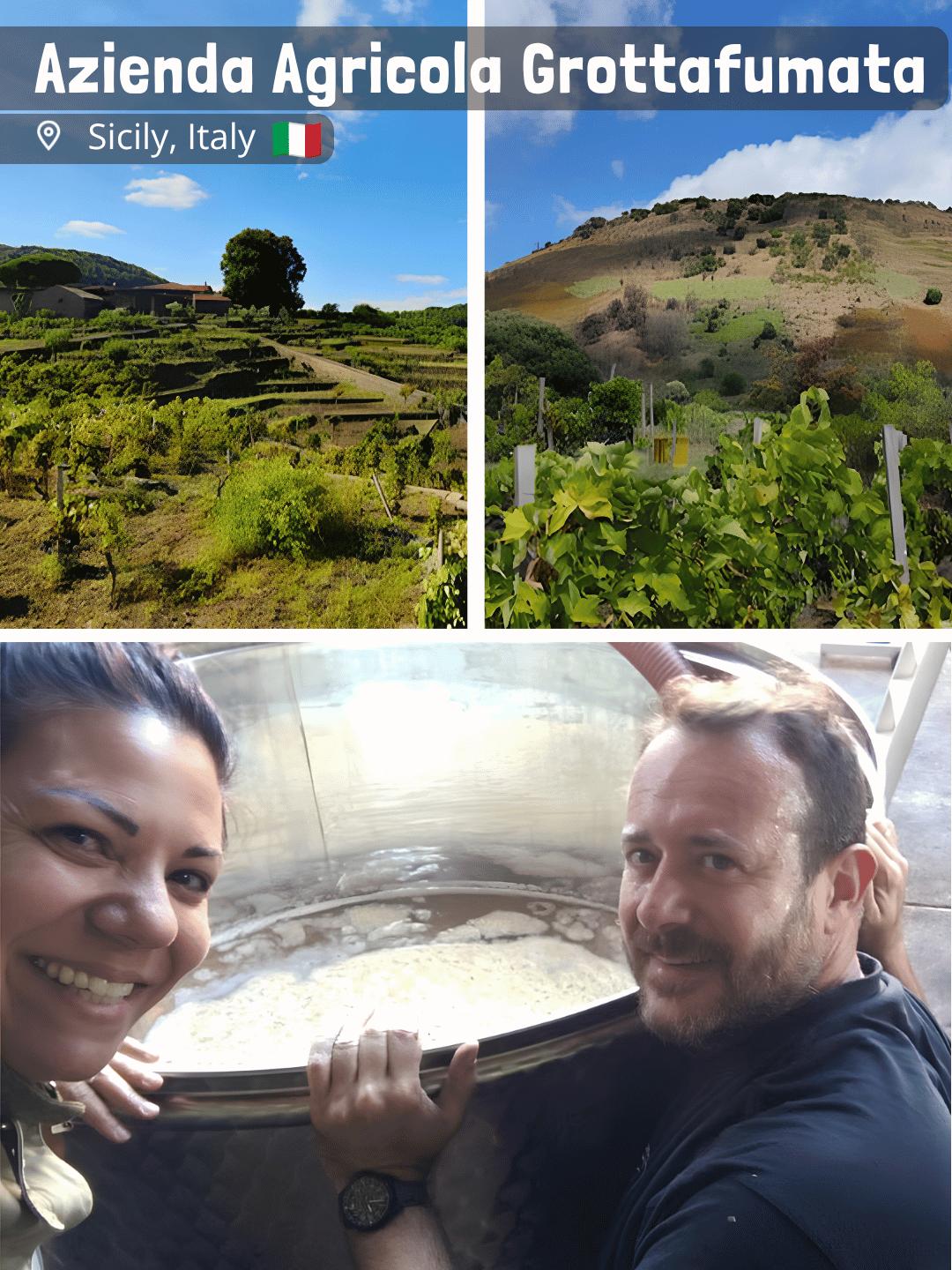
Founded in 2013 around an eight-hectare Nocellara Etnea olive grove, Azienda Agricola Grottafumata turned to winegrowing in 2017.
Mauro Cutuli and Mariangela Prestifilippo now cultivate four hectares on the southern, eastern and western slopes of Etna, between Zafferana Etnea, Trecastagni and Biancavilla, at altitudes ranging from 500 to 840 metres.
The old bush vines, around 40 years of age, produce Nerello Mascalese, Carricante and Grenache, among others, on volcanic soils combining sand, rock, clay and basalt.
The estate seeks to maintain a living ecosystem around the vines through sheep grazing, cereal and legume green manures, permanent ground cover and no irrigation. Beneficial insects also contribute to natural pest control and pollination.
In the cellar, fermentations are spontaneous and SO₂ levels remain low. Ageing takes place in stainless-steel tanks and barrels before an extended period of bottle ageing.
The estate is certified organic.
Le Chant des Murettes - Marion Muret
Languedoc, France
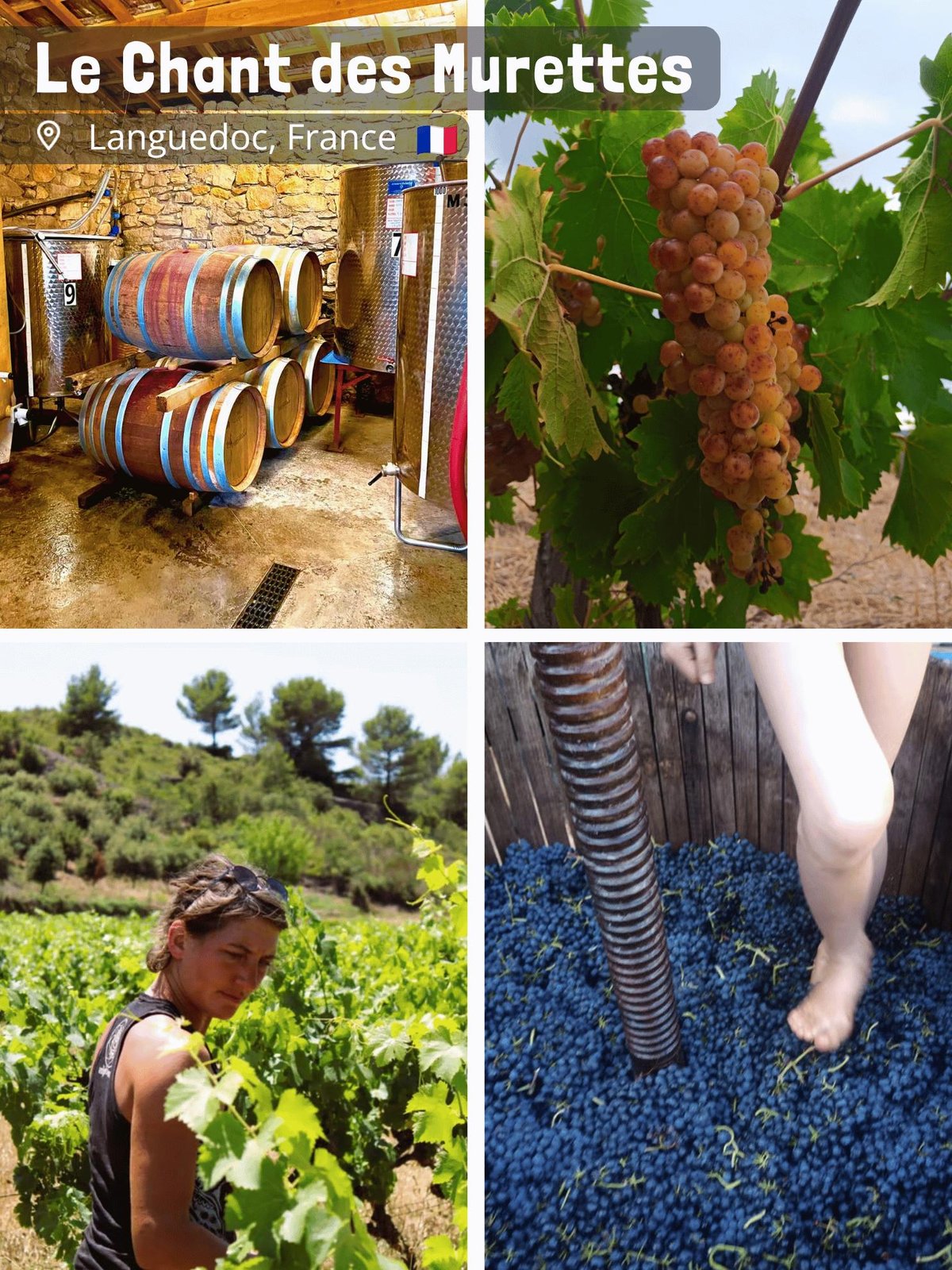
In the Minervois, at the foot of the Montagne Noire, Marion Muret has cultivated the nine hectares of Le Chant des Murettes since the estate was created in 2022.
The vines are spread around the small hamlet of Babio, in La Caunette, often isolated among woodland and Mediterranean scrub.
This particular setting directly shapes the estate’s philosophy. Marion seeks to preserve the natural diversity of the plots and considers insects, birds, fungi, arachnids and small mammals to be an integral part of the vineyard’s balance.
Merlot, Cinsault, Syrah, Carignan and Muscat are farmed here under Ecocert-certified organic agriculture, with an approach focused above all on preserving the connections between the vines and their environment.
Azienda Agricola Pian del Pino - Giovanni Batacchi
Tuscany, Italy
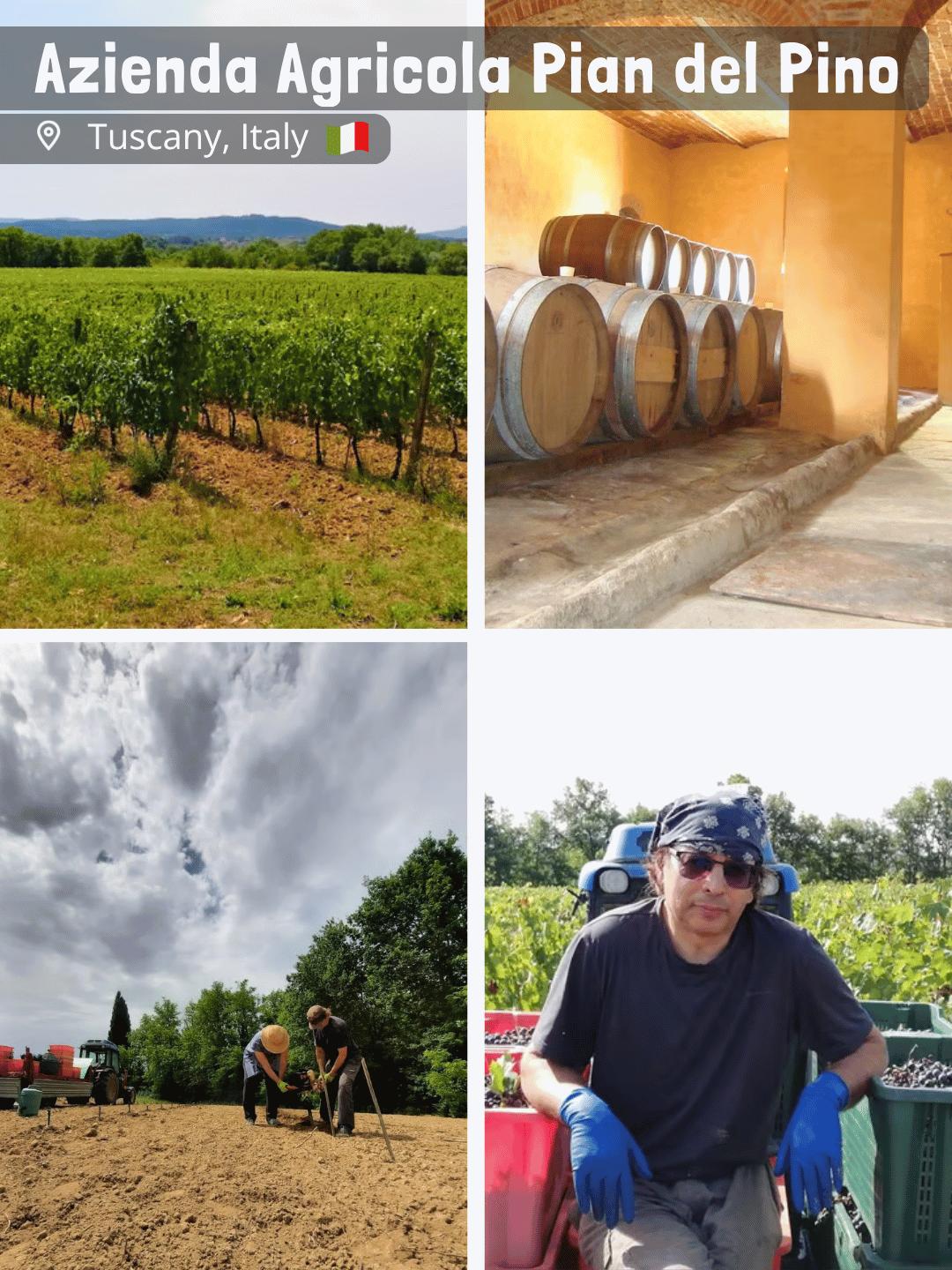
Between Arezzo and Florence, in the Pianalti del Valdarno, Giovanni Batacchi represents the third generation of Pian del Pino.
The family has been producing natural wines for more than twenty years and today works four hectares of vines within an estate of around fifteen hectares.
The plots are farmed under certified organic agriculture, with particular attention paid to reducing external inputs, especially copper and sulphur. The aim is to obtain healthy, balanced grapes capable of undergoing spontaneous fermentation without excessive intervention.
Giovanni mainly works with the historic varieties of the area (Sangiovese, Colorino del Valdarno, Canaiolo, Malvasia and Trebbiano), alongside varieties introduced into the region long ago and which have developed a strong local identity, such as Tempranillo.
Whites, rosés, reds, still and sparkling wines are produced in small quantities, with particular attention to each vintage and individual vineyard plot.
A philosophy Giovanni sums up simply: here, wine is not constructed, it is accompanied.
Domaine de La Marotte - Julie Thelen & Xavier Auboux
Languedoc, France
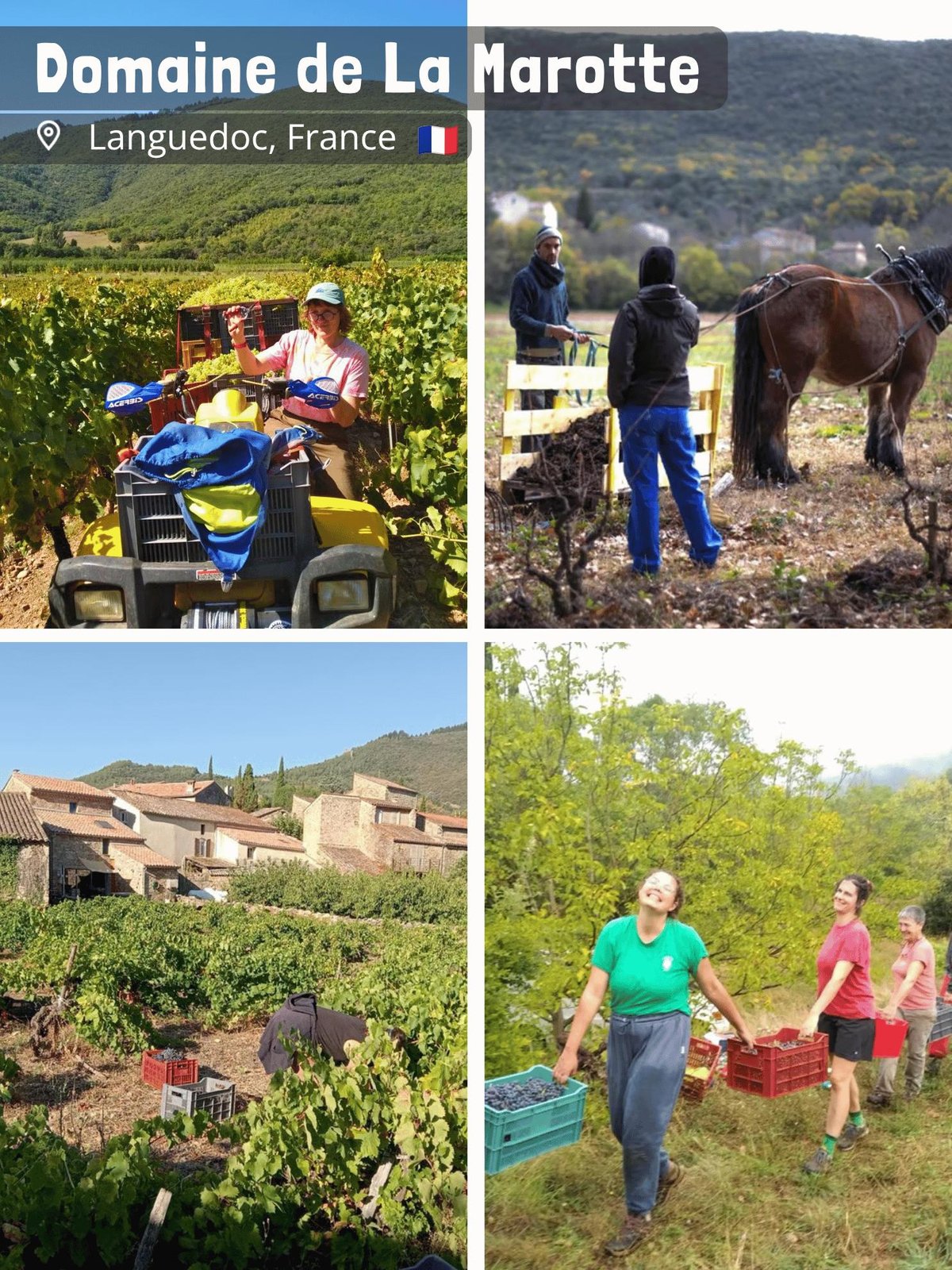
Before officially becoming independent winemakers in 2021, Julie Thelen and Xavier Auboux were already making wine in their garage from grapes harvested from abandoned vineyards.
Today, Domaine de La Marotte cultivates four hectares in Clairac, in the commune of La Tour-sur-Orb, at the foot of the Caroux massif in the Hérault.
Two-thirds of the vineyard consist of old bush vines featuring an impressive diversity of grape varieties: white and red Carignan, Cinsault, Œillade, Ugni Blanc, Aramon, Terret, Grenache, Vermentino, Mourvèdre, Morastel, Alicante and Clairette, among others.
Certified organic by Ecocert, the vines are supported with green manures, manure and plant preparations such as nettle extracts and horsetail infusions. Julie and Xavier also practise gentle pruning in order to limit large wounds and preserve the resilience of the vines.
In their village cellar, an old vertical hydraulic press dating from 1930 has been brought back into service. Vinification takes place without any additives, in stainless-steel and fibreglass tanks, with limited handling carried out as gently as possible.
The wines are above all focused on fruit, finesse and drinkability.
Domaine Exeterra - Florence Kachelhoffer
Alsace, France
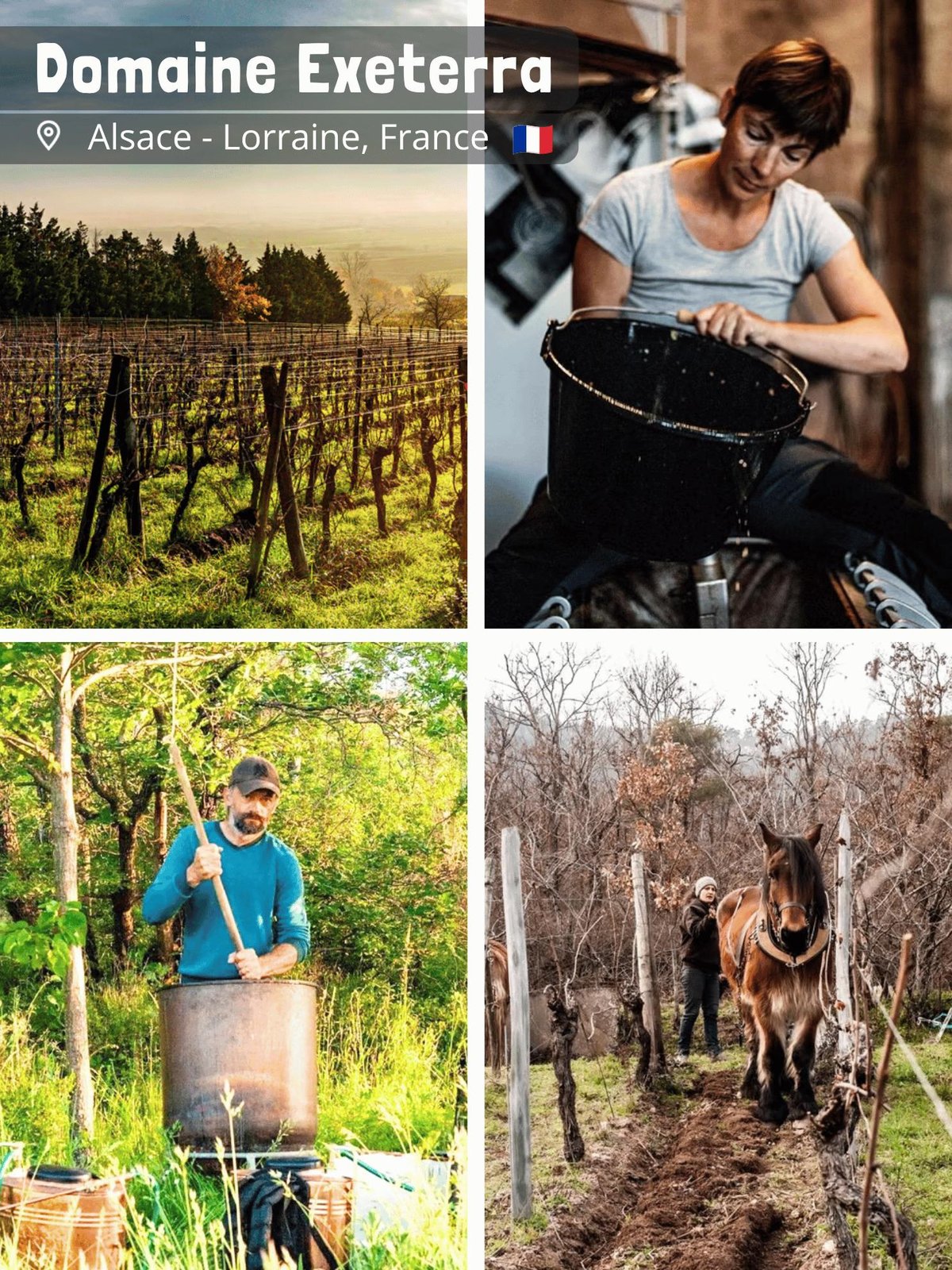
Domaine Exeterra was officially founded in 2022, but the project had been growing in Florence Kachelhoffer’s mind for nearly twenty years.
After more than ten years working with different Alsace estates, Florence took over her first plots on the slopes of the Rittersberg in Scherwiller. The estate has since expanded with old Riesling and Pinot Noir vines, some around 70 years old, in Nothalten and Blienschwiller.
Alongside her husband Boris, a vineyard manager who has worked at several biodynamic estates in Alsace, she farms the vines organically and biodynamically.
Their work extends beyond the vines themselves. Around fifty melliferous trees and shrubs have been planted around the plots, along with a beehive, in order to create a richer environment for biodiversity.
In the cellar, Florence favours observation and minimal intervention. The wines evolve naturally, and a very small amount of sulphur is used only when she believes a wine genuinely needs it.
Jan-Philipp Bleeke - Winemaking
Mosel, Germany
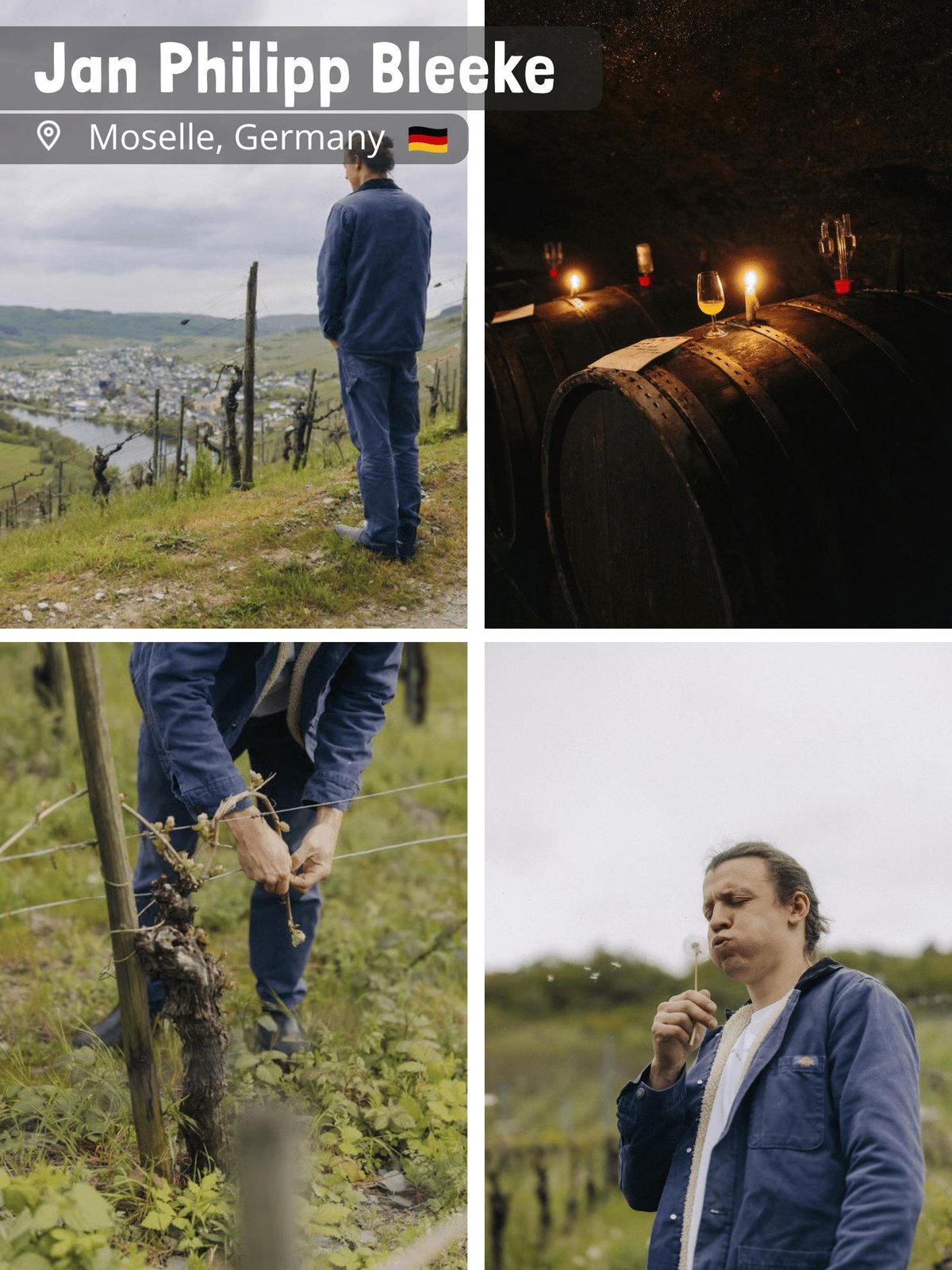
Originally from East Westphalia, Jan-Philipp Bleeke was not necessarily destined to become a winemaker. Yet he eventually settled along the Mosel, where he has been producing organic and natural wines since 2017.
He now cultivates around two hectares spread across Kröv, Traben-Trarbach, Burg, Noviand and Piesport, among other places.
On these often steep slopes dominated by slate soils, mechanisation is kept to a minimum. Much of the work is carried out by hand, with help from his small flock of sheep.
Jan-Philipp is also behind a form of community-supported viticulture inspired by CSA models, creating a direct connection between consumers and agricultural production.
Riesling, Pinot Noir, Dornfelder, Sauvignon Blanc, Cabernet Franc and several hybrid varieties make up his vineyards. In the cellar, the wines are aged in old barrels and stainless-steel tanks following a low-intervention approach.
He likes to describe his wines as “glou glou plus”: immediately drinkable, but always with something more to discover.
Azienda Agricola Nebraie - Andrea Tacchella
Piedmont, Italy
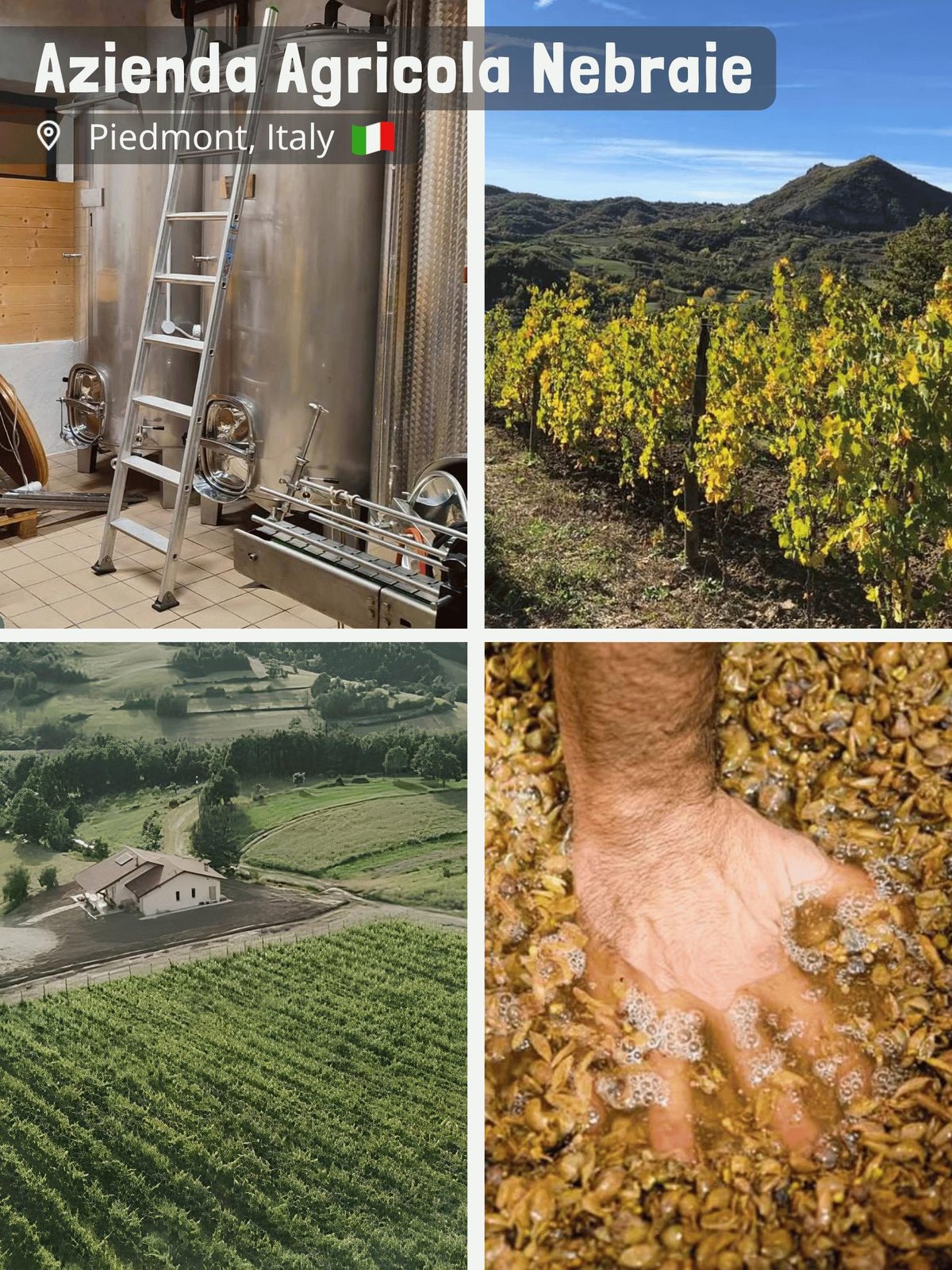
In the Borbera Valley, in the heart of the Ligurian Apennines, Andrea Tacchella is reviving a winegrowing tradition that had almost disappeared.
Founded in 2014, Azienda Agricola Nebraie is a family farm that combines winegrowing with the production of hay, legumes for green manure and ancient grains.
The plots are located in the province of Alessandria, between 450 and 600 metres above sea level. The cooler climate, significant temperature variations and maritime influences create a distinctive environment for Timorasso, the grape variety at the heart of the project.
The vineyard is divided into several plots on clay-loam soils rich in gravel and limestone, with grey-reddish schist and conglomerates deeper underground.
Andrea places particular importance on soil life. Green manures, manure, permanent ground cover and light mechanical cultivation help maintain humus and biodiversity. Around thirty beehives belonging to a neighbouring farm are also hosted on the property.
Pruning follows the Simonit & Sirch method, while a pied de cuve is prepared a few days before harvest in order to naturally initiate fermentation.
After gentle direct pressing, the must ferments with indigenous yeasts in stainless-steel tanks. The wines are then aged on the lees, without filtration or any further oenological treatment. A small amount of SO₂ may be added when the vintage requires it.
The estate has been certified organic since 2019.