February 20, 2026 - 0 comments
Sulfur and wine: a millennia-old story
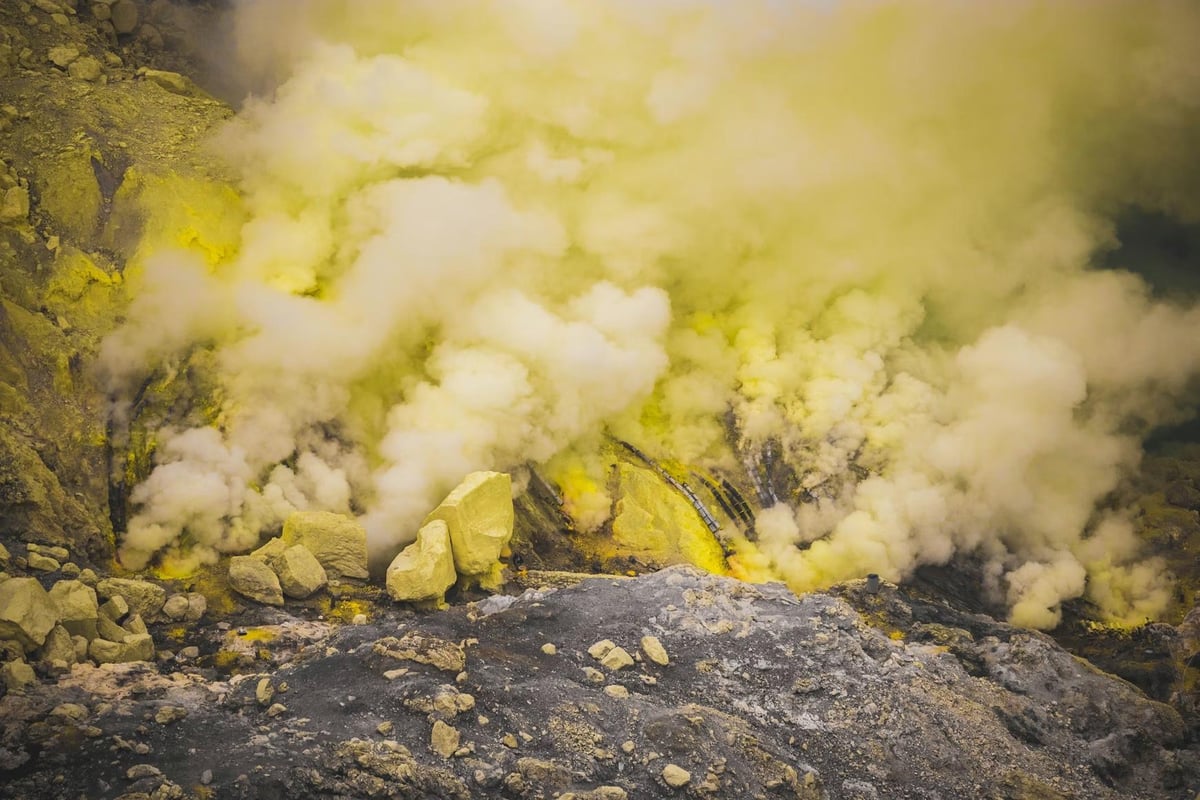
Do you think sulfur only arrived with petrochemistry and the industrialization of wine? You might be surprised to learn since when, and how, it has been used. From Roman amphorae to today’s organic cellars, this substance has accompanied winemaking for more than two thousand years, evolving from simple fumigation to a legally regulated additive.
From Roman amphorae to modern cellars
The use of sulfur in winemaking goes back to the Greeks and Romans, who burned sulfur in their amphorae and barrels to sanitize them and prevent the wine from turning sour. Pliny the Elder already mentions this fumigation practice, designed to avoid faults such as acetic spoilage. At the time, there was no precise dosage, everything was done empirically, with the hope that the wine would make it through the months without deteriorating.
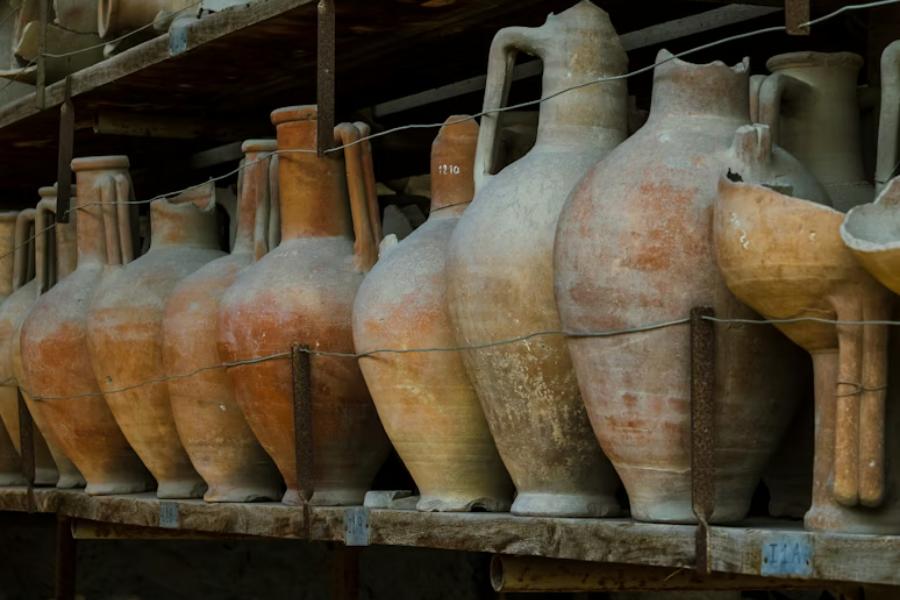
This method continued through the Middle Ages in a very artisanal way, until 1487, when a royal decree of the Holy Roman Empire explicitly authorized the burning of sulfur-treated wood chips in barrels. It is the first clear regulatory trace of sulfur being used as a tool to preserve wine.
Much later, the pioneers of natural winemaking would rediscover an overlooked truth: the best way to keep a wooden vessel healthy is not to burn sulfur inside it, but to never let it stand empty. A dry barrel is the ideal environment for Brettanomyces, acetic bacteria and molds, but also for the development of persistent faults such as volatile phenols, musty flavors or that dry wood smell that never really goes away. When it is full, well maintained and alive, the wood can defend itself.
The gradual move toward standardization
From the 17th century onward, the addition of sulfur dioxide (SO₂) or its salts became a recognized winemaking practice for its antioxidant and antimicrobial effects. Sulfur firmly took its place in European cellars, even if growers were still dosing it by feel, without any measuring instruments.
The scientific turning point came at the end of the 19th century. In 1892, the Ripper method made it possible for the first time to measure free and total SO₂ precisely. This breakthrough marked the beginning of a more thoughtful use: winemakers could finally control what they were adding, adjust the doses, and understand how sulfur protects wine.
From vineyard to cellar: two distinct uses
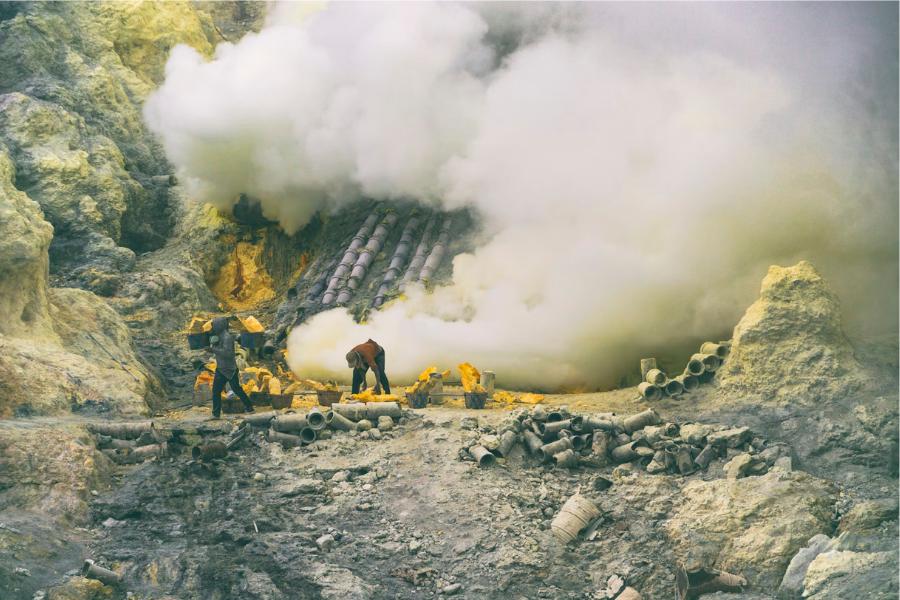
In the vineyard, sulfur established itself from the mid-19th century as the go-to treatment against powdery mildew, a fungal disease that appeared in Europe between 1845 and 1870. Today, sulfur in powder or spray form is still one of the few fungicides allowed in organic farming. For downy mildew, however, it is copper, particularly in the form of Bordeaux mixture, that became the historic solution. ANSES has recently restricted both its use and the number of authorized products.
In the cellar, SO₂ combines two properties that are hard to replace: it protects wine from oxidation and inhibits microorganisms. No other enological input brings together both functions so effectively, which explains its persistence in conventional winemaking.
Modern regulation and the rise of natural wine
In the 20th century, the creation of the Office International du Vin in 1924, which became the Organisation Internationale de la Vigne et du Vin (OIV) in 2001, established a scientific framework and international recommendations on enological practices, including the use of sulfur. Legal limits were gradually defined, varying according to wine styles and production specifications.
From the 1980s and 1990s, another movement emerged in parallel: some winemakers began questioning the industry’s dependence on SO₂. They experimented with native fermentations, learned to manage yeasts, bacteria and temperatures, and showed that it was possible to do without this “technological crutch” that sulfur had become.
Because sulfur has a well-known effect: it tends to lock a wine in place. It stabilizes it, preserves it, makes it easier to transport, more “practical” for export and mass distribution, where bottles are sometimes stored in poor conditions. But there is a trade-off: this protection can mute the wine’s expression. By contrast, wines with no added sulfur reveal a more forthright, direct and vibrant identity.
In 2012, the European Union officially created the “organic wine” category, with lower SO₂ limits than for conventional wines. In 2019, France saw the birth of the “Vin Méthode Nature” charter, which defines the use of the term through strict criteria: organic vineyards, native fermentations, no enological inputs, and zero or very low SO₂ at bottling. This label does not create a legal status at the European level, but it does offer a transparency framework. It is part of a broader international movement, with other countries developing their own charters or certifications, which we detail in this dedicated article “Pourquoi le vin naturel n'a pas de label unique ?”.
Since 2023, new EU nutrition labelling rules have required ingredients and additives to be disclosed, either directly on the label or via a QR code. Any added SO₂ must now be documented, strengthening transparency for consumers.
A debate that’s still wide open
Sulfur remains at the heart of both a technical and philosophical debate within the natural wine community.
Beyond endless, slightly sterile arguments, working without sulfur is first and foremost a path, an ideal to aim for. Pierre Overnoy says that sulfur “(…) is a medicine. And a medicine is for someone who is sick. If your grapes are healthy, why treat them?” For him, “wine without sulfur isn’t a beginning, it’s an achievement”, one that can only be reached when the vines are free of chemical products, the roots are strong, the harvest is healthy and carefully sorted, and the cellar is impeccably clean. It is a truth we shouldn’t forget. On the ground, natural winemakers adapt with pragmatism and honesty. Some use sulfur systematically, in minimal doses at bottling, for safety or in difficult vintages. Others never use it and manage to do without. Reality often lies somewhere in between, as Michèle Aubéry of Domaine Gramenon, who does not rule sulfur out, explains. For her, “it’s a luxury to do without.”
The history of sulfur in wine reveals one constant: since Antiquity, winemakers have been trying to protect their wines from time and spoilage. Methods have evolved, doses have become more precise, regulations have tightened. Yet the same question remains: how far should we go to protect a wine while still respecting its natural expression? For some, like Pierre Overnoy or Nadia Verrua, it may soon become impossible to make wine without sulfur in the face of climate change. Others, like Didier Grappe, Valentin Morel or Léa de Cazo, see PIWI and hybrid varieties as a solid option for continuing to avoid both treatments and sulfur. Only time will tell.