January 20, 2026 - 2 comments
Les Maisons Rouges: Nitrogen, the Key to Managing Volatile Acidity
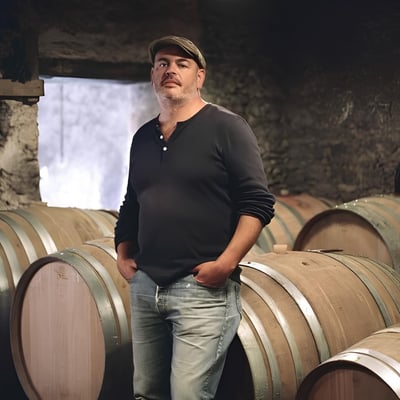
In the context of climate change, managing volatile acidity has become a major challenge for winemakers. At Les Maisons Rouges, a biodynamic estate since 2009, Benoît Jardin understood that the solution does not lie in chemistry, but in the natural balance of the soil, and more specifically in nitrogen management.
When climate conditions favor bacteria
Volatile acidity, the flaw that can turn a promising wine into vinegar, has found an unexpected ally in climate change. “Volatile acidity is now strongly favored by today’s climate evolution,” explains Benoît Jardin. The mechanism is simple yet formidable: volatile acidity is mainly produced by bacteria, and these bacteria thrive under two specific conditions—heat and low-acidity musts.
As vintages become increasingly warm, the playground for these unwanted bacteria expands year after year. But there is another, less obvious factor that can encourage their development: nitrogen deficiency.
Nitrogen: fuel for yeasts, shield against bacteria
“Another factor that can generate volatile acidity is musts that are deficient in nitrogen,” explains the winemaker. This deficiency typically occurs in years with little sunshine or in heavily grassed, exhausted vineyards. In these conditions, nitrogen is absorbed by grasses and other soil elements, depriving the vine of this essential nutrient.
The result? “The yeasts responsible for transforming sugar into alcohol slow down, struggle, and lose vitality. Bacteria then take over.” This is precisely what must be avoided: weakened yeasts open the door to the bacteria responsible for volatile acidity.

Biodynamics as a solution
At Les Maisons Rouges, Benoît Jardin has developed an elegant approach to maintaining this delicate balance. “We always have grass in our vineyards,” he says. But rather than seeing it as a competitor, the estate has made it an ally.
The secret lies in a carefully managed life cycle: “We try to break the grass without turning the soil, since we work in biodynamics. We break it, it partially decomposes, it grows back, we break it again, and so on.” This continuous dance between life and decay is far from insignificant. As the grass dies, it naturally releases nitrogen back into the soil.
“Simply by hoeing and breaking this grass regularly throughout the year, we achieve ground cover that doesn’t deprive the vine of nitrogen but instead helps rebalance the soil.”
A fragile but virtuous balance
This approach perfectly illustrates biodynamic philosophy: instead of fighting nature, you work with it. Grass is neither completely eliminated nor left to grow unchecked. It lives, dies, and regenerates in a cycle that nourishes the soil and, by extension, the vine.
In a wine world where climate change is forcing many practices to be reconsidered, Benoît Jardin shows that intelligent nitrogen management can be an effective response to volatile acidity. A solution that requires neither chemistry nor heavy intervention, just a deep understanding of natural cycles and consistent work throughout the year.
Because in viticulture, as elsewhere, balance remains the guiding principle.