December 16, 2025 - 1 comments
Les Maisons Rouges: volatile acidity, the salt and pepper of wine
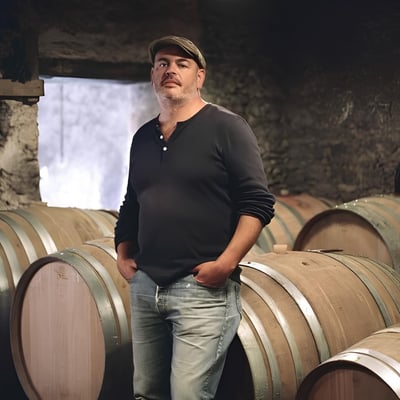
Benoît Jardin explains how climate change shook their certainties and turned a once-feared fault into a source of complexity. A lesson in humility and trust.
For years, Les Maisons Rouges never really had to think about volatile acidity. Between 2000 and 2010, harvests quietly unfolded in early October, summers stayed moderate, and the wines came together without trouble. The drosophila fly hadn’t yet touched their Pinot d’Aunis grapes. “We barely knew volatile acidity, it was very rare for us to have any deviation at all,” recalls Benoît Jardin.
2011: a climatic turning point
Then came 2011. A vintage Benoît sees as a true shift. Suddenly, harvests that traditionally began around the 5th or 6th of October were pushed up to the 10th or 11th of September. Nearly a full month early. Summer heat became the new norm in the Loire.
With these warmer summers, the musts began to change and volatile acidity started appearing in the tanks. “At that time, we were still unaware of what was happening. We hadn’t understood yet,” Benoît admits openly.

2015: the cuvée that brought shame, then revelation
In 2015, Les Maisons Rouges released a cuvée from their century-old Pineau d’Aunis vines, named Alizari. A powerful wine born from very old vines. But that year, the level of volatile acidity reached heights the estate had never seen.
Benoît and Elisabeth were almost ashamed of the wine. Until renowned tasters welcomed it warmly and reassured them: “They simply told us that volatile acidity, in a wine this powerful, is the salt and pepper of a wine.” The relief. The element that brings life, tension, and complexity.
This revelation completely transformed their perspective. It changed the way they understood volatile acidity.

Accepting volatile acidity as part of the wine’s structure
Today, Benoît is clear: “I think a great, powerful wine without a touch of volatile acidity is a wine that feels absent, a bit flat in the mouth for me.” A wine with very low volatile acidity is often a wine made with sulfur. To him, it’s almost a muted wine.
Of course, it’s not about letting things drift. “You need to know how to measure it and keep it within acceptable levels,” he explains. But once mastered, volatile acidity becomes an asset, not a flaw. It gives character, personality, depth.
Adapting to a changing climate
What Benoît Jardin is really describing is the story of an estate adapting. The climate is changing, harvest dates keep moving earlier, and the musts themselves are different. Winemakers have to learn new ways of working, new parameters to understand.
For Les Maisons Rouges, volatile acidity is no longer a problem to eliminate at all costs, but a structural element to embrace. An approach that reflects their philosophy: trust the wine, accept what it has to say, and resist the urge to iron everything out.