August 05, 2025 - 0 comments
When a New York Musician Makes Chianti Sing
Silvio Messana traded music for a wine press. Here's the fascinating story of an artist turned natural winemaker.
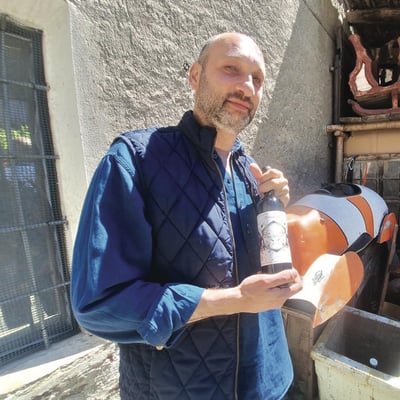
“In New York, if you’re an artist and your name isn’t Andy Warhol or Sonny Rollins, people ask you which restaurant you work at.” Silvio Messana shares this reflection while thinking back on the 15 years he spent in the city, juggling gigs and side jobs to make ends meet. Today, in the hills of San Casciano in Val di Pesa, this musician’s son has found his perfect score: making natural wine.
Montesecondo is, above all, a family story. Passed down since the 1950s, the estate revolves around two vineyards, each with distinct elevations and profiles. One sits at 500 meters on galestro soils; the other, at 150 meters, grows on a mix of clay, sand, and river stones. Two terroirs, one philosophy: let the land speak.

Yet nothing pushed Silvio toward a return to his roots. As a child, he grew up surrounded by three generations of winemakers and olive growers in Tunisia and Libya, but it was music that called to him. “Since I was very young, wine and music have always been part of my life,” he says. Family meals with their ritual bottle, weekends in the country house above a cellar whose smell still lingers in his memory, these were quiet memories, waiting for their time.
Fifteen Years in New York
At 14, Silvio began to play music. He moved to the United States, settled in New York, and stayed for 15 years. He lived off music, composing, performing, and took on odd jobs. One of them was selling wine, giving him his first real hands-on experience with bottles, customers, and the industry that would shape his future.
His father, a successful postwar musician in Rome, passed on the passion. His childhood was steeped in the sound of his father’s saxophone and piano, but eventually it was wine, “already in my DNA,” he says, that took over after “a musical journey that had run its course.”

The Stravinsky Method, Applied to Wine
“The best way to express a terroir’s character is to interfere as little as possible with the fruit.” This belief now drives every decision at Montesecondo. Since taking over the estate in 2000, Silvio has embraced a philosophy of minimal intervention and maximum respect. Certified organic since 2004, the vineyard is farmed biodynamically, with only native yeast fermentations and manual harvesting. The only addition? A small dose of sulfites before bottling, and only when absolutely necessary.
Silvio compares this approach to his musical training: “Making wine without additives or commercial yeast forces you to confront your work without filters. To quote Stravinsky: working within constraints inspires creativity.”
In his cellar, Silvio draws on the principles of jazz improvisation. “Every day, we have to listen, smell, taste, and decide based on the quality of the grapes in front of us.” “As a musician, visualization is key,” he explains. The ability to anticipate, to mentally compose before taking action, now finds expression in the art of natural winemaking.

Music Still Guides His Hands
When asked if there’s rhythm or harmony in winemaking, Silvio answers simply: “Yes, just like in life, and in everyday gestures.” Music hasn’t disappeared from his world; it’s still with him “whether I’m listening to it, or it’s just there in my thoughts.” This shift from music to wine didn’t feel like a rupture: “That chapter of my life had ended. It was time to do something else.” He’s also nurtured other creative passions, cooking, since childhood, and now baking bread once or twice a week.
Today, at Montesecondo, Silvio Messana has found his true composition. In the northwestern corner of Chianti Classico, he does what he knows best: he tastes, he decides, and above all, he lets the grapes speak. Whether you’re a musician or a winemaker, art is about revealing what was already there , just waiting to be expressed.

Montesecondo – San Casciano in Val di Pesa, Tuscany