December 11, 2025 - 6 comments
What does “Glou Glou” actually mean?
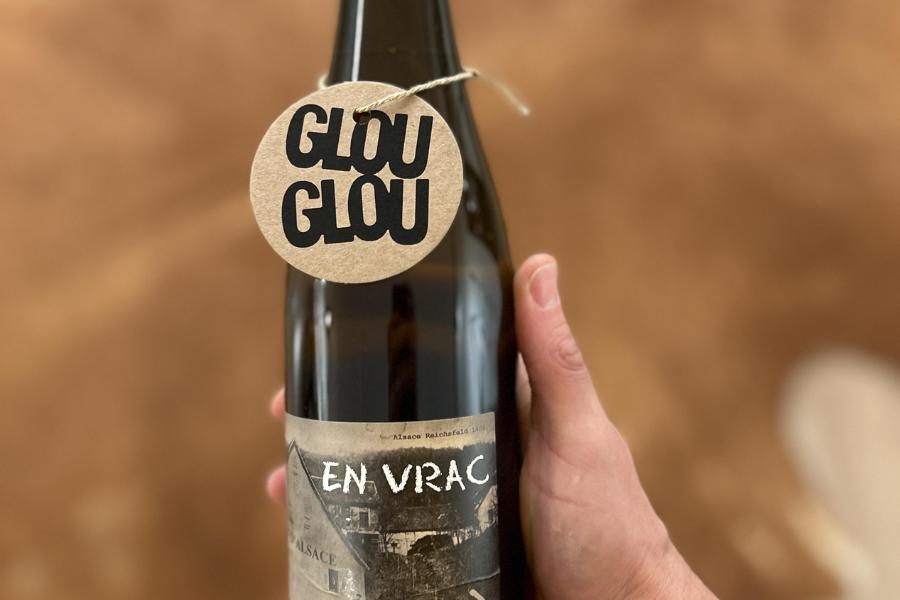
You’ve probably heard of wines that taste like wild strawberry, fresh herbs, or even a hint of wet stone. But what about glou glou? It’s not a flavor you can swirl and sniff in the usual way, in French, the word mimics the sound of wine sliding down your throat: glug glug. In the natural wine world, though, it’s become a term all its own.
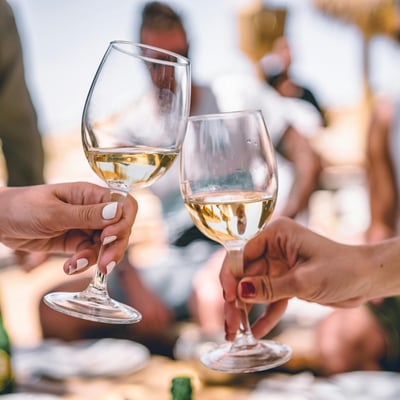
A glou glou wine is one that you don’t need to think too much about to enjoy. It’s bright, juicy, and goes down almost too easily, the kind of bottle that disappears before you realize it. These are wines that refresh rather than weigh you down, made for sharing with friends, picnics, or long lunches that stretch into the evening.
What makes a wine glou glou?
A few things can contribute but there aren’t strict rules or recipes.
- Low tannins – meaning there’s none of that drying grip that can make a wine feel heavy.
- Fresh acidity – which gives energy and drinkability.
- Modest alcohol – usually around 10–12%, keeping things light and balanced.
- Minimal extraction – often achieved through gentle pressing or shorter macerations that don’t pull too much color or tannin from the skins.
- Carbonic maceration – a technique where whole bunches ferment inside their own grapes, creating juicy, fruit-forward aromas that make you want to take another sip.
In the cellar, winemakers often also skip heavy oak or extended aging, bottling early to capture that vibrant, living, just-fermented energy.
Glou glou isn’t a category, it’s a feeling. It’s that moment when a wine makes you smile after the first sip and you immediately reach for another.

Not just “easy drinking”
Calling a wine glou glou doesn’t mean it’s simple. The best examples are beautifully made, balanced, alive, and full of character. Their freshness comes not from shortcuts, but from care: healthy fruit, gentle extraction, and minimal interference. They remind us that wine can be serious while remaining light. Glou glou wines are often linked to a special moment, perfect for an apéro, when nothing’s too serious and the goal is pure enjoyment. No conventions, just relax. Even Michel Tolmer named one of his protagonists “Glouglou” in his eponymous book, capturing that playful, unpretentious spirit.
Still, glou glou is only one expression of what natural wine can be. Many naturally made wines lean toward lightness and energy, perfect for aperos, but others have structure, depth, and the ability to age for years. Rich, layered reds and textured whites evolve beautifully over time, showing that minimal intervention can create something powerful, not just playful.
Natural wine isn’t a single taste or style. It’s a philosophy that lets the grape, place, and vintage speak for themselves, whether that voice is bright and glou glou, or deep and contemplative. What matters is that it’s honest, alive, and made with respect for nature.