April 10, 2025 - 1 comments
How are Natural Winemakers Cutting Carbon in the Cellar?
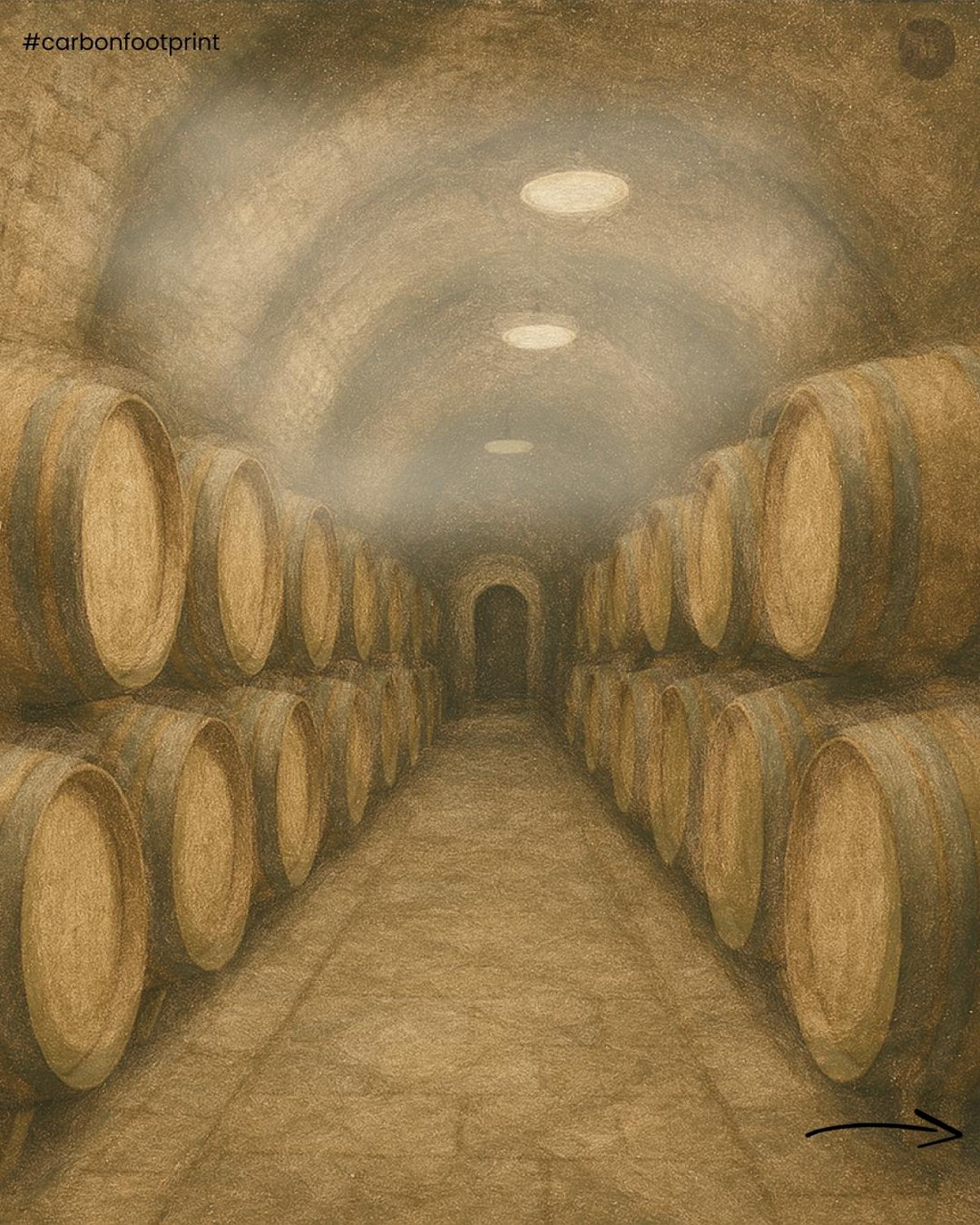
When we talk about sustainability in wine, the vineyard often gets the spotlight. But step into the cellar, and you’ll find another critical piece of the carbon puzzle. From fermentation to stabilization, the way wine is made can have a huge impact on its environmental footprint.
Natural winemakers are already taking steps, where possible, that dramatically reduce cellar emissions. Here’s how:
Letting Fermentation Run Naturally
Many wineries chill tanks to keep fermentation at precise low temperatures. But this process burns through electricity—often around the clock. What some natural winemakers do instead:
- Embrace ambient fermentation, letting native yeasts work at cellar temperature.
- In warmer regions, use passive cooling, thicker walls, and insulation
- Accept variation as part of vintage expression, reducing dependence on machines.
💡 Every fermentation that doesn’t rely on industrial cooling saves carbon.
Ditching Cold Stabilization
To avoid forming tartrate crystals, many wineries chill wines for weeks. This step alone consumes massive energy—especially at scale. Natural winemakers take another path:
- Skip cold stabilization entirely, accepting harmless tartrates as a sign of minimal intervention.
- Extend aging to let wines naturally stabilize over time.
Using Gravity Over Pumps
Moving wine typically means mechanical pumps—which means energy use. Natural winemakers often design their cellars differently. Here’s what they do:
- Build gravity-fed cellars where wine flows downhill between fermenters, barrels, and tanks..
💡 Gravity is free, quiet, and carbon-neutral.
Skipping Reverse Osmosis
Reverse osmosis is often used to tweak a wine’s alcohol level, acidity, or even remove flaws. It’s an energy-intensive process, using high-pressure pumps to force wine through fine membranes. What natural winemakers do instead:
- Accept the vintage as it is, with all its uniqueness, rather than engineering consistency.
- Use minimal intervention farming to reduce the need for correction later.
💡 Every wine that isn’t run through a machine to “fix” it avoids another layer of carbon cost.
Avoiding Emissions-Heavy Additives
Every additive—whether a yeast nutrient or fining agent—has a carbon footprint from production and transport. Many are lab-made, chemically intensive, or shipped across the world. Natural winemakers typically:
- Use no synthetic additives, choosing wild yeasts and natural clarifiers.
- Source materials locally or seasonally, reducing transport emissions.
- Bottle with minimal sulfur, avoiding lab-based stabilizers entirely.
💡The fewer inputs, the fewer emissions.
Not every winemaker can ferment without cooling or build a gravity-fed cellar. In hot climates, some interventions are necessary just to keep wine from spoiling. And for small producers, retrofitting a cellar or aging wine for longer isn’t always practical—or affordable. But the natural wine movement shows that thoughtful, low-intervention choices can cut carbon dramatically, even in the cellar.