February 05, 2026 - 1 comments
Bordeaux mixture under pressure: how natural winemakers are trying to move beyond it
For over 140 years, Bordeaux mixture has protected French vineyards against downy mildew. This summer, ANSES has drastically restricted access to copper-based products. For organic and natural winemakers, it’s yet another tightening of the rules. But it also confirms a fight they have been leading for years: getting rid of a product that protects vines today while poisoning soils for tomorrow.
Why copper is a problem
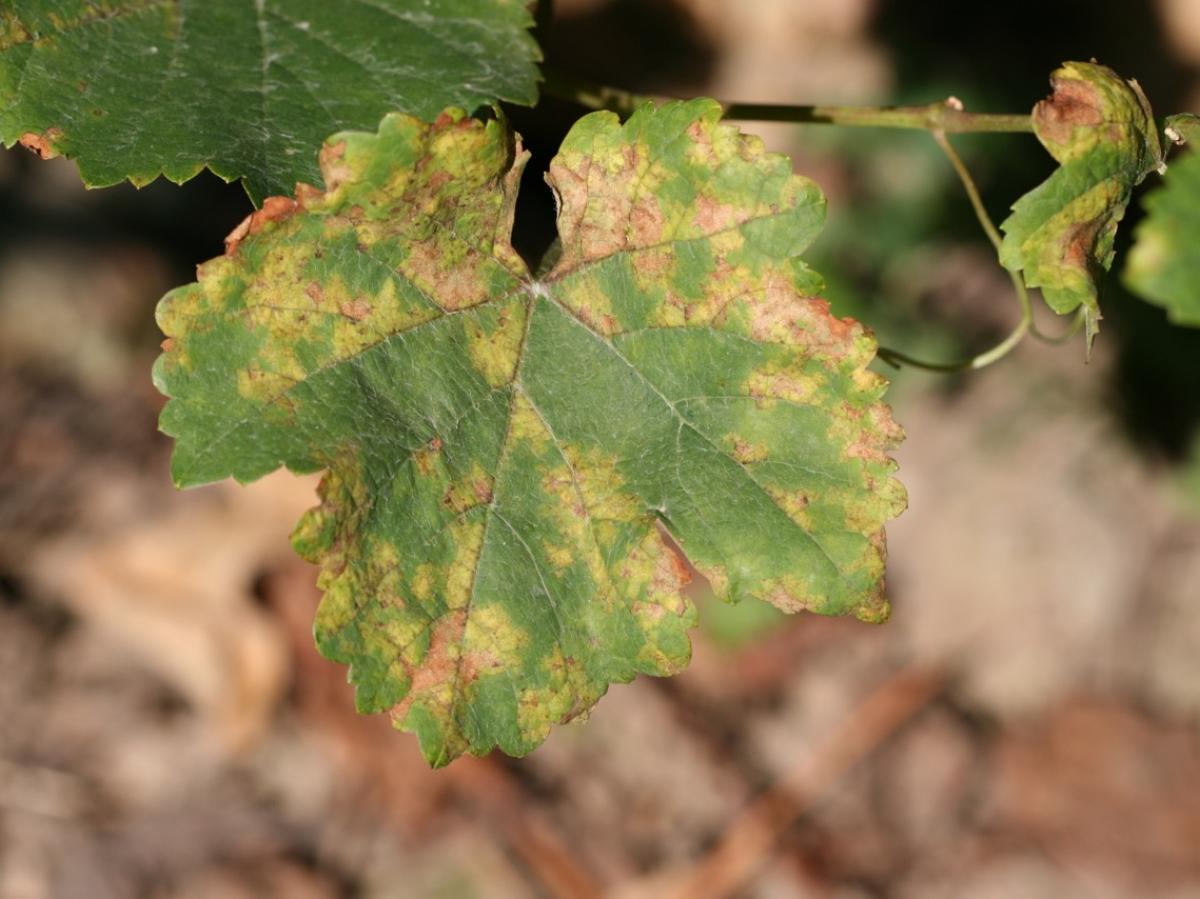
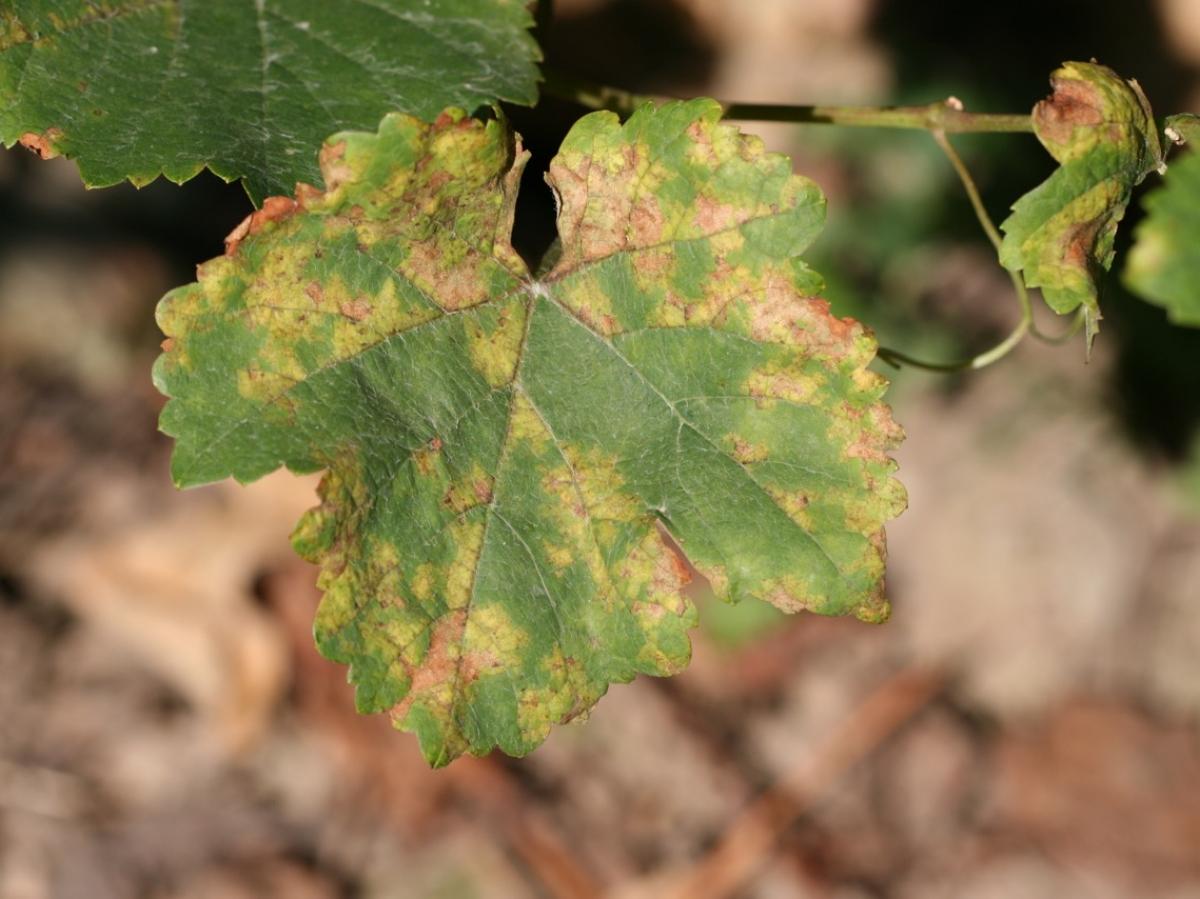
Copper is something of a paradox in organic viticulture. Essential for fighting downy mildew, a devastating fungus capable of wiping out a crop in just a few days, it is also a slow poison for soils.
Copper does not break down: each treatment adds a thin layer that accumulates in soils or in the sediments of ditches and waterways. Beyond a certain threshold, it disrupts soil microfauna and macrofauna (earthworms, springtails, mycorrhizal fungi), which are the very foundation of a living terroir. In old vineyards heavily treated with copper, vines tend to grow less vigorously, develop shallow root systems, and show deficiencies (yellowing leaves, a sign the plant lacks certain nutrients). For aquatic organisms, copper toxicity is even more severe.
This is why Europe has tightened the rules: since 2019, the limit has been set at an average of 4 kg of copper per hectare per year over a seven-year period. In biodynamics, the Demeter standards are even stricter: 3 kg/ha/year on average over five years. Many natural winemakers are already well below these limits, by choice and conviction.
The problem is that in years of high downy mildew pressure (warm rains, repeated storms), these caps are difficult to respect—especially in wetter regions. A paradox, given that certain synthetic molecules remain authorised in conventional viticulture.
The summer when the rules tightened
On 15 July 2025, the ANSES delivered its verdict on 34 copper-based products intended for use in vineyards, including commercial brands such as Bouillie Bordelaise RSR, Nordox, Kocide, Champ Flo Ampli, Héliocuivre, and others. The outcome was severe: 17 products were explicitly withdrawn from the market, 8 lost their vineyard use authorisation, and those that remain authorised now face significantly stricter conditions of use.
In the end, around nine copper-based products remain authorised for use in organic viticulture, including Bouillie Bordelaise RSR Disperss, Nordox Vitis, Cuproxat SC, Champ Flo Ampli, and Héliocuivre. But with reduced doses, expanded no-spray buffer zones (ZNT) around waterways, and in some cases restrictions on the number of applications.
Withdrawn products may still be purchased until 15 January 2026 and used until 15 January 2027. After that, they will disappear permanently. In addition, 15 products representing around half of the copper volumes used in France are currently awaiting evaluation in Italy, with decisions postponed until 2029.
New constraints putting winemakers in a bind
Let’s look at two examples of re-authorised products and their new conditions:
Champ Flo Ampli: the maximum dose has been reduced from 2 litres to 1.3 litres per hectare; the no-spray buffer zone around waterways has increased from 5 to 20 metres; and the number of authorised applications has dropped from 12 per year to just 3. The addition of the Spe1 label also prevents spreading copper use across multiple years.
Héliocuivre: a 50-metre no-spray buffer zone around water, a 10-metre distance from residential areas, and a minimum interval of seven days between treatments. Up to 10 applications per year are allowed at 1 L/ha (400 g of copper).
These no-spray buffer zones (ZNT) of 20 to 50 metres create serious problems in many vineyards (Loire, Rhône, and Garonne valleys), where parcels run alongside streams, drainage ditches, or small tributaries. For some winemakers, the new rules make it impossible to treat entire plots—especially the smallest ones.
The other major constraint is the minimum seven-day interval between treatments for certain products. In practice, during repeated storm events in peak growth periods, treatments every three days may be necessary to contain downy mildew. Waiting a full week after a violent storm means risking the loss of the crop.
“You’re tightening the screws without giving us alternatives”
The organic sector’s reaction was swift. The FNAB and CNAOC have spoken of incomprehension and deep concern. In organic viticulture, copper remains the only strong fungicidal active substance still authorised. There is nothing else as effective against downy mildew within the current specifications.
The ANSES itself acknowledges that organic vineyards would be particularly affected by a withdrawal of copper, with significant yield losses in certain regions. Yet restrictions continue to tighten year after year.
Winemakers also point to an inconsistency: while copper, used for 140 years and whose effects are well known, faces ever stricter restrictions, synthetic molecules such as Folpel—classified as CMR2 (suspected carcinogenic, mutagenic, and reprotoxic)—remain authorised in conventional viticulture.
Natural winemakers: ahead of the curve for years
Contrary to what the current climate of concern might suggest, natural winemakers are not discovering the problem of copper today. For years, many have been trying to move away from it, fully aware of its toxicity for soils and for the microbial life that underpins the quality of a terroir.
Copper is considered a last-resort product, to be used only when everything else has failed. The goal is not systematic treatment, but creating the conditions for the plant to defend itself. Among natural winemakers, many aim for very low doses (≤ 2 kg/ha/year) and sometimes accept greater losses in catastrophic vintages. Some even experiment with zero-copper years, with mixed results depending on downy mildew pressure.
An arsenal of alternatives already in use
Rather than waiting for restrictions to be imposed, natural winemakers are multiplying experiments to reduce their dependence on copper. Their approach relies on several complementary pillars.
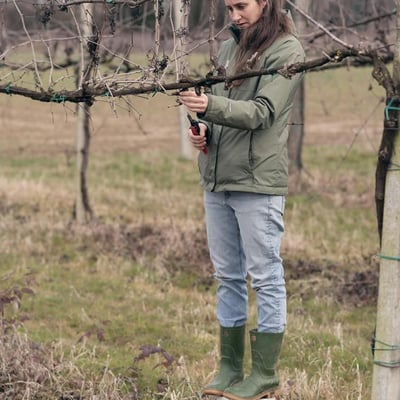
Prevention through vineyard work. Instead of systematic spraying, the idea is to make it harder for downy mildew to establish itself. This involves pruning and canopy management that allow air to circulate between the grape clusters: the more aerated the vine, the faster it dries after rain, and the less the fungus can develop. Fertilisation is also limited to prevent overly vigorous growth, with tender, fragile leaves that are more vulnerable to disease. Some growers allow grass to grow between rows to compete with the vine and slow its growth.
Resistant varieties. PIWI grape varieties (from the German Pilzwiderstandsfähig, meaning fungus-resistant), created through traditional cross-breeding, allow for a significant reduction in copper use. Even if these varieties do not completely eliminate treatments in extreme years, they open up a promising path forward. The main obstacles remain cultural and regulatory: appellations do not yet authorise these new varieties, and the market remains wary of unfamiliar names.
Herbal teas and plant extracts. Horsetail, rich in silica, strengthens plant cell walls. Nettle, willow, and algae have a mild antifungal effect. Under low to moderate pressure, these preparations deliver decent results, often in combination with micro-doses of copper. But in years of severe downy mildew pressure, they are not sufficient on their own.
Essential oils: an explored avenue. Oregano, tea tree, clove, sweet orange, rosemary, thyme—essential oils have shown real effectiveness in certain trials, especially when combined with very low doses of copper. Results are encouraging, particularly in dry, windy terroirs where downy mildew is naturally less aggressive. However, essential oils evaporate quickly, can burn leaves if poorly dosed, and are costly to produce.
Plant defence stimulators. Some products, such as extracts from yeast cell walls or algae, do not kill the fungus directly but activate the vine’s immune system, prompting it to produce its own defensive compounds. These products often work well as a complement to small doses of copper, but cannot fully replace it under high pressure.
Why we still can’t do without copper everywhere
Technical syntheses from research institutes (IFV, ITAB) are clear: the idea of replacing copper is overly simplistic. In certain contexts, doses can be significantly reduced, but copper cannot yet be eliminated in most viticultural situations.
Alternatives work well under moderate pressure, on dry and windy terroirs, and with naturally less sensitive varieties. But in disastrous years (repeated warm rains, violent storms during peak growth), copper remains the most effective line of defence.
This is the core frustration of natural winemakers: they have been working for years to create the conditions to move beyond copper, but when the weather turns against them, they have no other choice. Restrictions continue to tighten without alternatives being sufficiently mature to take over in all contexts.
The current debate does not pit “pro-copper” against “anti-copper.” Instead, it confronts two timelines: the long-term protection of soils and aquatic environments, and the transition towards alternative methods that require time to be refined, tested, and widely adopted.
Natural winemakers have been trying to build this transition for years, combining fine agronomy, biodiversity, adapted varieties, and new biocontrol products. Perhaps it is time to support them in this process, rather than imposing restrictions without giving them the means and time to develop viable solutions.