February 17, 2026 - 1 comments
5 Myths About Natural Wine: What’s True, What’s Not
“Natural wine is just for Parisian hipsters!” Even among well-informed wine lovers, certain misconceptions still circulate. Between fantasy and reality, here is a clear and honest look at the most persistent myths.
Myth #1: “Natural wine always has a fault.”
False. And this confusion causes real damage.
Confusing expression with fault is the most common misunderstanding. A reductive nose that opens with air is not a fault. Notes linked to spontaneous fermentation are not faults either. They are signatures, not accidents.
The real difference between natural wine and conventional wine lies in the method.
In conventional winemaking, fermentation is controlled using selected yeasts. Sulfur is added for stability. Wines are adjusted with oenological additives. These tools allow producers to address weaknesses or standardize results.
In natural wine, there is no safety net. The work must be precise from the vineyard to the cellar. Healthy grapes, the right harvest date, well-managed spontaneous fermentations, and strict cellar hygiene are essential. A difficult vintage, a timing error, or a lack of attention shows immediately in the glass.
This is exactly why natural winemakers demand a high level of rigor and skill. They are not trying to make faulty wines. They are making honest wines that reflect intention. Funky or classic. Oxidative or precise. Generous or discreet. It is a deliberate choice.
Myth #2: “Natural wine is a Parisian hipster trend.”
False. And condescending.
Natural wine did not start in trendy wine bars. Its principles, respect for living systems, minimal intervention, and refusal of synthetic chemistry, have existed for decades.
Winemakers like Pierre Overnoy in the Jura have always worked this way. Not out of fashion, but out of conviction and family tradition, long before the movement became visible.
Other historic estates began shifting toward organic or biodynamic farming in the 1980s. Sometimes quietly, sometimes with hesitation. Domaine de la Romanée-Conti has practiced biodynamics on much of its vineyards for years. These estates do not necessarily claim the natural wine label, but they proved that respect for life and excellence can go hand in hand.
Natural wine goes further by questioning cellar practices as well. Spontaneous fermentations. No oenological additives. Acceptance of the raw expression of each vintage. This coherence from vineyard to glass has nothing to do with where you drink or who you are.
Myth #3: “All natural wines taste the same.”
It is exactly the opposite.
Natural wine is less standardized than conventional wine. It reflects grape variety, soil, vintage, and the winemaker’s hand more directly. The result is a much wider diversity of styles.
In conventional wine, products are corrected and calibrated. In natural wine, the wine is allowed to speak. A Chenin from the Loire will never taste like a South African Chenin aged in amphora. Different places. Different intentions. Different expressions.
Saying that everything tastes the same usually means only one corner of the movement has been explored.
Myth #4: “You need to be an expert to enjoy natural wine.”
False. And elitist.
Natural wine does not require more knowledge. It requires curiosity.
Liking a wine has nothing to do with expertise. It depends on sensitivity, context, and openness. There is no universal educated palate, only encounters between a wine and a person.
Some people love clean, precise wines. Others prefer generous, oxidative styles. Neither is right nor wrong. It is about taste, not status.
Myth #5: “Without a label, it is not really natural.”
False, but nuanced.
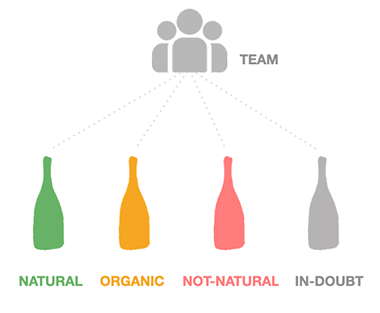
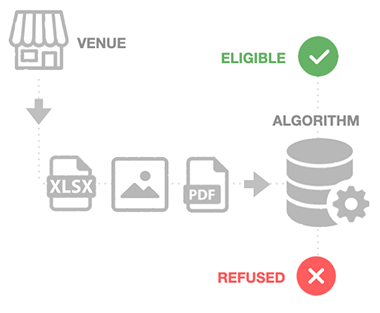
Organic and biodynamic certifications matter. They provide a framework. But natural wine cannot be reduced to a logo. Some winemakers have always worked cleanly without seeking a label. Others refuse certification for philosophical, administrative, or economic reasons, without compromising their practices. This is where selection matters. Beyond labels, practices must be understood and verified. The goal is not to tick boxes, but to ensure coherence between words, actions, and the wine in the glass. At Raisin, this is exactly our role. We meet, discuss, and verify. Not to validate a logo, but to ensure sincerity.
Beyond the Myths, a Simple Truth
Natural wine does not promise perfection. It does not sell miracles. It offers another way to make wine and another way to approach it. Less correction. More expression. Less standardization. More singularity. Fewer additives. More life. Natural wine is not a uniform or a dogma. It is a demanding and thoughtful approach, sometimes discreet, always committed. No cliché can erase that.