September 16, 2025 - Featured Winemaker - No comment
Artan Balaj has put Albania on the natural wine map.
Albania is not yet the first country that comes to mind when you think of natural wine, but that might be about to change.
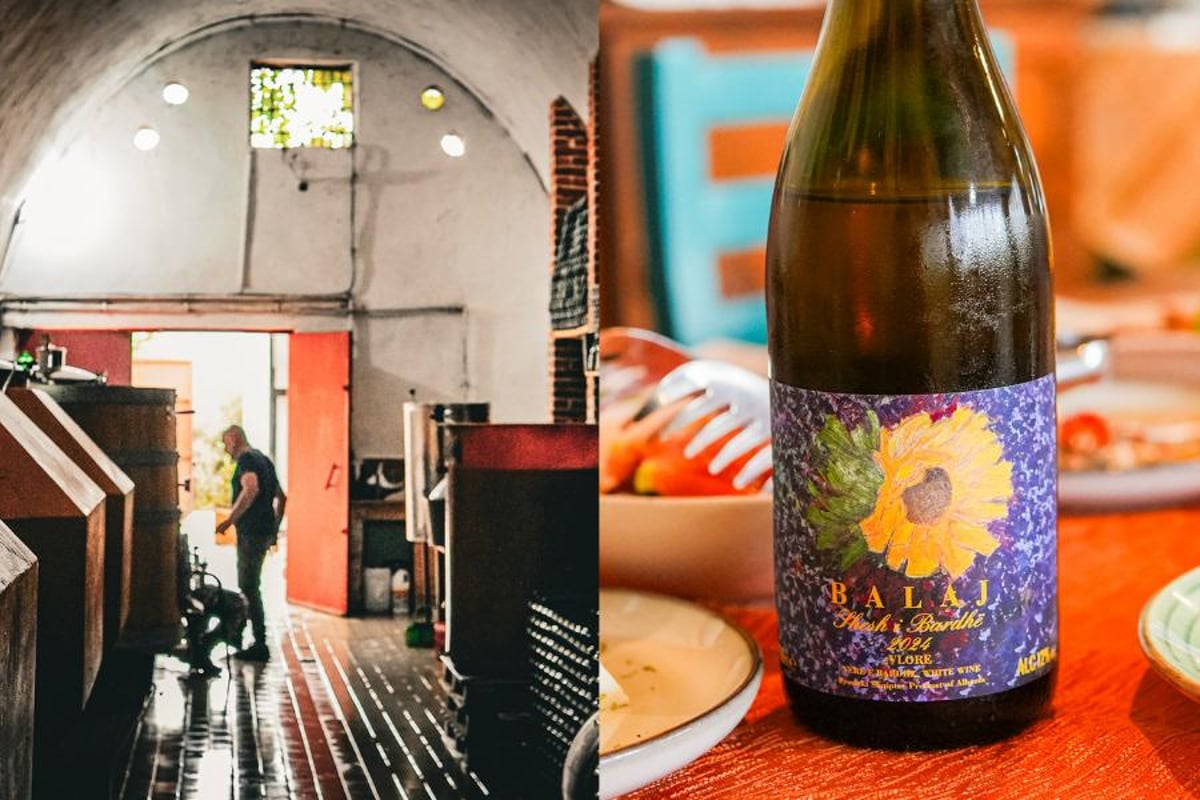
In the southern coastal village of Mifol, winemaker Artan Balaj is working almost single-handedly to put his country on the map. The first Albanian producer to appear on the natural winemakers, he’s showing drinkers that Albania is more than just a blank spot on Europe’s wine atlas; it’s a land of ancient roots, native grapes, and untapped potential.
A long and ancient wine history
Wine in Albania is nothing new. Vines have been cultivated here since Illyrian and Ancient Greek times, long before France or Italy became famous for it. The rugged mountains, Mediterranean coastline, and fertile valleys created ideal conditions for viticulture.
A disrupted winemaking tradition
But for much of the 20th century, Albania’s winemaking traditions were cut short. Under communist rule, vineyards were collectivized and wine was mass-produced, more for volume than for quality. After the 1990s, many family vineyards were abandoned or replanted, and the country’s deep traditions nearly faded from view.
It’s only now, in the last two decades, that winemakers like Balaj are beginning to reconnect with that history, and push it in new directions.
A return shaped by experience abroad
Balaj’s return to Albania after nearly a decade in Friuli, Italy, was driven by a belief that his home country offered the perfect conditions for natural wine.
.jpg)
“I’ve always wanted to do things the real way,” he explains. “Adding chemicals or corrections destroys the wine, the territory, and the variety. Here, with our hot summers, we can farm with almost no treatments, sometimes just essential oils or small amounts of sulfur.”
Climate, both ally and adversary
The climate is both ally and adversary: long, dry summers reduce the need for spraying, but frost and drought can wipe out entire parcels. Still, for winemakers seeking clean, chemical-free fruit, Albania’s terroir looks increasingly like an advantage, especially as climate change makes vineyard work more difficult in many parts of Europe.
A growing interest in natural wine
Natural wine is still new in Albania, but it’s quickly finding fans. “Younger and more educated drinkers are very open,” Balaj says. “They care about health, about what they’re putting in their bodies. While some expect natural wines to be cloudy or extreme, mine look more classic but remain natural. That balance makes it easier for people to understand them.”
This generational curiosity hints at a future where more Albanian winemakers could join Balaj. For now, he stands as a pioneer, but his example shows that the country has both the history and the raw material to grow a natural wine movement of its own.
Native Albanian grape varieties
What makes Balaj’s work especially exciting is his focus on native Albanian varieties. Two in particular stand out:
Vlosh
Vlosh: found only in the Vlora region, it ripens quickly and can be tricky to manage. But in the right hands, it produces structured, age-worthy wines. Balaj compares it to the Nebbiolo grape used for Barolo wine: “Elegant, complex, with a beautiful light ruby-red color and structure.”
Shesh i Bardhë
Shesh i Bardhë: used for both white and orange wines, it’s a grape Balaj believes can stand confidently beside orange wines from anywhere in the world.
By championing these grapes, Balaj isn’t just making good wine, he’s giving Albanian varieties a chance to shine on the international stage.
A philosophy rooted in practice
For Balaj, natural winemaking is not a trend but a philosophy, one that ties him to his land and to an ancient tradition. From “vine to glass,” as he puts it, every step is done by his own hand, planting, grafting, harvesting, fermenting.
Albania, a country to watch
Albania may not yet be widely known for wine, but the conditions are there: a deep but interrupted history, a climate made for clean viticulture, curious young drinkers, and unique grapes waiting to be rediscovered.
With Balaj leading the way, natural wine lovers may soon find that one of Europe’s last undiscovered vineyards has been here all along.