March 18, 2025 - 0 comments
Did you know a natural vineyard can be Carbon Negative?!
Wine doesn’t start in a bottle—it starts in a vineyard. And before a single grape is picked, the way a vineyard is managed has already determined much of its environmental impact. Conventional winemaking relies on heavy machinery, synthetic fertilizers, and pesticides, creating significant carbon emissions. Natural vineyards, on the other hand, take a radically different approach—one that can even make them carbon neutral, or better yet, carbon negative.
The Carbon Cost of Conventional Vineyards
The typical industrial vineyard runs on diesel-powered tractors, chemical sprays, and synthetic fertilizers. Each of these elements contributes to its carbon footprint:
Machinery: Conventional vineyards rely on tractors for everything—plowing, spraying pesticides, harvesting, pruning, tying. A single hectare (about the size of a football field) of conventional vineyard emits between 1.6 to 2.6 tons of CO₂ per year just from fuel and pesticide use.
Chemicals: Synthetic fertilizers release nitrous oxide (N₂O)—a greenhouse gas 300 times more potent than CO₂. Adding the equivalent of 0.6 to 1.2 tons of CO₂ per hectare every year.
Tillage: Conventional tillage practices break up the soil, releasing stored carbon into the atmosphere. In fact, traditional plowing can increase carbon loss by 10-20% over time compared to more sustainable methods, which help preserve biodiversity,retain water, conserve organic matter, and much more.
The result? A conventional vineyard releases on average 2.6 tons of CO₂ per hectare per year into the atmosphere.
How Natural Vineyards Absorb Carbon
Natural winemaking flips the script. By ditching synthetic chemicals and working with nature instead of against it, these vineyards can trap more carbon than they release.
Here’s how the numbers compare:
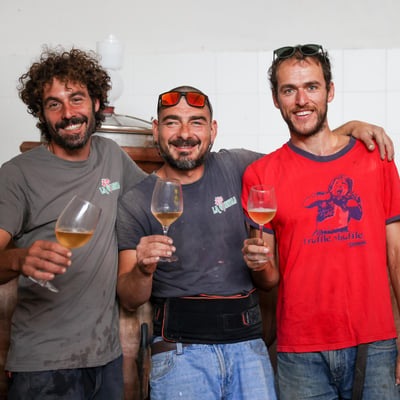
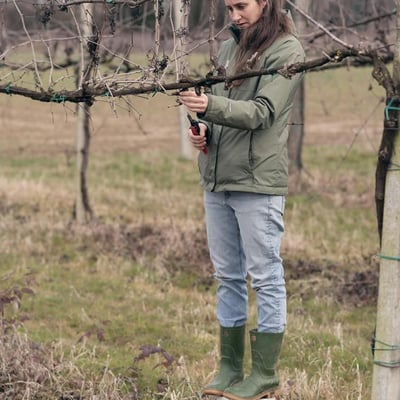
Lower Machinery Use: Natural winemakers harvest (like many other tasks) by hand, eliminating the need for diesel-powered harvesters. Others use plow horses, reducing CO₂ emissions by 50-80% compared to tractors.
Minimal Spraying: Instead of synthetic pesticides, natural vineyards rely on organic alternatives like biodegradable biopesticides, compost, and plant-based decoctions. This dramatically reduces indirect emissions.
Cover Crops & No-Till Farming: Instead of bare soil between vines, natural vineyards grow grasses, clovers, and wildflowers. These plants pull carbon from the air and store it underground. Studies show this type of soil management can absorb up to four times more carbon than conventional methods.
The result? A well-managed natural vineyard, however, absorbs 7.3 tons of CO₂ per hectare per year, making it a net carbon sink rather than a source of emissions.
Some organic and regenerative vineyards have been shown to sequester up to 11 tons of CO₂ per hectare per year—more than a temperate forest!
Why This Matters
At a time when climate change is a growing concern, it’s clear that how we grow wine has a massive impact. While no vineyard is perfect, natural winemaking proves that agriculture doesn’t have to be a carbon problem—it can be part of the solution.
So, next time you pour a glass, consider what’s behind it. The vineyard that produced your wine might not just be avoiding harm—it could be actively helping the planet.
Up next? We’ll be investigating at the carbon impact of the cellar!
Disclaimer
This article compares the environmental impact of conventional and natural winemaking using CO₂-equivalent emissions. While this provides a useful comparison, variations in agricultural practices and data availability mean results should be viewed as estimates. Emissions calculations are based on widely accepted factors, and natural vineyards are defined here as those following organic and/or biodynamic practices with minimal intervention. Consumer trends and the role of platforms like Raisin are also considered in assessing wine’s sustainability impact.
The research was conducted by Louis Zeno Hollis in collaboration with Raisin and the University of Exeter.