April 17, 2025 - 4 comments
Pierre Overnoy and Emmanuel Houillon share their experience on 50 years of climate change — and it’s mind-blowing!
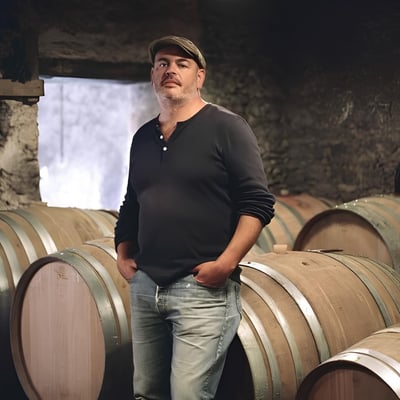
We had the privilege of meeting Pierre Overnoy and his adoptive son, Emmanuel Houillon, and from this meeting, a podcast was born.
Available (only in French) on:
- Apple
- Spotify
- Deezer
For several decades now, the vineyards of the Jura have been grappling with the tangible effects of climate change. This environmental crisis, now a part of daily life for winemakers, is gradually reshaping viticultural practices and the wines themselves. Pierre Overnoy and Emmanuel Houillon, iconic figures in the Jura wine scene, share firsthand accounts of these ongoing transformations.
As they point out, long-held reference points are shifting: harvests that once took place in October now occur in the middle of summer, with direct consequences on grape ripening and wine balance. This acceleration of the growing cycle goes hand-in-hand with changes to microbial ecosystems and disruptions in natural fermentations. In response, winemakers in Jura—and beyond—are adapting their methods while grappling with what the future holds for their terroir in the face of an ever-changing climate.
.jpg)
Accelerated Harvests: Finding a New Rhythm
Pierre Overnoy. You know, we harvest 100 days after flowering—that’s how it works. In the past, in northern Jura, people used religious holidays as reference points. If flowering was finished by the Feast of the Visitation on July 2nd, that meant we were ahead of schedule.
If the flowers were gone and the berries were already growing by that date, it was considered an early year. But even in an early year, we still wouldn’t harvest until late October. We had the entire month of October to pick the grapes. And if it rained in October, it was cold rain—it didn’t cause the grapes to rot.
Emmanuel Houillon. Now, we’re harvesting in the summer. Warm rain can rot everything in just three days. So our reference points are shifting. The main issue is rising temperatures. We’re harvesting earlier. In the mornings, the grapes are already at 20°C (68°F). In the past, we used to harvest at the end of September when the nights were cooler. The first grapes would come in at 10-13°C (50-55°F). Now, it’s much hotter.
Normally, during harvest, sugar levels rise by less than 1 degree per week. Now, it’s at least 2 to 2.5 degrees per week. That’s a big problem. When a vineyard is ready to be picked, you start in one plot thinking, "Okay, it’s just right." But four days later, it's already at the next stage of ripeness, and within a week, it’s too hot. Ideally, we’d have to pick everything at once.

Rising Heat and Altered Fermentation: A Challenge for Wine Balance
Emmanuel Houillon. There are also ripening blocks because of severe water shortages. The grapes tend to burn in the sun, and the damage can be extensive. Naturally, alcohol levels are rising—on average, over the past 10 years, we’ve seen a noticeable increase. That really changes the structure of the wines, and we have to find ways to deal with it. The wines are evolving, and we have no choice.
Pierre Overnoy. What we don’t always realize is how insects transport yeasts. The beneficial insects are being killed, while the harmful ones survive. So the yeasts are in a bad position because they’re not "mature," so to speak. There’s almost no malic acid left. The less malic acid there is, the sooner bacteria start attacking. And since there’s barely any malic acid, they attack even faster. They’re also in top shape, so they work even more aggressively. Meanwhile, the yeasts are weak, and the bacteria are thriving.
Emmanuel Houillon. And there are far more bacteria than before because we’re harvesting earlier, which leads to greater bacterial development.

Anticipating Climate Extremes: A Constant Challenge for Viticulture
Emmanuel Houillon: Yes, there’s always stress, that’s for sure. The problem with climate change is that we know things are getting warmer. One year, there’s no water; another year, there’s way too much. This year, for example, there’s an enormous amount of rain. Getting three consecutive days of good weather feels like a chase. We have to adapt every year.
At the same time, we need to think things through carefully. We can’t get complacent. We always have to move forward, understand what’s changing, why, and how to deal with it. These are the kinds of questions we need to ask. If we don’t take the time, we’ll miss out on a lot of important things. Experience is key. You need to have gone through difficult times to really understand what’s wrong and how to handle it.

Between Adaptation and Uncertainty: What Does the Future Hold for Vines?
Pierre Overnoy: If this trend continues, where are we headed? From 1995 until now, look at how fast things have changed.
Emmanuel Houillon: I don’t know, but this year (2024), things started extremely early. Then we had some frost, and the temperatures have been cooler for this time of year, so we’ve lost a bit of time. But if things had kept racing ahead, we would have been harvesting by August 15th. Everything is completely out of sync.
Even back in 1989-1990, people were already talking about climate change. We’ve seen how much things have changed in 20 years, but I can’t even imagine what another 20 years will bring. If we don’t find solutions... we’re going to die. We’re going to burn. Or we’ll have to bury ourselves underground.
Pierre Overnoy: In 70 years, half the planet will be uninhabitable. What are those people going to do? Die where they are? Or come here? And by then, we’ll already be too hot as well. We’re burning through 85 million barrels of oil every day. If you lined them up end to end, with each barrel taking up one meter, it would circle the Earth almost three times—every single day. One day, the atmosphere will no longer be able to absorb it.
We hope this testimony helped you better understand the impact of climate change on the vine and the work of winegrowers. We have published another article with Emmanuel Houillon & Pierre Overnoy, about the changes taking place in the Jura vineyards, available here. See you soon.