October 02, 2025 - 1 comments
Living Next to Vineyards Also Means Living Next to Pesticides.
Anses and Santé publique France have just published the long-awaited results of the PestiRiv study, marking a turning point in understanding the effects of viticultural practices on neighboring populations. This large-scale survey, conducted with nearly 2,700 participants across six French regions between 2021 and 2022, provides unprecedented scientific data on a topic that has divided the wine industry and environmental advocates for years.
A Large-Scale Protocol for Clear Results
With a budget of €11 million, PestiRiv is one of the most ambitious studies ever conducted on pesticide exposure among non-agricultural populations. The particularly rigorous protocol allowed researchers to compare the pesticide exposure of people living within 500 meters of vineyards to that of residents far from any crops, across different times of the year.
The results leave little room for doubt: residents near vineyards show significant overexposure to pesticides. During treatment periods, this overexposure can reach 60% in urine analyses, while certain chemicals were found at levels 45 times higher in ambient air and 10 times higher in household dust.
Children: the Primary Victims of Contamination
One of the most concerning findings involves children, particularly those aged 3 to 6. This vulnerable group shows higher pesticide accumulation than adults, largely due to specific behaviors; spending more time near the ground and frequently putting their hands in their mouths.
It should be noted that the study could not include children under 3 due to sampling protocol restrictions, even though they may be the most exposed. Infants could therefore show even higher levels of contamination.
A Troubling Link to Childhood Leukemia
This overexposure in children is particularly alarming in light of research published in October 2023 in Environmental Health Perspectives. This large epidemiological study, involving over 3,700 pediatric leukemia cases between 2006 and 2013 compared to 40,000 controls, quantified for the first time a link between vineyard density near the home and an increased risk of acute lymphoblastic leukemia in children.
A Tense Political Context
The release of these results comes at a particularly sensitive time. Environmental organizations had accused the government of delaying the publication of the data, originally scheduled for 2024, during debates on the Duplomb bill, which sought to reauthorize certain banned pesticides.
This controversy highlights growing tensions around public pesticide expertise. Anses’s independence is under political pressure, while Santé publique France is undergoing a major restructuring under the General Inspectorate of Social Affairs.
Implications for Viticulture
In response to these findings, expert recommendations converge on several measures:
- Reduce pesticide use to the strict minimum
- Systematically inform neighboring populations before spraying
- Expand pesticide-free buffer zones
- Promote organic farming near residential areas
For winemakers, these conclusions call for a deep reflection on current practices. Although vineyards account for only 3% of France’s agricultural land, they consume nearly 20% of the country’s pesticides. This intensity of use, combined with the frequent proximity of homes, places the wine sector at the center of public health concerns.
Natural Wine as a Horizon of Hope
PestiRiv is a significant scientific milestone, as it focuses on human exposure. It is inconceivable that viticulture should contaminate residents, or the soil, destroying the invisible life it supports.
If residents are exposed, what about earthworms, microorganisms, fungi, pollinating insects, underground biodiversity, and everything that makes an agricultural ecosystem fertile and alive?
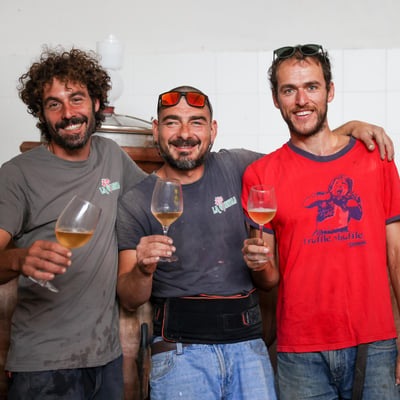
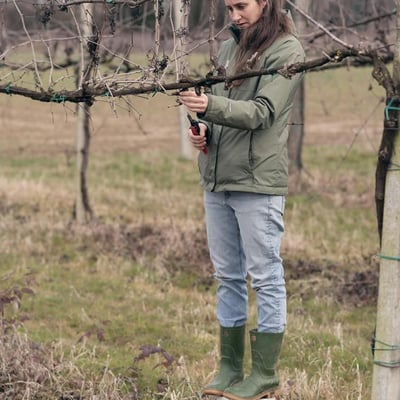
Faced with these concerns, some in the wine industry are already exploring alternatives. The natural wine movement, along with organic and biodynamic viticulture, shows that it is possible to grow grapes without synthetic chemicals.
These approaches respect both neighbors and the land: mechanical soil work, cover crops, biodiversity, plant-based preparations, and the use of copper and sulfur only in reduced doses when necessary. By eliminating chemical pesticides, these winemakers remove the root cause of residents’ exposure.
While still a minority, these practices are gradually spreading, driven by growing environmental awareness. The PestiRiv study could accelerate this transition by providing the scientific support needed for a paradigm shift.
PestiRiv’s data is now publicly available for the scientific community, paving the way for further research on the long-term effects of exposure to vineyard pesticides.