May 21, 2026 - 1 comments
Cadmium and Pesticides: What Fifty Years of Agriculture Left Behind in the Soil
There’s a question almost nobody asks when opening a bottle. What still remains today in the soils where this wine was grown?
Not an accusatory question. A question of memory. Because soils have one, and across the European countryside that memory carries the imprint of decisions made half a century ago.
The 1970s: When Everything Changed
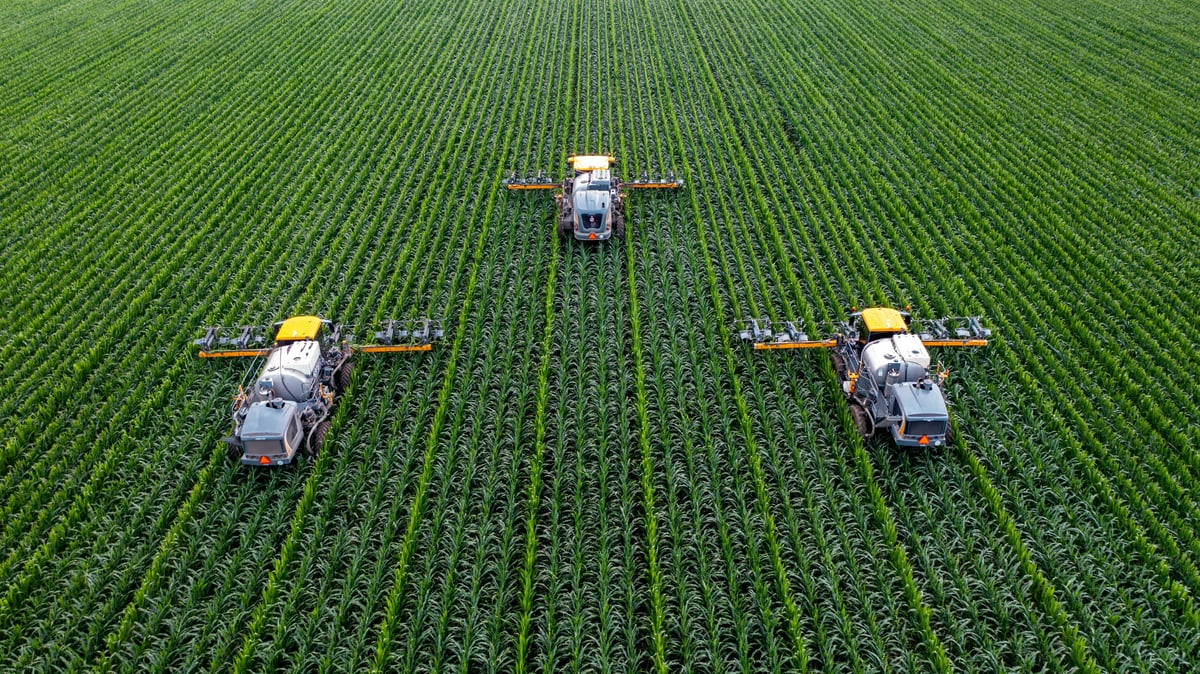
After the war, Western agriculture had a clear objective: produce more, produce fast, industrially, so shortages would never happen again. Postwar industrial agriculture answered that urgency. Massive mechanization, varietal selection, nitrogen and phosphate fertilizers, synthetic pesticides: yields exploded. Within a few decades, Europe had become one of the world’s breadbaskets.
The model worked, heavily supported by the Common Agricultural Policy. It fed entire populations. But it was built on an implicit assumption: that soils could absorb everything without long-term consequences. That assumption proved false.
The land kept producing. But it also began accumulating.
Cadmium: The Invisible Contaminant Settling In
It’s one of the most pressing agricultural issues today, and it deserves attention. Cadmium is a heavy metal naturally present in trace amounts in certain soils. The problem lies elsewhere: phosphate fertilizers, used massively for decades in conventional agriculture worldwide, contain cadmium impurities. Spread year after year across the same fields, they have slowly and continuously increased cadmium concentrations in agricultural soils.
Health agencies such as ANSES in France and EFSA at the European level have documented this link and now monitor cadmium as a priority contaminant in the food chain. Not because it kills overnight, but because its gradual accumulation in living organisms over time raises serious concerns.
This is what’s known as diffuse pollution. No accident, no visible disaster, no major spill. Just silent contamination, layer after layer, measured across generations.
One important clarification: organic farming is not completely exempt, but it is structurally less exposed. Several scientific studies, including a meta-analysis covering 343 publications, show cadmium concentrations averaging up to 48% lower in organic crops. The reason is straightforward: organic regulations impose far stricter limits on mineral phosphates, identified by ANSES as one of the primary contamination sources, and organic farmers use them sparingly, if at all.
It’s not a miracle solution. But it is a real structural difference.
What Conventional Agriculture Adds to the Soil
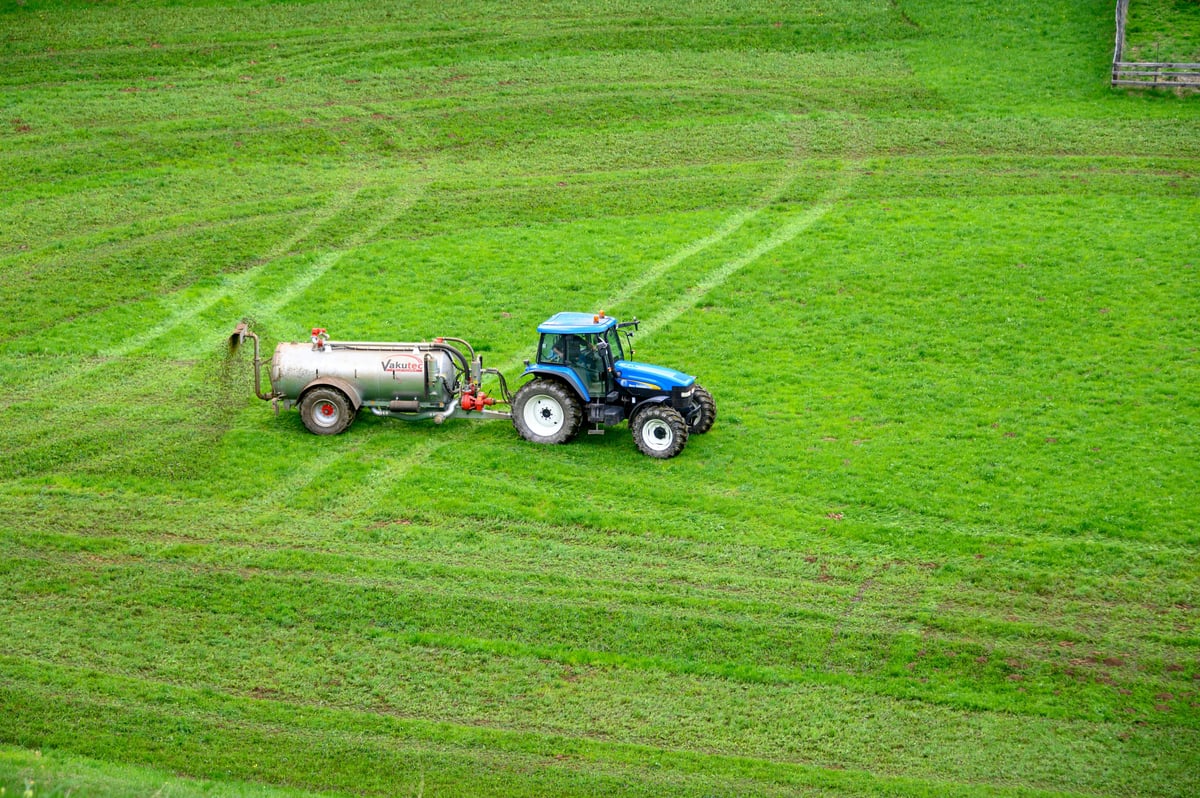
Beyond cadmium, the broader picture is even larger. Conventional agriculture relies on a chemical arsenal whose ecological consequences are now far better documented than they were when these products became widespread.
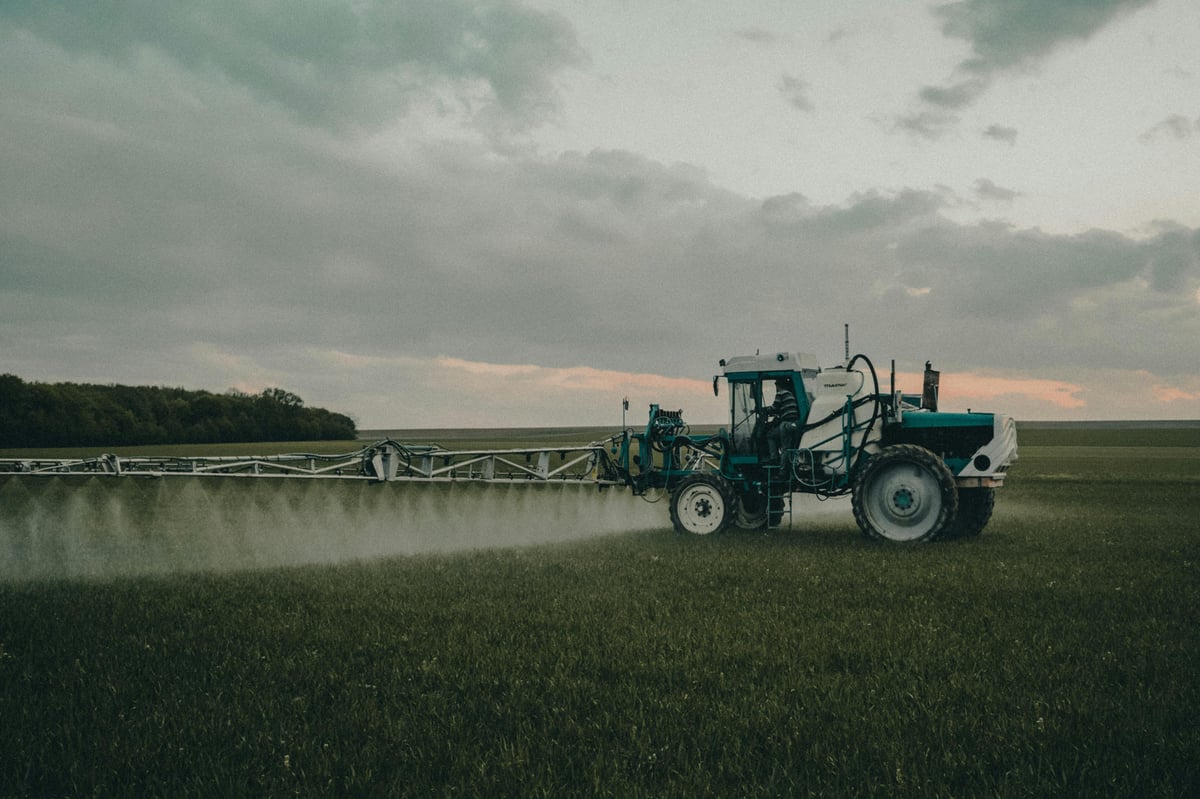
Herbicides, led by glyphosate, are used on a massive scale to control weeds and reduce labor costs. Their impact on soil biodiversity, earthworms, and the microorganisms that keep soils alive is increasingly studied across Europe and beyond. Synthetic fungicides and insecticides leave residues whose persistence varies depending on the molecule: some degrade quickly, others remain far longer.
The issue is not one isolated substance. It’s the combination, repetition, and duration. Decades of applications on the same soils create what agronomists call a cocktail effect: interactions between substances whose consequences we are only beginning to understand.
Vineyards: A Special Case
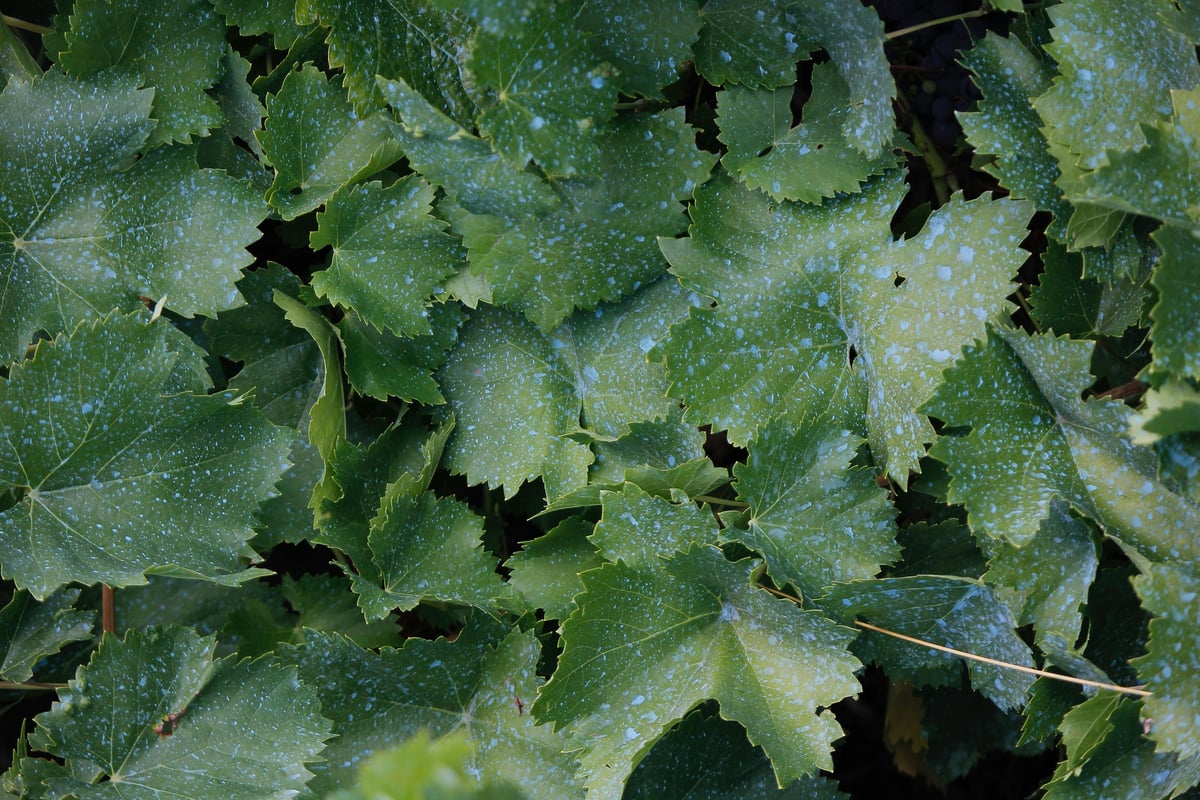
Within this broader landscape, conventional viticulture occupies a unique position. Across Europe, vineyards cover only around 3% of agricultural land, yet account for a disproportionate share of phytosanitary treatments. Depending on the country and the year, viticulture represents between 15 and 20% of fungicides used. This is one of the most documented findings reported by the European Environment Agency.
The reason is agronomic, not careless. Mildew, powdery mildew, and botrytis are fungal diseases capable of devastating an entire harvest after only a few days of rain. Vines are particularly vulnerable, and the economic pressure on winegrowers is very real, whether in Tuscany, Burgundy, Rioja, or the Douro Valley. Treatments are applied because many growers feel they cannot afford not to.
But the outcome remains the same: soils receiving large quantities of inputs for decades, on plots cultivated continuously for centuries in some cases. Over time, these repeated applications leave a lasting chemical imprint on vineyard soils.
What Eventually Ends Up in Water
Soils do not retain everything forever. What they absorb can eventually leave them.
Groundwater monitoring agencies across Europe and North America have documented pesticide residues in aquifers located beneath intensive farming areas. Wine regions regularly appear among the monitored zones. Contamination does not follow the logic of a single accident: it depends on soil permeability, rainfall intensity, groundwater depth, and the specific molecules involved.
In certain regions, these residues are now measurable in tap water. Not always above legal thresholds, but present nonetheless. Which raises a simple question: how far does soil memory extend?
There Are Still Choices
Faced with this reality, alternatives exist. They are not perfect, they do not solve everything, but they matter.
Eating local and organic food supports agricultural practices that reduce dependence on synthetic inputs. On an individual scale, it means reducing pressure on soils, biodiversity, and groundwater. It is not necessarily a militant act. It is simply coherence between what we understand and what we choose to eat. A meaningful gesture whether you are in Milan, London, or Lisbon.
Drinking natural wine means choosing growers who have made soil health a priority. Fewer treatments, greater attention to microbial life, and a form of viticulture built with the long term in mind. These natural winemakers rarely begin by speaking about their wines. They speak about their soils: their texture, their smell, the earthworms returning to them.
It is not a miracle solution. But it sends a signal across an entire agricultural system, and after everything we’ve just read, that signal matters.
Agricultural choices leave traces. Fortunately, ours do too.