July 08, 2025 - 5 comments
In search of naturally fermented non-alcoholic beverages
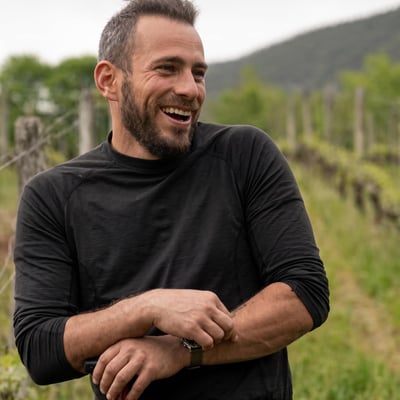
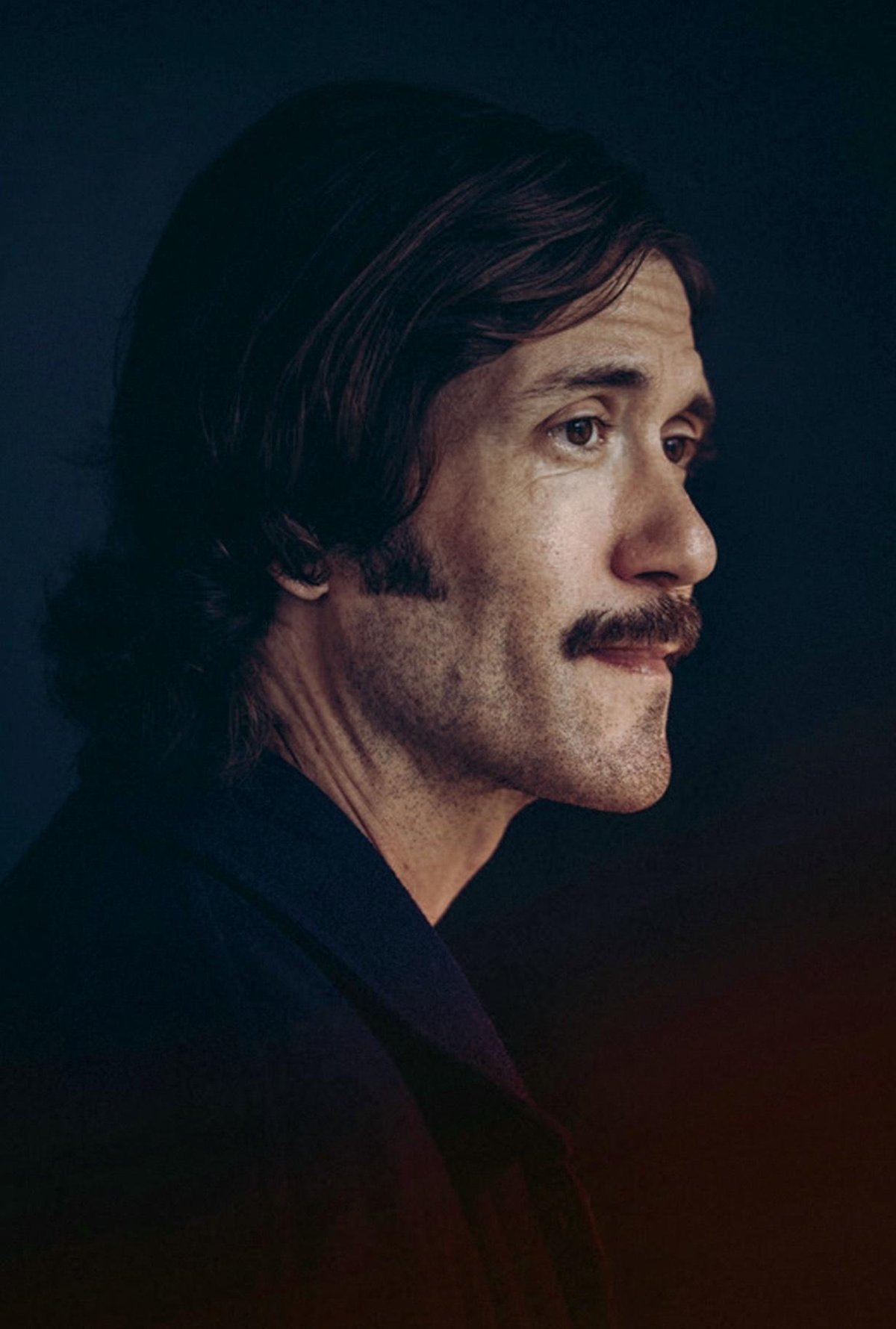
We made a fascinating interview with Benoît d'Onofrio !
Available (only in French) on:
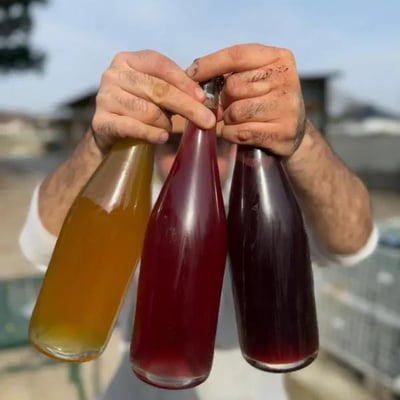
Going against the grain of the soft drink and dealcoholized wine industry, sommelier Benoît d’Onofrio proposes another path: that of “sobrevage” (sober beverages). Inspired by natural wine, he creates living, non-alcoholic drinks that are naturally fermented, without additives, added sugar, or artificial flavors. This finally offers a high-quality, natural alternative for those seeking an alcohol-free experience.
In this episode, Benoît d’Onofrio shares his journey as an unconventional sommelier and explains why he chose natural fermentation to create original, complex beverages capable of accompanying a meal to the same standards as wine.
A conversation that challenges conventions and opens new perspectives: If I can summarize what I do in one commitment, it’s ultimately building bridges between the ways of working in the natural wine world and the non-alcoholic beverage world.
A Journey Through Sommellerie: From Wine Merchant to Sober Sommelier
My name is Benoît d’Onofrio, and I’m a sober sommelier, meaning a sommelier who gives space to all beverages, regardless of their alcohol content. I first stepped into the world of hospitality in 2011, as a wine merchant at La Closerie des Lilas, and from that moment on, I never looked back. It was there that I began developing my knowledge of wine, and of drinks more broadly.
That was followed by a role at La Cave de Belleville, this time as a cavist, before I returned to sommellerie to lead the beverage selection and service, wines and other liquids, at the restaurant Datcha, which I helped open alongside chef Alexia Duchêne. After Datcha came two residencies with Manon Fleury, first at Le Perchoir Ménilmontant, and then at the Chalet des Îles, nestled in the heart of the Bois de Vincennes.
Today, I’ve been working independently for two and a half years, creating my own beverages and collaborating with chefs and restaurateurs who invite me to pair their meals with these drinks. I was lucky enough to start my career under the guidance of the head sommelier at La Closerie des Lilas, who introduced me to wine, spirits, and beer. From early on, he emphasized the importance of embracing all types of beverages. With that principle in mind from the very beginning, I gradually came to feel, "lost", might be too strong a word, but I did feel, a certain discomfort with the gaps in my knowledge when it came to drinks outside the traditional world of wine and alcohol.
A More Inclusive Service
What struck me as increasingly problematic over the course of my career was realizing how sommellerie remained, for the most part, confined to the service of wine alone. Aside from a few eccentric sommeliers, who might focus on sake, beer, or occasionally incorporate non-wine beverages into pairings, it was rare to see a broader approach. I often sensed a degree of confusion or even discomfort from guests when I, as a sommelier, dared to step outside the bounds of wine service.
I wanted to give more space in my work to all types of beverages, and to strike a genuine balance between serving alcoholic and non-alcoholic drinks, ultimately to ensure that no one dining at the restaurant felt left out. I mean that specifically from the guests' perspective. After eight years in the profession, I’d reached a point where I no longer wanted anyone to feel like a second-class consumer.
When I began expressing my intention to highlight drinks beyond the usual alcoholic offerings found on restaurant menus, it was generally accepted, largely because I committed to a serious and thoughtful selection process. A selection that I wanted to hold to the same high standards, whether the drinks contained alcohol or not. At first, I felt content with that approach.
One evening at Datcha, I introduced myself to a table and one of the guests asked if I had anything outside of what was listed. I replied no, everything I offered was on the menu. A bit taken aback, I added, perhaps defensively, that there were, after all, two full pages dedicated to non-alcoholic beverages in a cellar book that spanned several dozen pages, mostly filled with wines. When I told her there was nothing else, the woman responded that she would simply share the wine bottle with the rest of the table. That moment hit me hard. I felt I had failed her, I felt inconsiderate. And to make matters worse, I had tried to justify myself by pointing out the effort I had put into curating those two pages.
But almost instantly, like a snap of the fingers, everything became clearer. I suddenly realized I wasn’t actually doing my job as well as I thought. I began to wonder why this selection, which I had put together with such care, still fell short for this guest, and probably for many others who had dined with us. The truth was undeniable: the non-alcoholic drinks simply weren’t being ordered.
Over the course of that service, I came to understand why. All the drinks I was offering were either overly sweet, dull, not necessarily in taste, but in the way they resonated. They evoked moments that had nothing to do with celebration. Even if sodas, fruit juices, coffee, or tea can be interesting in terms of flavor, they no longer feel at home in the convivial, festive atmosphere of a restaurant. That’s when it hit me: I’d have to do things differently. Maybe I’d even have to create drinks that didn’t yet exist.
The Beginnings of Sobrevages
This new chapter began with my meeting Manon Fleury in the summer of 2022. During our interview, I made it clear that from that point on, I would only continue working as a sommelier if I could offer a non-alcoholic beverage selection, one that made it unmistakably clear it was just as important to me as my alcoholic pairings. More than that, I wouldn’t consider myself a sommelier unless I was also creating original drinks capable of offering meaningful, alcohol-free pairings throughout an entire meal.
To my surprise, Manon Fleury immediately said yes, without hesitation, without debate. She told me it was something she had been thinking about herself for months, maybe even years. In that moment, it was clear we were aligned. We had found the right partnership, and the conversation moved forward naturally. I went on to create a seven-course pairing, entirely alcohol-free. I had no formal expertise at the time, but I wasn’t trying to impress anyone with illusions. I genuinely didn’t know if it would work. I didn’t know what I was capable of yet.
Applying Winemaking Techniques to Non-Alcoholic Beverages
I was stepping into uncharted territory, a blank page. It felt like an intuitive process. At least, that’s what I thought. I told myself it was amazing. When I started pressing fruit by hand, I thought, this is it. This is what I should be doing. For a moment, just a few seconds really, I felt like something meaningful was happening, like I was finally moving things forward.
It turns out, what I was doing had a name: in the wine world, it’s called foulage crushing the grapes by hand. Not just in winemaking, of course, but that was the first time I truly borrowed a method from that tradition. A few months later, the same thing happened when I began experimenting with fermentation. I was speaking with a winemaker friend and told her, I’m doing something incredible. I’m collecting the leftover material from my fermented drinks, still in the process of fermenting, to cultivate and help start new fermentations. She replied, “But you’re just making a pied de cuve.” And she was right.
Those are just two examples, but the past two and a half years have been full of moments like that. I haven’t invented anything. It’s all been reuse, borrowing, bridging one artisanal world into another. What I’ve done is simply adapt techniques I’d only ever seen applied to alcoholic beverages and rework them for non-alcoholic creations. And in doing so, I’ve realized something else: apart from three or four now-trendy staples, kombucha, ginger beer, and kefir, there’s a kind of creative void in the non-alcoholic space. These drinks are relatively recent additions to our conversations, and beyond them, there’s still a real uncertainty. We don’t really know what else to do.
So, What Exactly Is a Natural Beverage?
Even today, it seems like every week a new brand of kombucha, kefir, or something similar hits the market, but often, these are little more than sodas. A good drink, first and foremost, is one that meets our desire in the moment. There are as many good drinks as there are tasting desires. If I’m in the mood for something light, and someone serves me an intensely extracted Syrah from the Southern Rhône, I won’t enjoy it. On the other hand, if I’m given a wine made from Trousseau in the Jura, gently extracted, aiming to convey the purest expression of the grape, that will satisfy me completely. That’s what I’ll consider a good drink.
Now, when we talk about a natural beverage, that means something else entirely. It starts with ingredients grown in a responsible, virtuous way, ideally according to organic standards, but more importantly with a commitment to doing good for the environment, the plants, and the animals. But that’s just the first step. There’s also a responsibility in how we transform those raw ingredients. Once we agree that a beverage should come from clean, healthy sources, put simply, it must also be processed in a way that respects both the product and the people who drink it.
That means: no additives. No unnecessary ingredients. No added sugar, salt, artificial flavors, taste enhancers, or gums to thicken the texture. A natural beverage, in my view, is made only from what appears on its label. If I say I’m making wine, then wine should be made from grapes. That’s it. Just grapes. And when those grapes are grown without chemical treatments, the native yeasts and bacteria remain intact. That allows fermentation to happen naturally, using only what’s already present on the grape’s skin. That’s the principle I follow: building a bridge between natural winemaking methods and the world of non-alcoholic beverages.
I don’t claim to be a pioneer in alcohol-free drinks. But, to my great surprise, I do seem to be one of the very few, if not the only one, committed to making fermented beverages without the use of lab-grown yeasts. I deliberately avoid using generic commercial strains, because ultimately, that’s a form of eugenics: selecting and propagating certain yeast and bacterial profiles at the expense of others, in a controlled laboratory environment.
But when it comes to natural drinks, the goal should be to let the product express its origin, its terroir. Using additives or lab-selected cultures to override or redirect that expression is counterproductive. These ingredients often have so much to say, provided we work in a way that lets them speak. Fermentation, in that sense, is a kind of amplifier, a resonating chamber for the plant to tell its story. That’s what it’s really for.
What Is a Sobrevage?
The drinks I create as a sobrelier are what I call sobrevages hexagonaux. It’s a playful nod to the “Vin de France” designation, signaling that these are beverages made entirely from ingredients sourced across the French hexagon. That said, I prioritize plants grown in the Île-de-France region. There are only a few exceptions, mainly rice and citrus, which I source from outside the region. The rice comes from the Camargue, while the citrus fruits come either from the Var or the Pyrénées-Orientales.
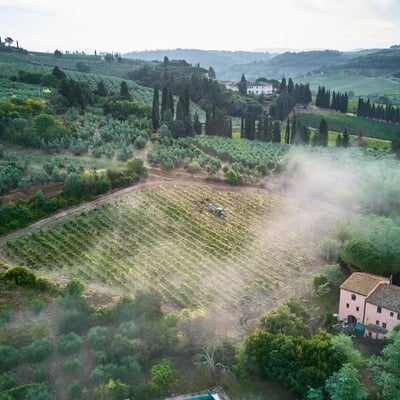
Everything else comes from local foraging around Paris. I work primarily with a market gardener based in Seine-et-Marne. At certain times of the year, I’ve even been able to create single-parcel cuvées using only produce from that specific farm. There is a clear intention to tighten the radius from which I source ingredients for my sobrevages, with the ultimate goal of growing my own crops. That will naturally lead to a different production model. Right now, I work in small volumes and produce regularly, depending on what’s in season. But once I begin cultivating my own land, I’ll need to adapt the process, likely producing larger quantities at particular times of the year to sustain availability throughout the seasons.
Each bottle is given a minimum durability date of one year. That date doesn’t reflect a health or safety risk beyond it, but rather a commitment: that the beverage will still have something to say after a year in the bottle. Since September 2023, I’ve set aside six bottles per cuvée, 24 in total over four months of production, and between January and June, I began re-tasting them month by month to monitor their evolution.
What I’ve observed is that the drinks become more compelling over time. When I revisit my tasting notes and compare them month to month, I see the same general structure, but with more pronounced edges and subtleties that emerge and deepen. The beverages evolve, thanks to the mellowing of aromatics, yes, but also to the trace oxygen left in the bottle. In short, they benefit from aging. For restaurants, I currently work with just one establishment: Alain Ducasse at Le Meurice. I produce bespoke beverages there for each new seasonal menu. I’ve had to decline several requests that deeply honor me, and that I hope to accept in the future. But for now, my production volume is too limited, and I give priority to individuals and private customers.
That said, I’m actively working to increase my capacity. I’m looking for a new space. My top priority is to scale up, modestly. I plan to go from 50 liters per cuvée to around 200 liters, all while maintaining the same level of manual, hands-on commitment.
Shifting Consumption Habits, Not Just a Passing Trend
What we’ve seen emerging over the past few years, even among those who still enjoy wine and don’t wish to cut ties with alcohol altogether, is a growing desire to drink less alcohol by volume. In the world of natural wine especially, this shift has been palpable: wines now often hover around 10–11% ABV. It’s surprising, in the best way, to come across a Sémillon or Malbec that lands at 10%. And I find that deeply encouraging, it means that more and more people are embracing the idea of drinking not only better, in terms of quality, but also more mindfully. Drinking "healthier" doesn’t just refer to the quality of the ingredients, it also means drinking in a way that doesn't cause harm. Lighter alcohol means waking up the next day feeling better after a well-lubricated meal.
We see this movement too among cider producers, like Isabelle Perrault, who’s been experimenting with infusing her ciders with botanicals beyond apples and pears. Or at the Domaine des Grottes, which has made real strides in the world of non-alcoholic beverages. Their Antidote is often cited as a trailblazer: a complex, thoughtful alcohol-free drink made from natural ingredients, combining grape juice and aromatic plants. What’s remarkable about both Antidote and Antilope from Domaine des Grottes is that they don’t rely on fermentation to create complexity. Instead, they achieve layered aromatic expression through masterful blending, constructing flavors and textures that echo what fermentation might offer, but through entirely different means.
What encourages me most is that all of this reflects a rising, openly embraced demand to drink differently, to choose alternatives to what we've long known. And for the farmers behind most alcoholic beverages, this shift opens up new opportunities to showcase the full spectrum of their biodiversity, plants over animals. It’s part of a broader reckoning with the constraints posed by climate change and resource depletion. Think of winemakers, for instance: many grape varieties that once thrived in certain regions are now struggling under new climate pressures. These producers are now exploring other possibilities, and that feels like a hopeful, necessary evolution.