5 6 9978 KM
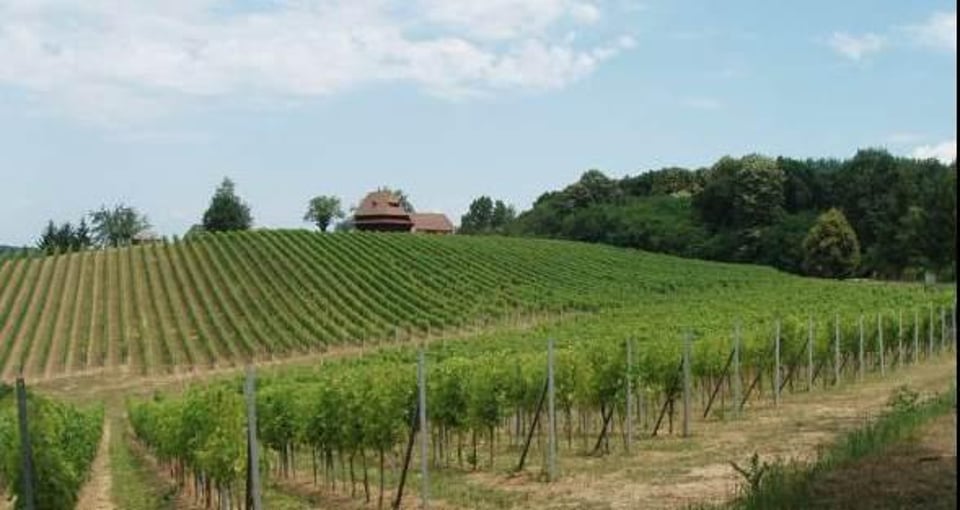
Ivan started in the winemaking business when he was just 18 years old, in 2003. He went into oenology school in Istria and that same year, with the support of his family, he bought 4 hectares of pristine land. After some clearing and deforesting in 2005, he planted 3 hectares of vineyards with a total of 18,000 vines in one of the finest sites in the Moslavina region. Grape varieties include Škrlet, an autochthon white variety only grown in Moslavina. There is less than 100 hectares planted in the entire world. Other varieties are Chardonnay, Zweigelt, Frankovka and Pinot noir. Their philosophy of viticulture is based on a maximum natural approach – so they farm their vineyards organically, encourage small yields with the use of only minimum quantities of copper and sulfur for fungus protection, without the use of any synthetic pesticides, herbicides, or insecticides and a lot of manual work. They do not use any kind of mineral or foliar fertilizers – only organic fertilizers, humus, and green manuring when possible. The winemaking is based exclusively on the natural quality of the grapes with respect to the terroir and vintage. There is little to no intervention with the grapes, must, or wine – no added yeasts, enzymes or any other enological additives or preparations. No fining, filtering, and the use of sulfur is down to a minimum. With this kind of philosophy and approach, they want to make true, live, and terroir-driven wines which showcase the specific and unique characteristics of Moslavina’s geography, variety, and climate.
CROATIAN NATURAL WINEMAKER STORIES, by Šimun Župarić
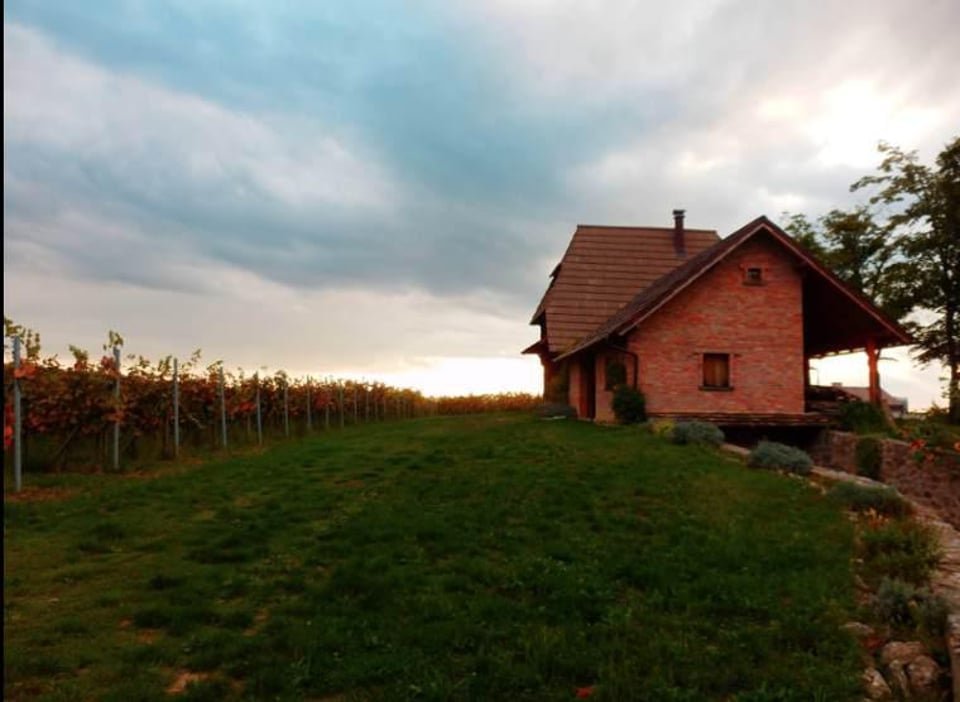
"Reaching Ivan Kosovec, Moslavina’s natural winemaker, means taking a road that is only occasionally paved, climbing towards the top of Popovača, to an old wooden house built in 1835. It is one of those monumental timber houses of Austro-Hungarian architecture that still seem to bear traces of former power, although, as Kosovec says, no one can say with certainty who they originally belonged to. Yet behind its beauty, the calmness of the house and the natural harmony of the whole estate, lies an enormous amount of work: in the early 2000s, new vineyards had to be planted, almost the entire house restored, and a cellar dug five metres into the ground beneath it; a cellar whose steady temperature is maintained not by refrigeration technology but by the earth itself. At the time, the young Ivan Kosovec carried out most of that work himself, with the help of his family.
Kosovec had no family infrastructure to rely on, no inherited winery waiting to be taken over, no one behind him to give him a push. After finishing his studies, he decided to buy land and start from scratch, with an old house and three hectares of vines, later expanded to around four. He had a clear idea: he would not make wines that were merely correct, but wines that reflected the place they came from. He is a trained oenological engineer, a man who learned about Malvazija during his studies but made his name with Škrlet. Before he had his own cellar, he took his grapes to Marko Miklaužić for vinification; only when he was finally able to work entirely on his own terms does he consider his winery to have truly begun.
That choice quickly proved more expensive and more difficult than any sensible person might wish for. Hail devastated his vineyards in two consecutive years: completely in 2015 and almost completely in 2016. That is why 2017, when he finally had grapes to harvest again, was far more than a good vintage. It was the year in which he had to show what he truly wanted to achieve with Škrlet. This year, hail spared him more than some sites around Kutina, where many winemakers lost their harvests, although in this abnormally hot season he is currently concerned about acidity.
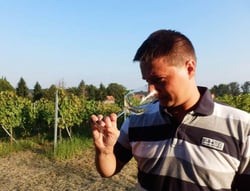
From the attic terrace, where summer heat can be oppressive, the view stretches across his vineyards. It is not a postcard scene; it is a view that immediately reveals the scale of one man’s work. You see someone who lives with these vines, who did not plant them merely to make the landscape look attractive. With winemakers, it is always worth looking at their hands. Kosovec’s palms leave no room for doubt: worn down and weathered, yet still full of life.
Today he cultivates around four hectares, roughly half planted with white varieties and half with red. At the centre is, naturally, Škrlet, alongside some Chardonnay; the reds include Zweigelt, Blaufränkisch and Pinot Noir. Part of the Chardonnay also goes into a pét-nat with Pinot Noir, and even this small range of varieties shows that Kosovec is not a man of a single label, although most people will rightly remember him above all for Škrlet.
Škrlet is an indigenous Moslavina variety, and its old name, Ovnek žuti, is more than a local curiosity. The name is connected to the appearance of the bunch, which local interpretation says resembles a ram’s head or the shape of ram’s horns. More important than the etymology, however, is the fact that Kosovec was one of the first winemakers to take Škrlet truly seriously—as a variety capable of delivering much more than a competent local white wine.
From the start, there was never any question that he would farm his vineyards as cleanly as possible. He says that from day one he has worked on an organic basis, without artificial fertilisers, herbicides, insecticides or pesticides, using organic fertiliser only exceptionally, when vines need to recover after hail or frost. He was doing this long before natural wine became a fashionable phrase in Croatia, and he did not arrive there through marketing, but through taste and the conviction that wine must remain connected to the soil it comes from.
In the early and mid-2000s, naturalness was neither a market advantage nor a safe business decision; it was an added layer of risk in a profession already full of risk. Planting Škrlet at that time, restoring the house, building the cellar and doing everything without shortcuts meant choosing a slower, harder path. Kosovec looks for freshness, tension and moderate alcohol in wine, wines with structure but without heaviness. This is especially important with Škrlet, a variety that in his hands gains texture and seriousness even at the entry level.
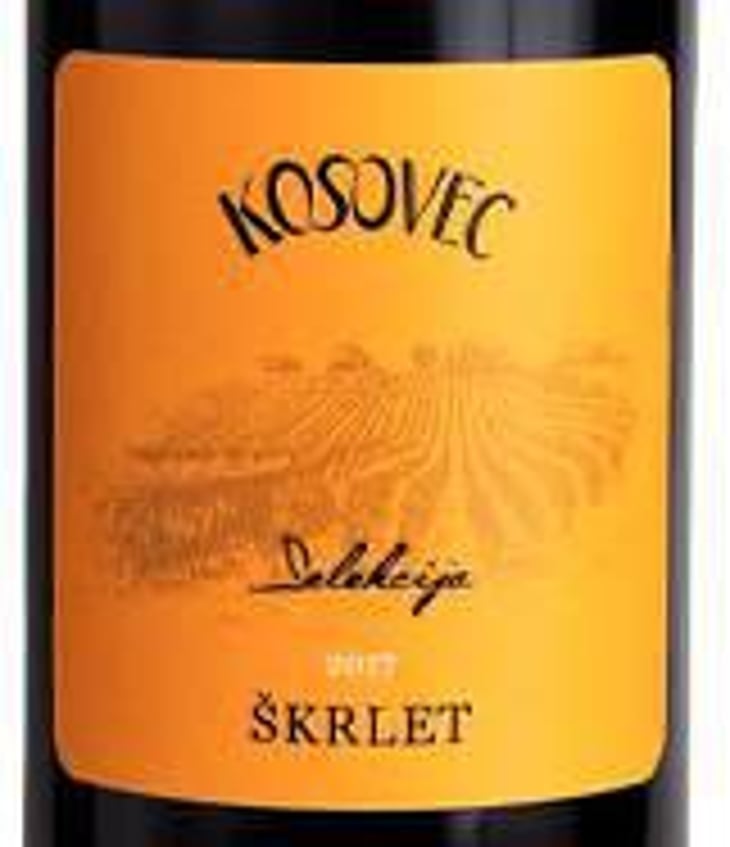
His Škrlet comes in several versions. The basic Škrlet has for years ranked among Croatia’s finest fresh interpretations of the variety. Škrlet Ovnek is more serious, yet still delicate and only lightly macerated, while Škrlet Selekcija goes further and has long stood among Croatia’s cult amber wines. He does not make Selekcija every year, only in better vintages; the grapes come from the higher part of the parcel, where the soil is better and ripening comes earlier. In the 2019 vintage, it fermented and macerated for one month in a large 3,300-litre wooden cask, with manual punch-downs and no temperature control, before spending another two years ageing in wood.
Škrlet Selekcija is one of Croatia’s first genuinely cult orange wines. What makes it special is not merely its pioneering role, but the fact that it has remained a delicate, almost intoxicatingly graceful Škrlet, a wine in which maceration does not crush but gathers everything together. It needs time to open in the glass, but when it does, it reveals Škrlet’s subtle and unexpected sweetness, a sweetness that almost mocks the rough name Ovnek, alongside orange peel, dried herbs, delicate soft tannins and a finish that simply does not fade. It is a wine that, once tasted, cannot be forgotten.
The logic in his cellar is just as clear. He does not add sulphur before pressing, works with spontaneous fermentations, does not fine or filter, and adds sulphur only before bottling, usually at around 40 milligrams. This shows that his natural approach has nothing to do with neglect: such work requires very healthy grapes, a clean cellar and constant attention.
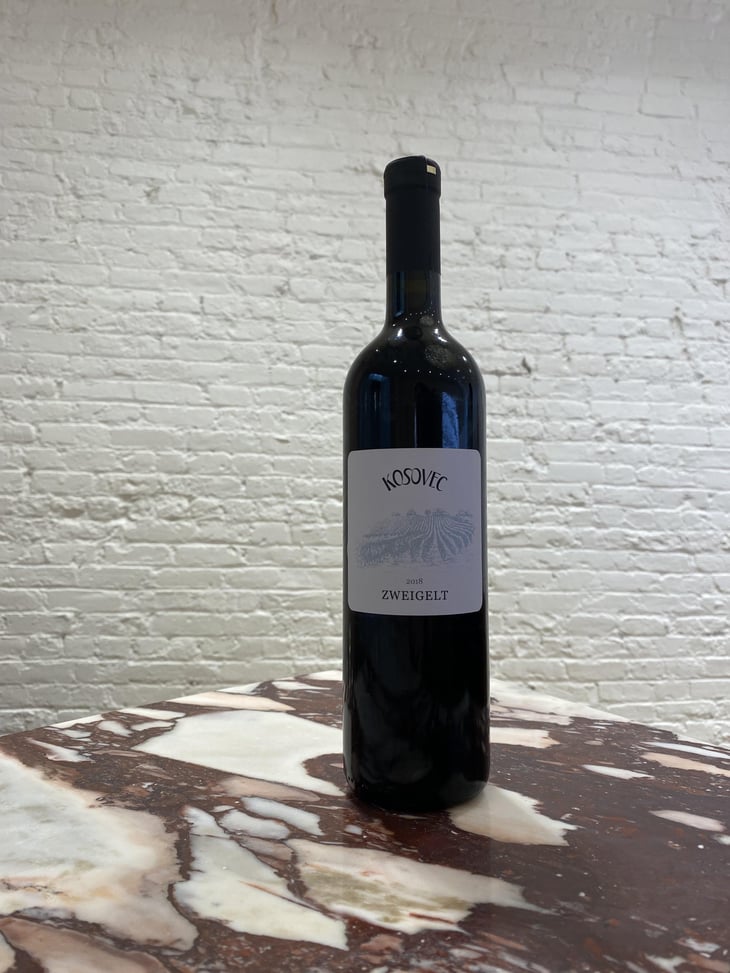
He also does not push for early harvesting, does not remove leaves around the grapes, and allows ripening to proceed slowly and in shade in order to preserve acidity and achieve more moderate alcohol levels. His wines therefore generally range from 12 to 13 percent alcohol. The new wines confirm this. The young Zweigelt is delicate, easy-drinking and made for hot summer days. The 2020 Pinot Noir Selekcija seems to have skipped primary aromas altogether and moved directly into tertiary territory: forest floor, wet leaves, earth. This site is perhaps a little too warm for the finesse of Pinot’s primary aromas, but judging by this vintage and Kosovec’s 2011 Pinot Noir—which, fifteen years later, is now a beautiful and powerful wine—this Selekcija should age very well.
Kosovec does not talk much about himself, but he clearly knows that he makes very good wines. He has been exporting to the United States since 2013 and was among the first Croatian natural winemakers to enter that market in a serious way. It is confirmation that wines from a small, independently run winery in Popovača can also persuade more demanding audiences than the domestic one.
The story of Ivan Kosovec is not just a story about excellent Škrlet, although his Škrlets are good enough that this alone would be significant. It is also the story of a man who, after finishing school, decided to buy an old house and a piece of land, dig a cellar five metres beneath it, restore the property, plant a vineyard and, from the very beginning, make wine in the only way he believed made sense. In Croatian winemaking, where shortcuts have never been in short supply, such persistence and consistency are genuinely rare. That is why Kosovec’s wines are worth drinking, but he is also worth getting to know: a self-effacing winemaker often says less than he knows, and over a glass of his wine, the importance of his story for Moslavina and for Croatia becomes clear."
Šimun Župarić is a Zagreb-born journalist at Dobra Hrana, covering restaurants, gastronomy, wine, and the people behind them. For the past two years, he has focused on Croatia’s growing natural wine scene, following it through events, winery visits, and articles on the work of small natural producers, and wider significance of natural wine for the Croatian public.
No rose wines at the moment.
No sparkling wines at the moment.
FIND THE EVENT YOU ATTEND

Sunday October 25
Paris
6492 KM

Saturday October 31 - Sunday November 01
Mulhouse
6872 KM

Saturday October 31 - Sunday November 01
Mulhouse
6872 KM

Sunday November 08 - Monday November 09
Turin
7047 KM

Wednesday September 23
LyonFrance
6814 KM
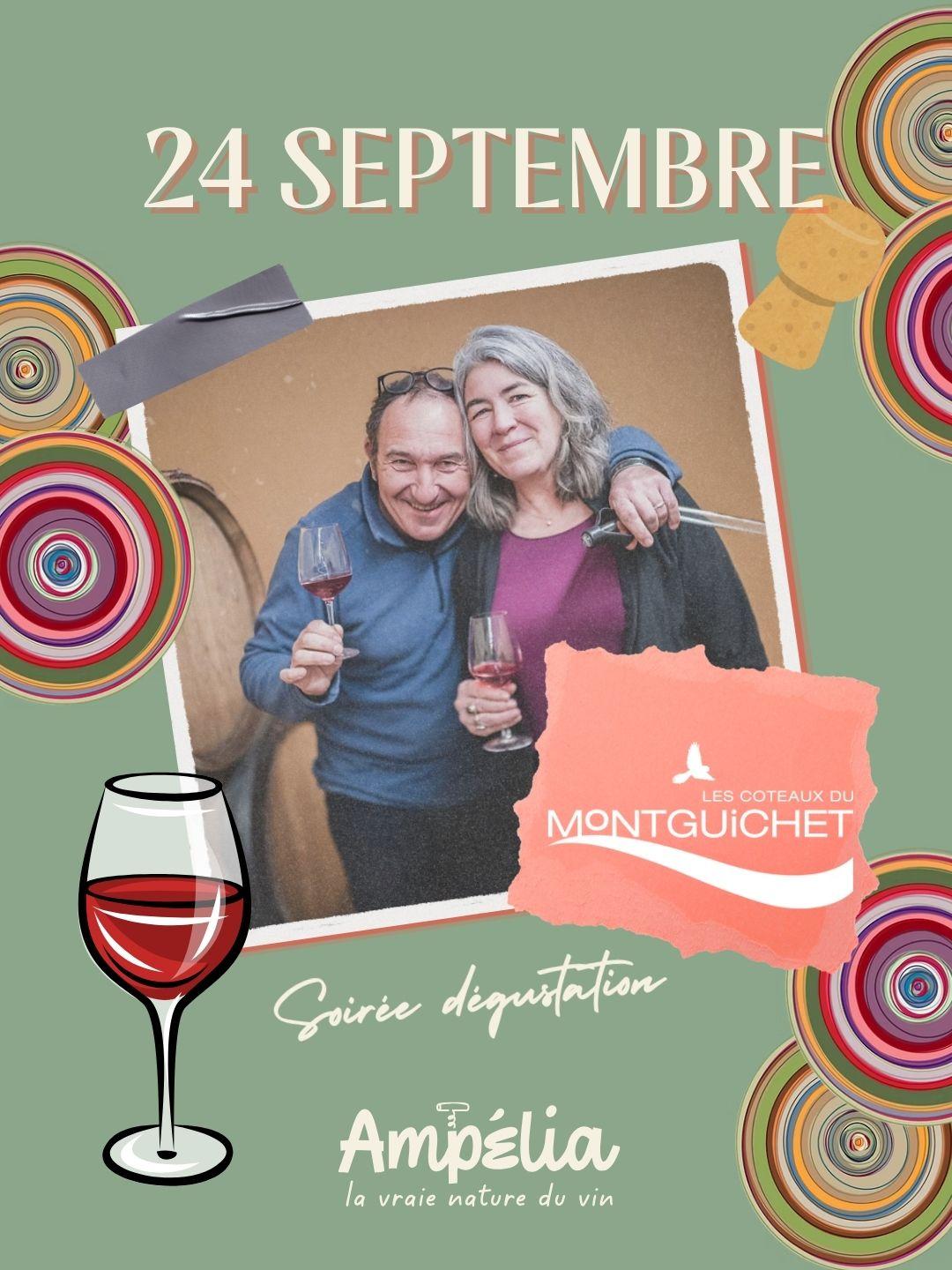
Thursday September 24
ParisFrance
6491 KM
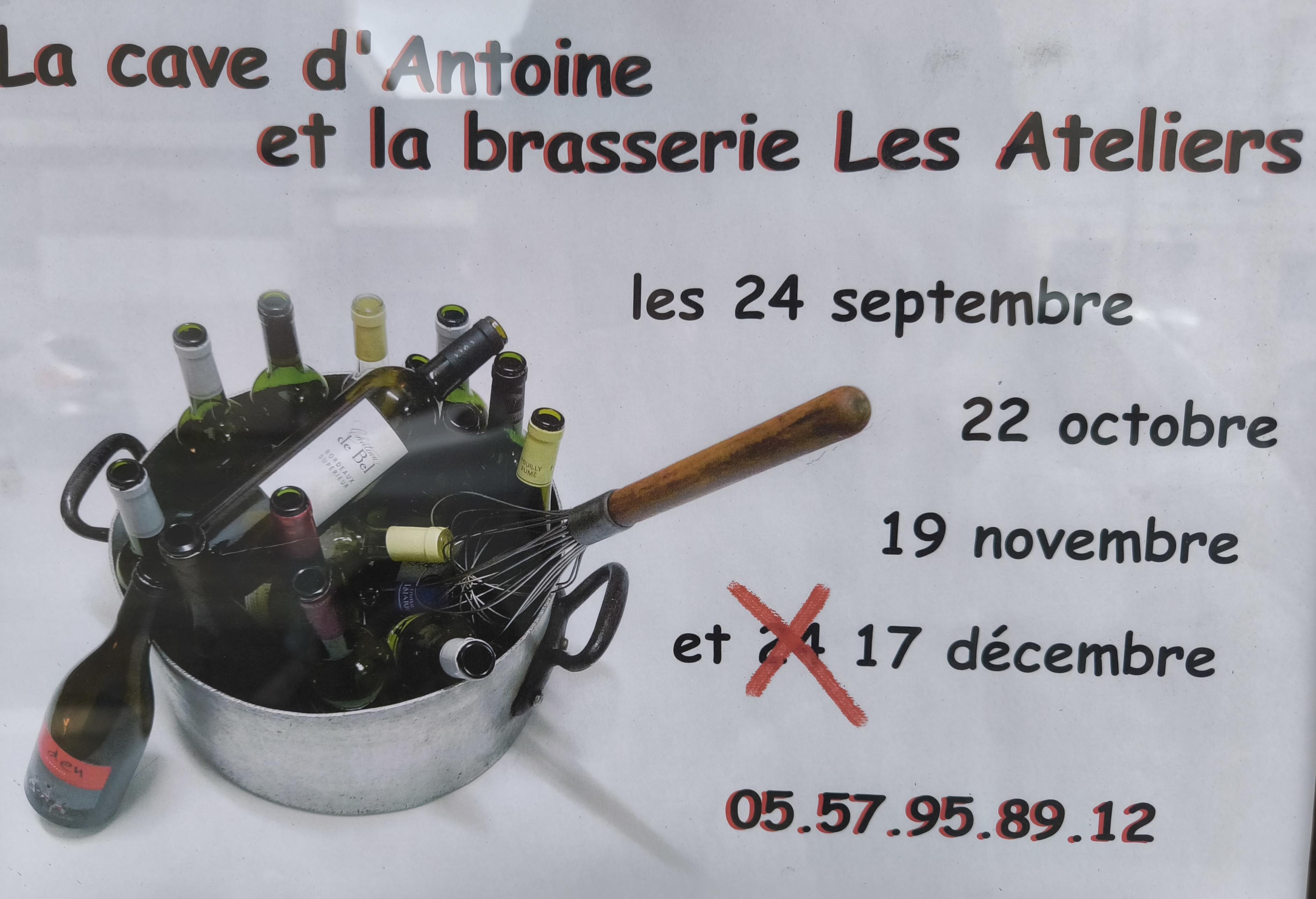
Thursday September 24
BordeauxFrance
6491 KM

Saturday September 26
AlmatyKazakhstan
10546 KM

Saturday September 26
Paris
6488 KM

Saturday September 26
Ierapetra Municipal UnitGreece
8946 KM
 Winemakers
 Restaurants
 Bars
Bars Wine Shops
 Accommodations
 Events