5 2 9671 KM
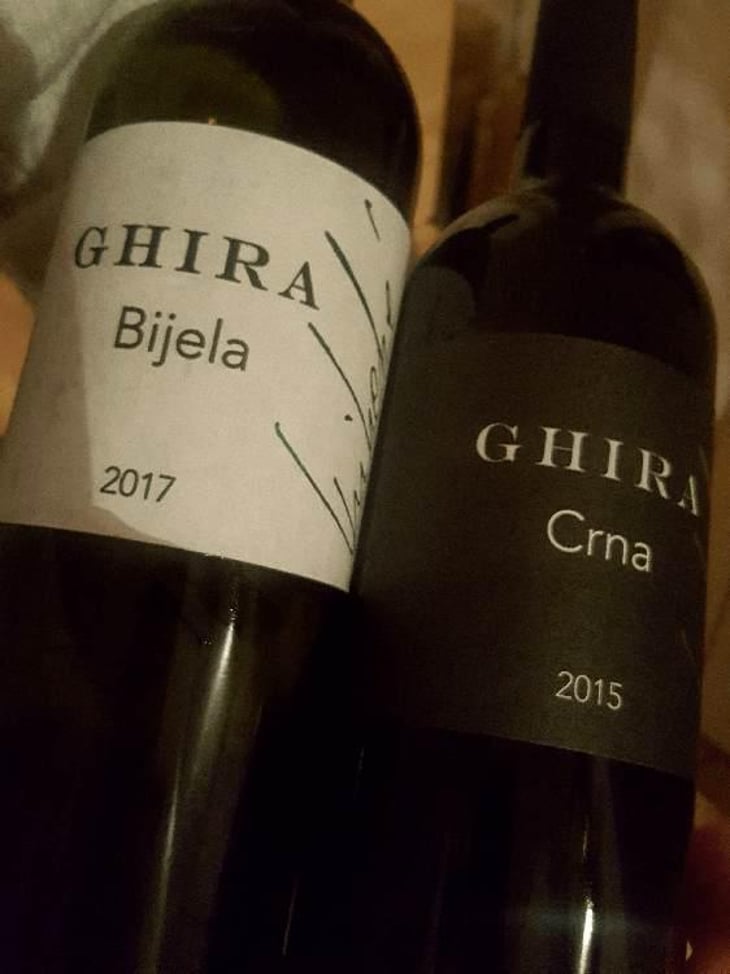
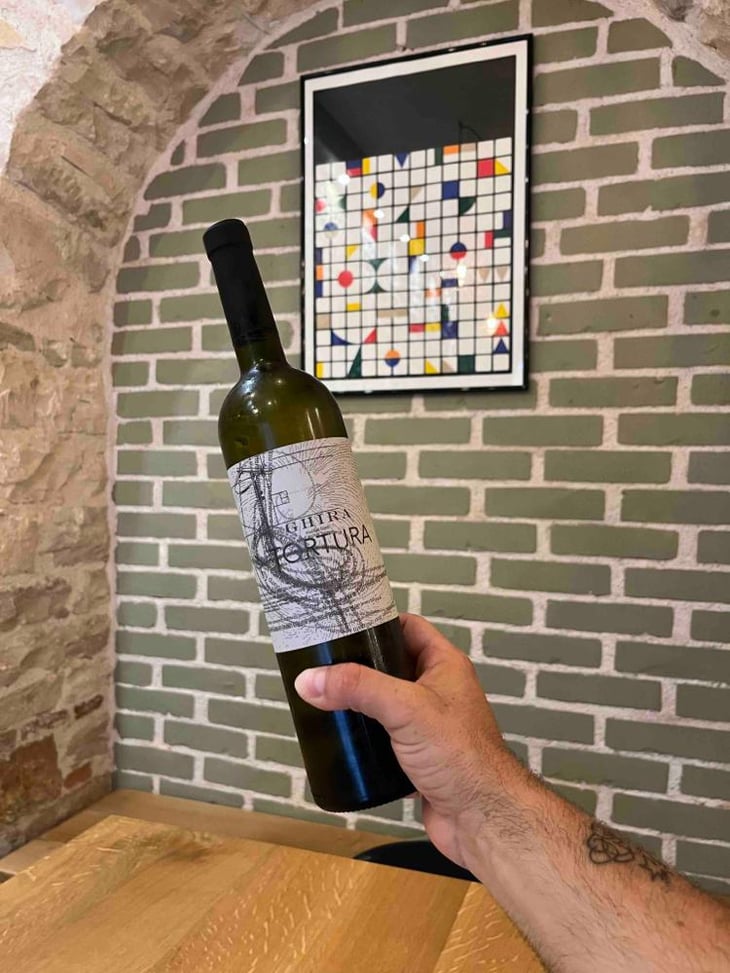
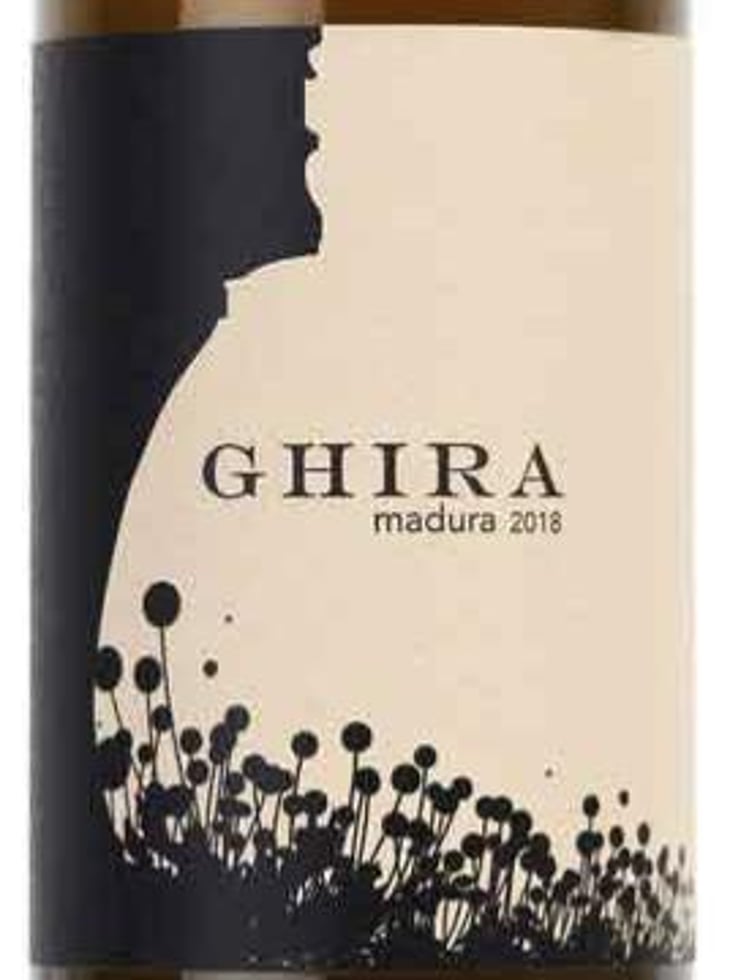
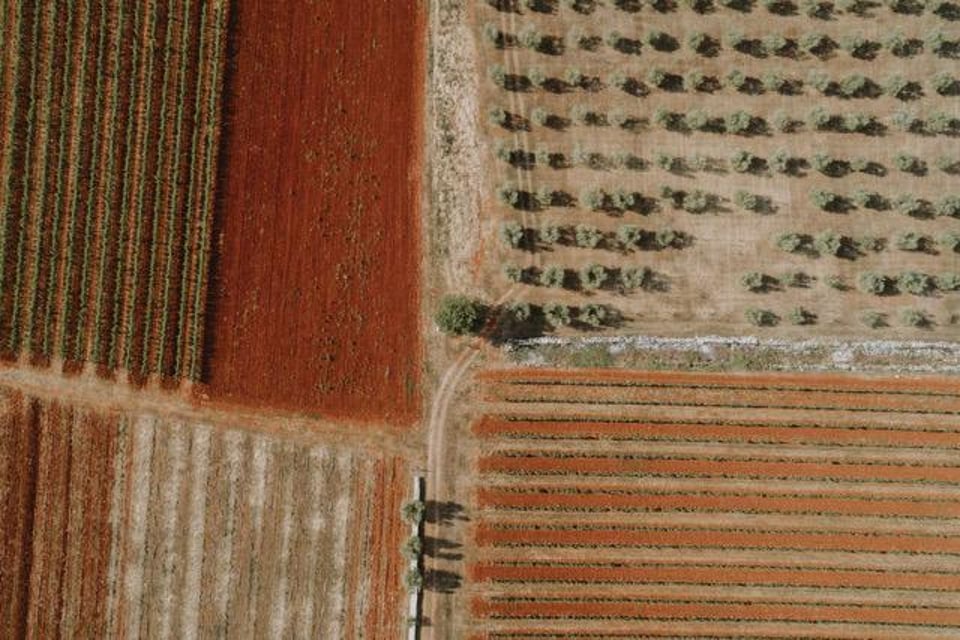
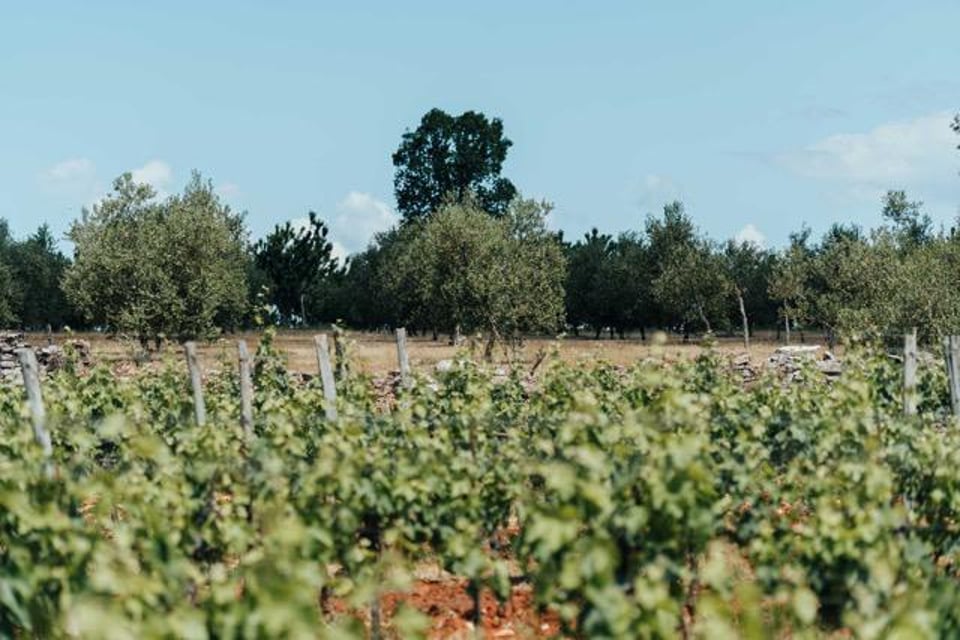
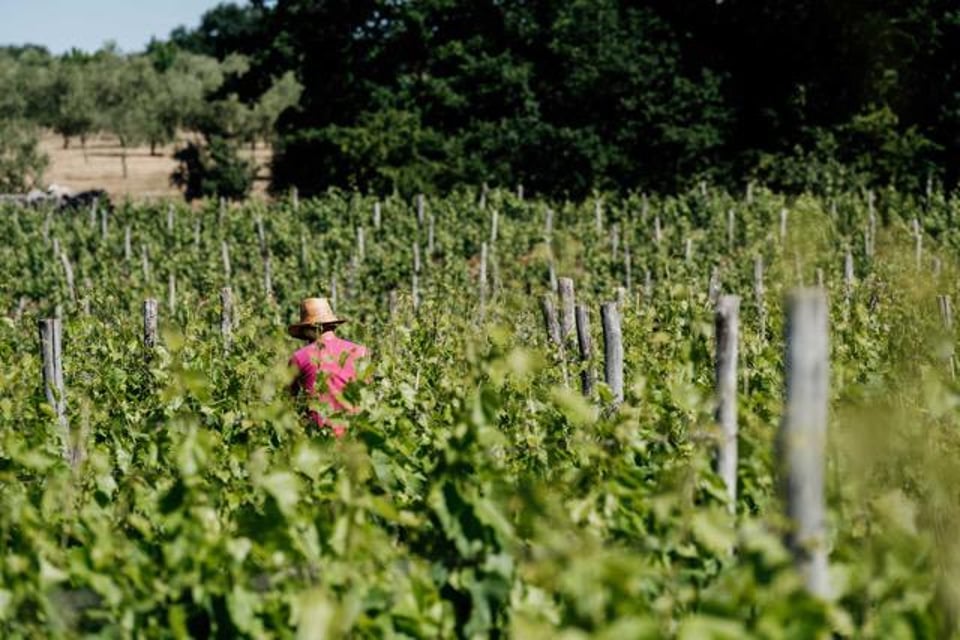
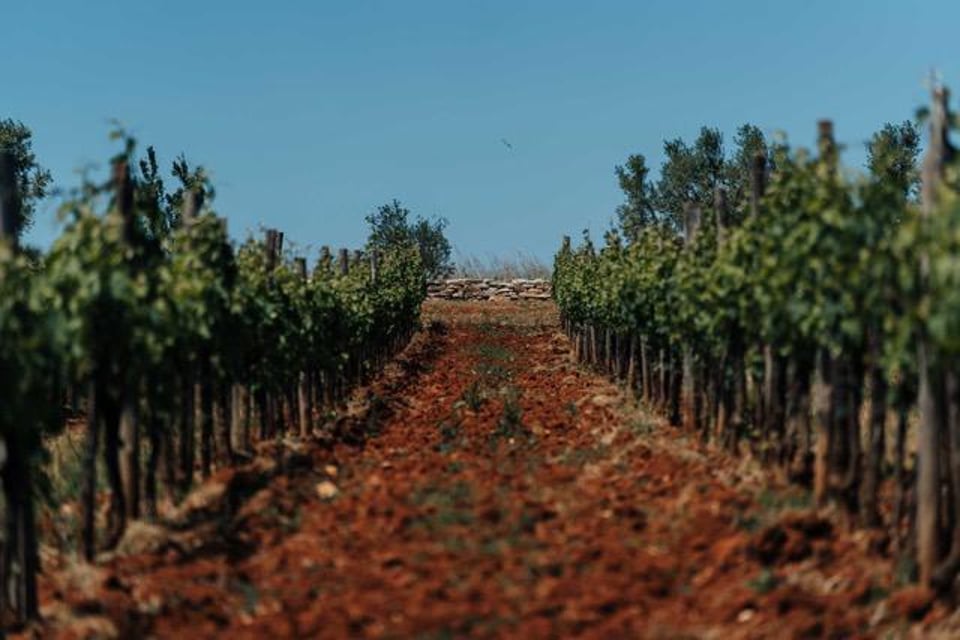
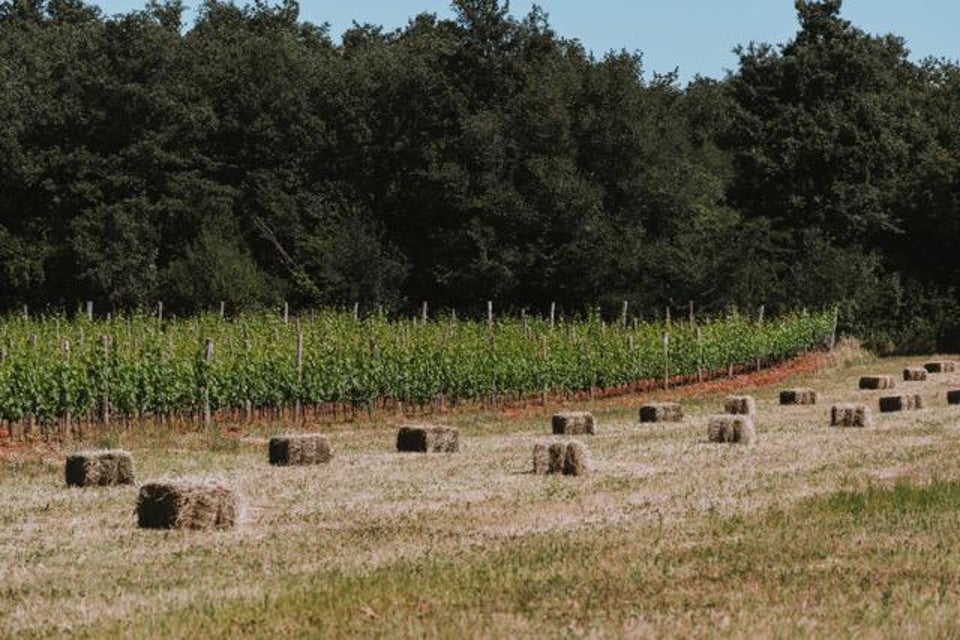
The soil is cultivated by hand and with machines for surface cultivation and in the vineyards surrounded by forest and native grasses, lacy phacelia is sown, which balances the soil and is an excellent pasture for bees. Harvesting is done by hand, in different months. Maceration is carried out in the wine cellar, sulphite intake is reduced, the wine is not filtered and its own yeast culture is grown using the Pied de Cuvée method. Since 2021, the wines of the Ghira winery have an ecological certificate, although the ecological approach was nurtured already ten years ago. Malvasia, white Istrian Muscat and Teran grow in the vineyards and in addition to vines, cherries, bees, olives and various grasses for bee grazing and horse nutrition are grown on the estate. It is the bees that play an important role in the biological diversity, but also in the ecological production of the Ghira winery, because not far from the vineyards, the owner of the winery, Damir Mihelić, has set up twenty beehives. In addition to using this honey for commercial purposes, Mihelić from the work of bees, in cooperation with the neighbouring family farm, also uses beeswax to seal the bottles in which Madura wine is filled. Also, at different locations of the estate, all vegetation mass created by pruning is composted. Four years ago, a biodynamic practice was introduced, through which preparations 500, 501 and 506 are used in smaller percentages for compost, and all work in the cellar is carried out according to the biodynamic calendar.
CROATIAN NATURAL WINEMAKER STORIES, by Šimun Župarić
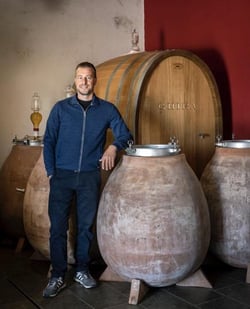
"Recently, while travelling through Istria, we visited a small winery. The family behind it has been making wine for more than thirty years, yet over time they have reduced their vineyard area, yields and production. You rarely hear that. Late that evening, on the way home, our minds kept returning to what we had heard. It is not often that a meeting with a winemaker sparks thoughts that reach beyond viticulture and agriculture. When someone speaks about wine but is really speaking about life, the history of a region and the great knowledge gathered through travelling the world, you know you have visited someone doing something different. Such was our encounter with Damir Mihelić, the second generation of winemakers at the Ghira family winery in Novigrad.
We first met Mihelić at the inaugural GrapeSton, and then more properly at AlterEgo, festivals that drew attention to numerous small wineries. His wines, especially his distinctive Malvazijas, made a strong impression on us. But, as so often happens amid the crowds at festivals, contact with the man himself was lost, so we made it a point to visit. On a recent journey through Istria, we finally did.
Outside his family home near Novigrad stands a small amphora, while the house is surrounded by olive groves. The vineyard itself, covering just three hectares, lies close to the house. The house also contains the wine cellar, exceptionally tidy but modest in scale. Once, when the vineyards were larger, there were more barriques here, and more wine. It is difficult to say how much wine Damir Mihelić produces on average today, because it depends on the harvest and on nature. In a difficult year such as 2023, when hail hit part of the vineyard, production can fall to only four thousand bottles. In a better year, such as 2025, it can reach around 14,000.
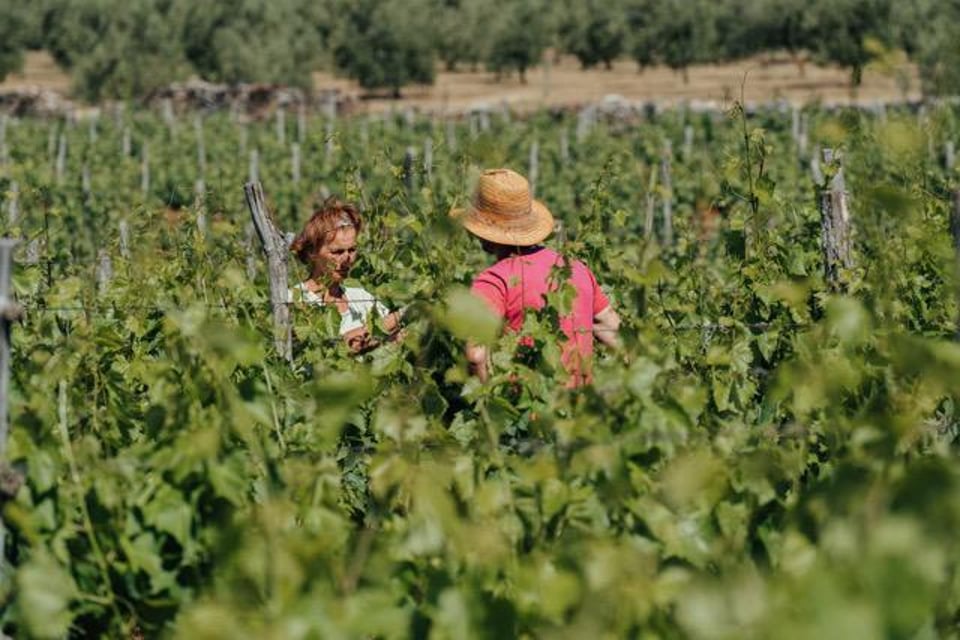
There used to be more litres, but after his father died in 2015, Mihelić decided to reduce yields, rationalise the work and keep only what he and his mother could manage themselves, with occasional help from friends, relatives and his nephew, who has enrolled in a winemaking programme. Of nine hectares, three remain. He removed Merlot, which required too much leaf removal during the hot month of May, as well as Cabernet, which ripens late. Only three indigenous varieties remain: Malvazija, Teran and white Muscat. Today he makes six labels, sometimes seven, depending on the year. Everything else has become history, which many would regard as commercial suicide. Yet the Mihelić family sells almost all its wine, mostly directly from the winery.
The Mihelić and Bibalo families, Bibalo being the surname of Damir’s mother Marija, have been involved in winemaking since 1981, when his parents bought the plot in Novigrad where the cellar now stands. There were already vineyards there at the time, old plantings of Malvazija. On his mother’s side, from the village of Bibali, the family owns a cellar dating from 1802. The nickname Ghira also comes from that side of the family: Damir’s great grandfather Ferdinand, who cultivated three hectares of vines, was known by that name. On his father’s side, the family owns the Oršići estate, dating from 1879, near Vižinada, where wine was also made from three hectares of vineyards. His father Bruno worked at PIK Umag in the 1980s and opened his own family farm here in Novigrad in 1997. His mother Marija grew up in the countryside, worked with Istrian cattle and handled agricultural work around the home. Damir has been in the vineyards since the age of five. His brother Igor, who grows cherries, also helps with the family business. A few years after his father’s death, Damir began turning towards traditional Istrian methods of macerating Malvazija.
Mihelić follows this strategy consistently. He gets up at five in the morning, walks through the vineyards and observes what is happening in the soil. By nine he is finished, because visitors begin to arrive then. This is where he makes most of his sales: more than half of the wine is sold directly at the winery. The rest goes to around a hundred restaurants across several countries, including Slovenia, Austria, Germany, France and Croatia, primarily in Istria. The broader Croatian market has never interested him much. This year, apart from a few domestic events, he has even decided to stop attending wine festivals.
His approach to both vineyard and cellar is meticulous and conscientious. Around 16,000 vines grow on the three hectares, mostly Malvazija, followed by Teran and a smaller amount of white Muscat, specifically the old Istrian Momjan clone. All planting material comes from old local clones. Mihelić follows numerous biodynamic practices: he uses copper and sulphur sparingly, sows phacelia to attract bees during flowering, and composts all plant residues. He keeps around fifteen beehives near the vineyard and produces his own honey. The vineyard is beautiful and full of life. In the cellar, he works with minimal intervention. Malvazija is macerated for three days for the fresh style and for up to a month for the Madura line. Teran and Muscat follow a similar approach. The wines are not filtered. We tasted several of them.
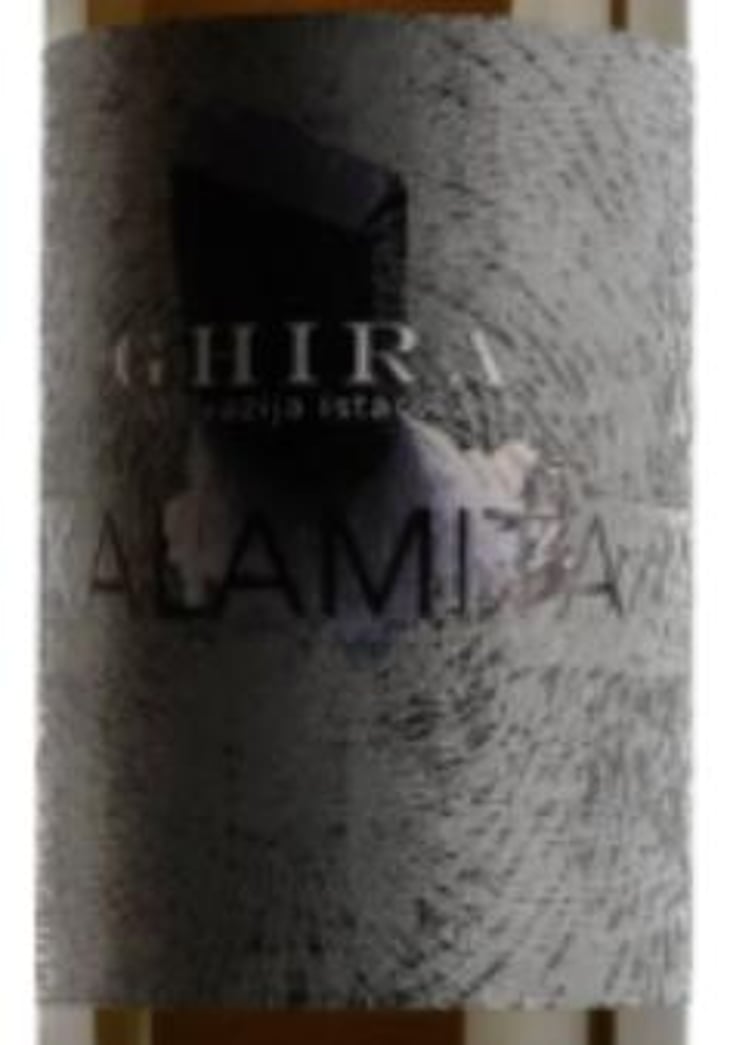
First came the young Muscat, highly seductive, slightly sweet and clean. Malvazija Kalamita 2024, his entry level Malvazija, is briefly macerated, fresh but intensely mineral, airy, juicy and easy to drink. It is unusually distinctive for a basic wine. His Madura Malvazija, macerated for longer, is excellent. We tasted the 2021 and 2022 vintages, both outstanding. The wines are deeper in colour, denser and golden. They have fuller bodies and are rich, earthy, warm and saline. They warm the mouth, dry it slightly and demand another sip. There is plenty of ripe fruit and bee honey, with great persistence. Both vintages take time to unfold and reward drinking over several hours. Some people might prefer decanting, but we enjoyed the gradual opening of this golden Malvazija.
We also tasted Riquertz 2021, a blend of Merlot, Cabernet Sauvignon and a small amount of Teran, which he no longer produces. It is a very dense, ripe wine full of dark berries. It warms the palate and offers plenty of spicy tobacco and chocolate notes, yet remains elegant and highly drinkable. This is not a wild wine, but a remarkably balanced blend. The same cannot be said of the 2025 Teran, which we tasted from the barrel. It has the beautiful violet colour only Teran can achieve, and is fresh, aromatic, high in acidity and tannin, lively and distinctive: everything that is best about young Teran, a wine that should age beautifully.
But the finest wine we tasted, and one of the best macerated Malvazijas we have ever tasted in this part of the world, was an amphora aged Malvazija from the turbulent 2024 vintage. There are only 800 litres of it, and it embodies everything the greatest natural winemakers of this region strive for. It is difficult to describe because it is exceptional: full of spice, honey and even caramel, with extreme yet pleasing notes of wild nature. It has the texture and body of the finest Italian Slovenian, or Slovenian Italian, Rebula wines: intense aromas of dried fruit, peaches and apricots, beeswax, resin and Oriental spices. It is a wine that continually changes in the glass, demanding attention and time. A wine that brings the broadest smile. Its tannins are present but polished and elegant. This will not be easy to find on the market, but it will be worth every cent, whatever its price. Wines like this rarely appear in the world of macerated whites.
Over a platter of homemade cured meats, prepared by Mihelić and his mother as it is for all visitors to the winery, we spoke about vineyards, regional history and tradition. Yet what we experienced above all was a deep love for roots, vineyards and the entire process of bringing wine into being. The Mihelić family are therefore not simply grape growers, but people who understand that wine is not necessarily a commercial product, but the result of a relationship with land, time and work. They are warm, hospitable, sincere and curious. They are the kind of people worth visiting not only for the wines, although the wines are excellent, but because their story contains something that is now rarely found among larger producers.
The warmest recommendation to visit the winery therefore comes naturally. Get in touch in advance, taste the wines and listen to their story, or rather to several of their stories. Ghira is certainly not a destination for social media posts, but it is a place for understanding what it means to live from the land and with it."
Šimun Župarić is a Zagreb-born journalist at Dobra Hrana, covering restaurants, gastronomy, wine, and the people behind them. For the past two years, he has focused on Croatia’s growing natural wine scene, following it through events, winery visits, and articles on the work of small natural producers, and wider significance of natural wine for the Croatian public.
No rose wines at the moment.
No sparkling wines at the moment.
FIND THE EVENT YOU ATTEND

Saturday October 31 - Sunday November 01
Mulhouse
6872 KM

Saturday October 31 - Sunday November 01
Mulhouse
6872 KM

Sunday November 08 - Monday November 09
Turin
7047 KM
Tuesday September 15 - Sunday October 25
Provincia di Avellino
7788 KM

Tuesday September 15
PisaItaly
7309 KM
Tuesday September 15
SacileItaly
7312 KM

Thursday September 17
Hong KongChina
12869 KM
Thursday September 17
PauFrance
6583 KM
Thursday September 17
Saint-Ouen-sur-SeineFrance
6485 KM
Friday September 18
PauFrance
6583 KM
 Winemakers
 Restaurants
 Bars
Bars Wine Shops
 Accommodations
 Events