7 5 8303 KM
I grow Chenin, Chardonnay, Cabernet Franc and Cabernet Sauvignon, and Grolleau.
But in reality,…I changed course.
I left a comfortable position as a senior film technician, and my beloved city of Lille, to tend a small plot of land using organic farming methods. For 20 years, I was also a committed and passionate social and environmental activist. By working within such determined circles, one learns to identify the promoters of an outdated model that seriously jeopardizes our future. These include: agribusiness and the pressure it exerts on farm incomes, the race for equipment, farm expansion and debt, synthetic pesticides and soil degradation, land pressure, resource hoarding, and the disappearance of the farming community.
In order to speak from an agricultural perspective and out of phenomenological concern, to save the environment, I decided, like many others, to occupy it…
I spent my childhood and adolescence between Orléans and Angers. A true child of the Loire, returning to its banks seemed like the obvious thing to do. I have memories of playing hide-and-seek with my brother in the small plot of Gamay vines belonging to my grandfather, an amateur winemaker in Chalonnes-sur-Loire. Later, the sweet memories of tastings in the Auxerre region of Burgundy (Chloé Maltoff in Coulanges-la-Vineuse, the Richoux family in Irancy, La Cadette in Vézelay, the Chablis geniuses De Moor and Patte-Loup, and especially meeting a visionary ahead of his time: Pierre Hervé, a former schoolteacher who became a winemaker in the Tannay hills) steered me towards vines and wine. A pair of former colleagues from the set, who went to make wine in the Ardèche, also greatly inspired me: Les Bois Perdus.
Wine and cinema also share many similarities: the delicate balance between technique and emotion, both being artisanal rather than industrial, both fields in which our country excels, and both fundamentally opposed but not mutually exclusive economic models. They are also both arts shaped by circumstance: just as a film can reflect the mood and logistics of its production, a wine is marked by our harvest environments, by flashes of lucidity as well as press breakdowns, by sharp instincts as well as the unavailability of a racking cane, by radical decisions as well as compromises.
To paraphrase Baptiste Morizot (in 'Ways of Being Alive'), the grape, transformed into wine, seems to me the perfect playground for forging alliances with the plant kingdom, for practicing diplomacy with non-humans. Finally, as Antonin IOMMI-AMUNATEGUI so aptly points out in his 'manifesto for natural wine', those who courageously, on the margins, craft wines without artifice, are sketching "the clear key to other battles." So I wanted to be part of it... Besides, didn't Jean-Luc Godard claim that "it is the margins that hold the pages together?"
That's the idea.
In concrete terms: : grape harvest at Grange Aux Belles in 2019, a professional baccalaureate in 2020, an internship at Melaric, a flagship of organic wine in the south of Saumur, some great encounters at the right time led me to settle in 2021 among unique personalities (and always ready to help) who gravitate around the Saumur-Puy-Notre-Dame appellation (Melaric, L'Austral, Manu Haget, Thibaut Stephan, Thibault Masse,...).
A smooth transition and gradual establishment; as the rapper Oxmo Puccino says, "From prestige to burlesque, I manage, with what life throws my way." I rent the vineyards and benefit from a shared equipment library.
But above all, I share a tractor, van, pump and press, grape harvesters, doubts and certainties, joys and setbacks with a winemaker who settled in the same area at the same time as me: Charlotte Savary Fulda (Vins Les Coquilles). With the one I call 'my sister in the vineyards', our operations are separate and our wines very different. But you'll often see us hanging out together. Our relationship combines shared logistics, mutual support, sisterhood, care, and philosophy.
Finally, between two jobs in the countryside, I continue my activism against agribusiness within the Confédération Paysanne (Peasant Confederation) and Les Soulèvements de la Terre (Earth Uprisings). The neighboring Deux-Sèvres region is currently the scene of struggles over water use, which I consider historic for the future of the world. This commitment, and many others, provides a welcome collective counterpoint to the isolation of our professions. It also requires a certain discretion. I avoid social media and shun photos. I aspire to make wine the way Daft Punk made music: without ever over-investing in my image. As a colleague here says: "It's all in the bottle"...
The estate is called 'Les Infiltrés' (The Infiltrators), like the Martin Scorsese film, a work that is at once edgy, tense, and elegant: a horizon for the wines I try to make, literally unfiltered, without artifice. It's also a nod to my previous profession and to a world I infiltrated three years ago when I knew absolutely nothing about it. It's a plural, which should even have been feminized, to pay tribute to all those who help me every day. From my partner to the seasonal bud-pruner, from my crowdfunding supporters to the grape harvesters, from the allied winemakers to the wine merchants who trust me.
In the vineyard, certified organic farming, we work as meticulously as possible on yield management (pruning, bud thinning in two passes, sometimes three as in 2023…it's tough!). We till the soil according to the observed vigor and the signals sent by the vine. There's no rigid system. Climate change forces us to be constantly vigilant. I already combine copper with herbal tea sprays (nettle and horsetail). Yarrow and valerian are used for periods of stress (frost, drought). Harvesting is done by hand, of course. And with perennials. I enjoy being the chronicler, every September, of the life breaks that each of us creates for ourselves with our buckets and pruning shears.
In the cellar, I work with indigenous yeasts. With the candor of a child ("our only homeland: childhood!" a Cretan rioter had tagged during the Greek crisis in 2007), my nose and palate are my compasses, the microscope my crutch. While in cinema, certain guiding figures have always intimidated me, in the world of wine, my naiveté and relative ignorance of the codes to master or the "100 wines you must have tasted" grant me great freedom. "Doing it like..." isn't really part of my vocabulary. Nevertheless, I strive to create fine, delicate, and easy-drinking wines. With sparkling and white wines, I seek purity, clarity, and radicality, even if it means flirting with vegetal notes (but do we really need to forget that wine comes from a vine?!). With reds, I aim for luscious fruit and freshness: short macerations, sometimes whole clusters. I tend to shy away from sophistication, but I recognize that the wood of old barrels has a quiet, age-old way of enhancing certain choices.
Sometimes homeopathic amounts of sulfur are used to correct a deviation or an air leak during bottling. That said, my wines do not show more than 25mg/l of total SO2, while regulations allow 100 to 150.
This whole sulfur thing is complicated: I admire those who make no compromises, but I've decided to channel my radicalism elsewhere.
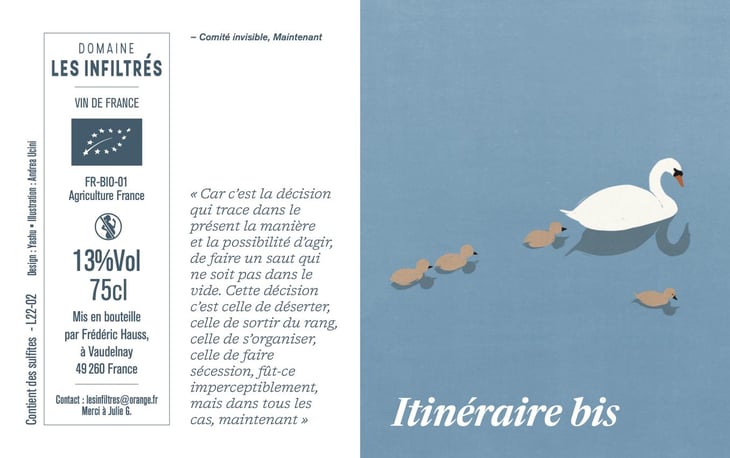
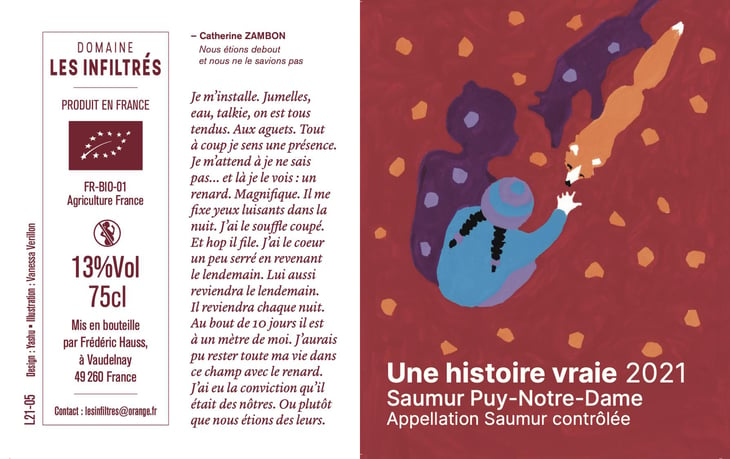
On the bottles, each label features a distinct illustration to highlight the unique character of each vintage. The accompanying quotes guide me daily, like revolutionary life's horizons that I humbly try to share with my drinkers. They resonate well with the work in the vineyard and the cellar, evoking serious, determined paths, always open to questioning…
No rose wines at the moment.
No orange wines at the moment.
FIND THE EVENT YOU ATTEND
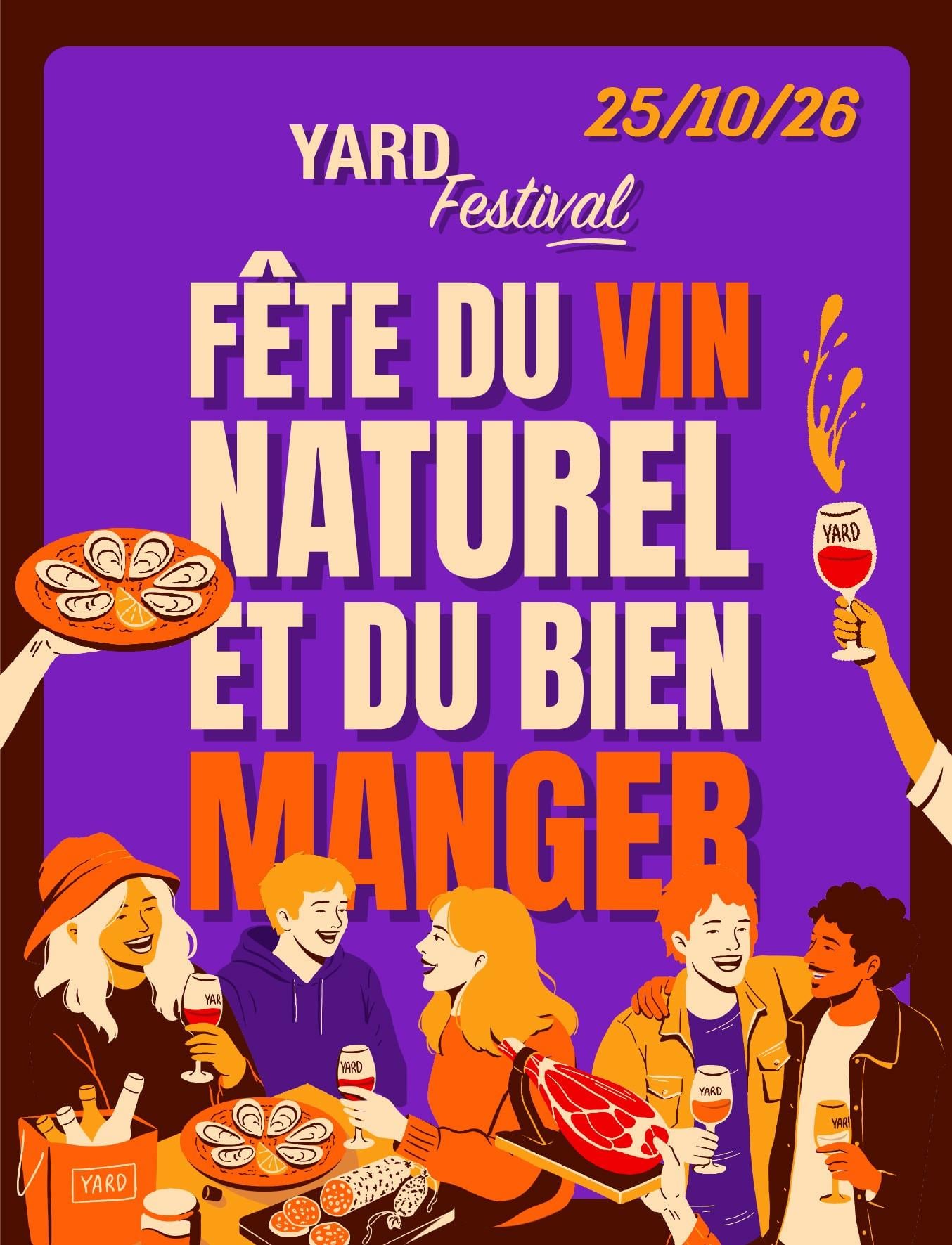
Sunday October 25
Paris
6492 KM
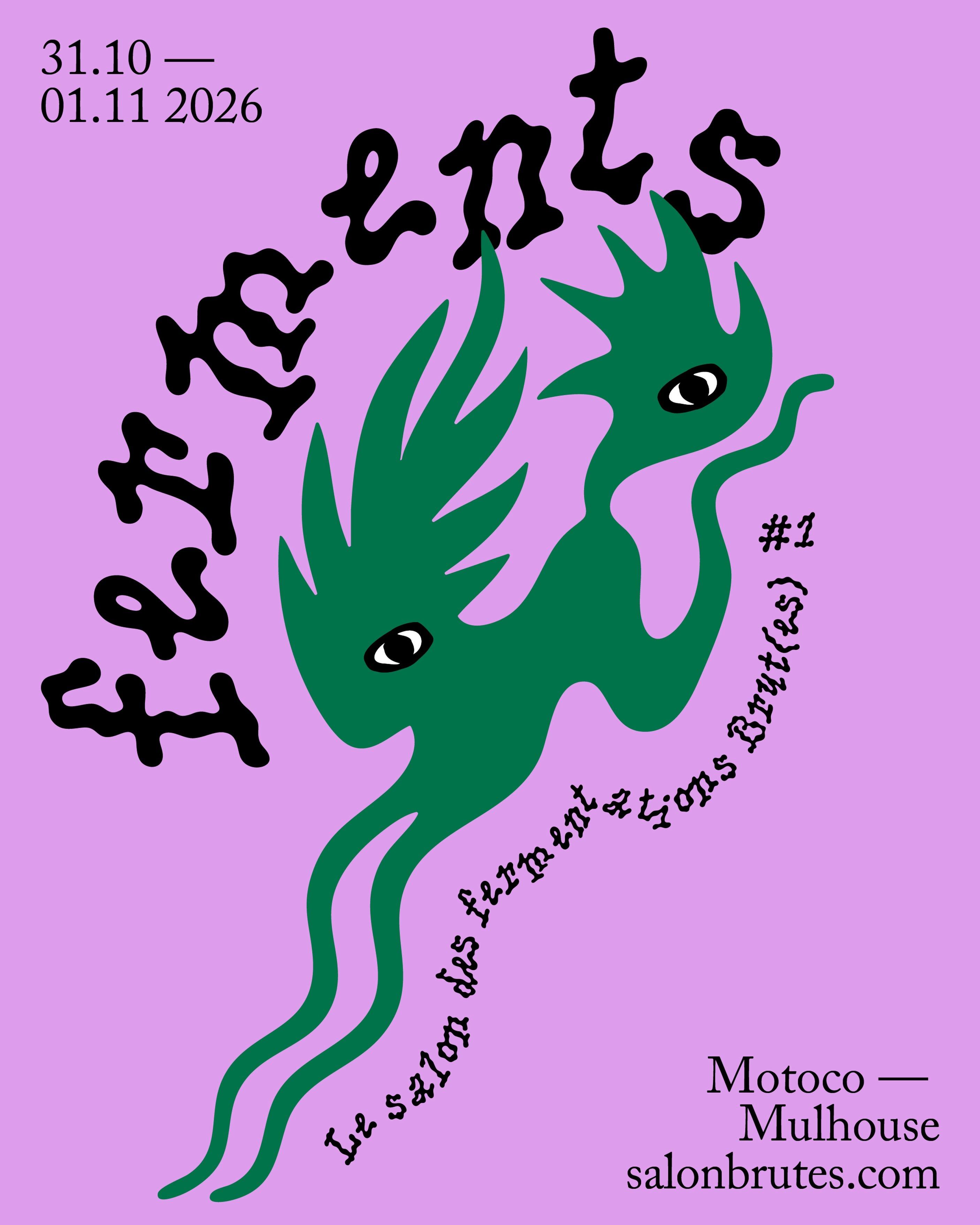
Saturday October 31 - Sunday November 01
Mulhouse
6872 KM
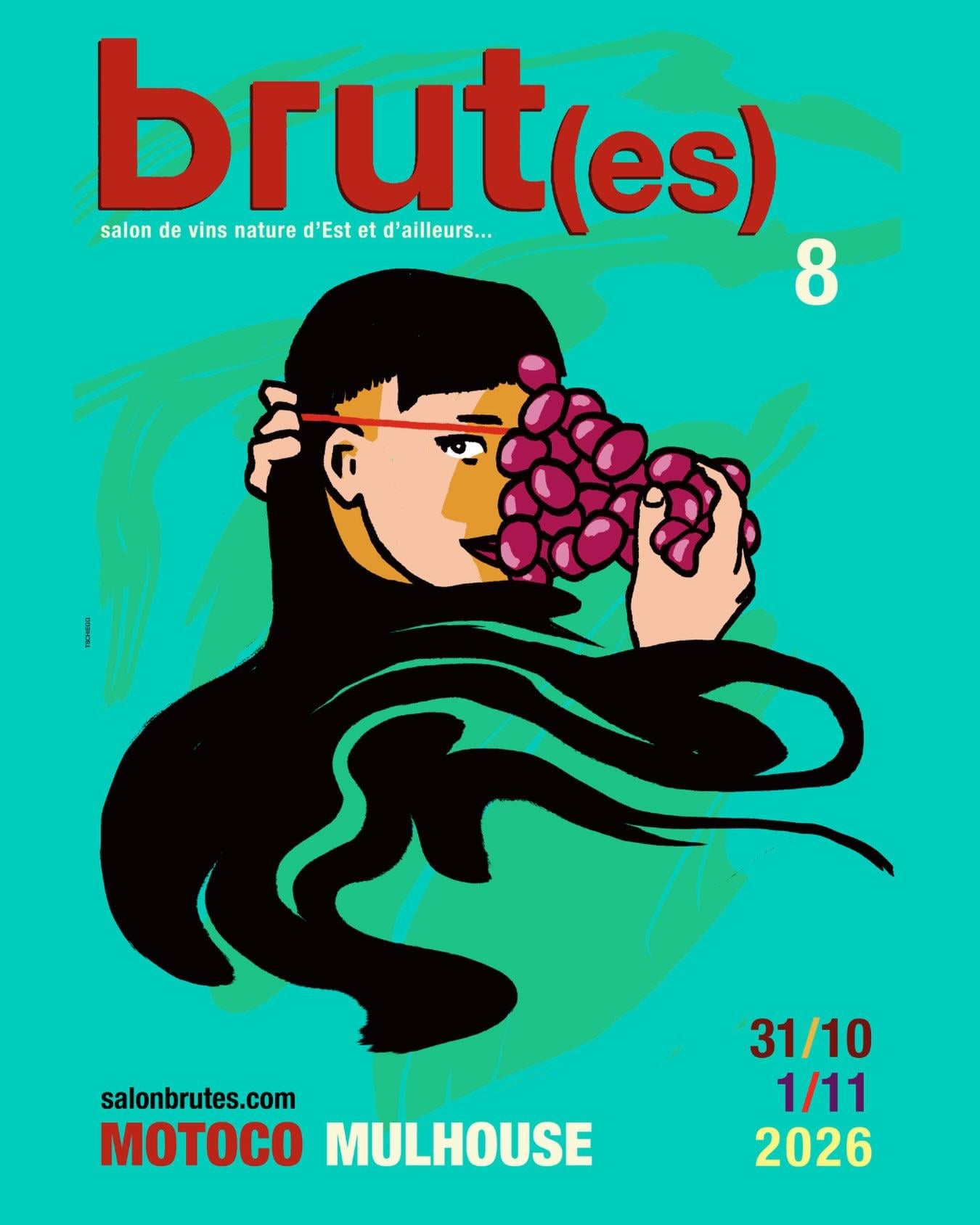
Saturday October 31 - Sunday November 01
Mulhouse
6872 KM

Sunday November 08 - Monday November 09
Turin
7047 KM
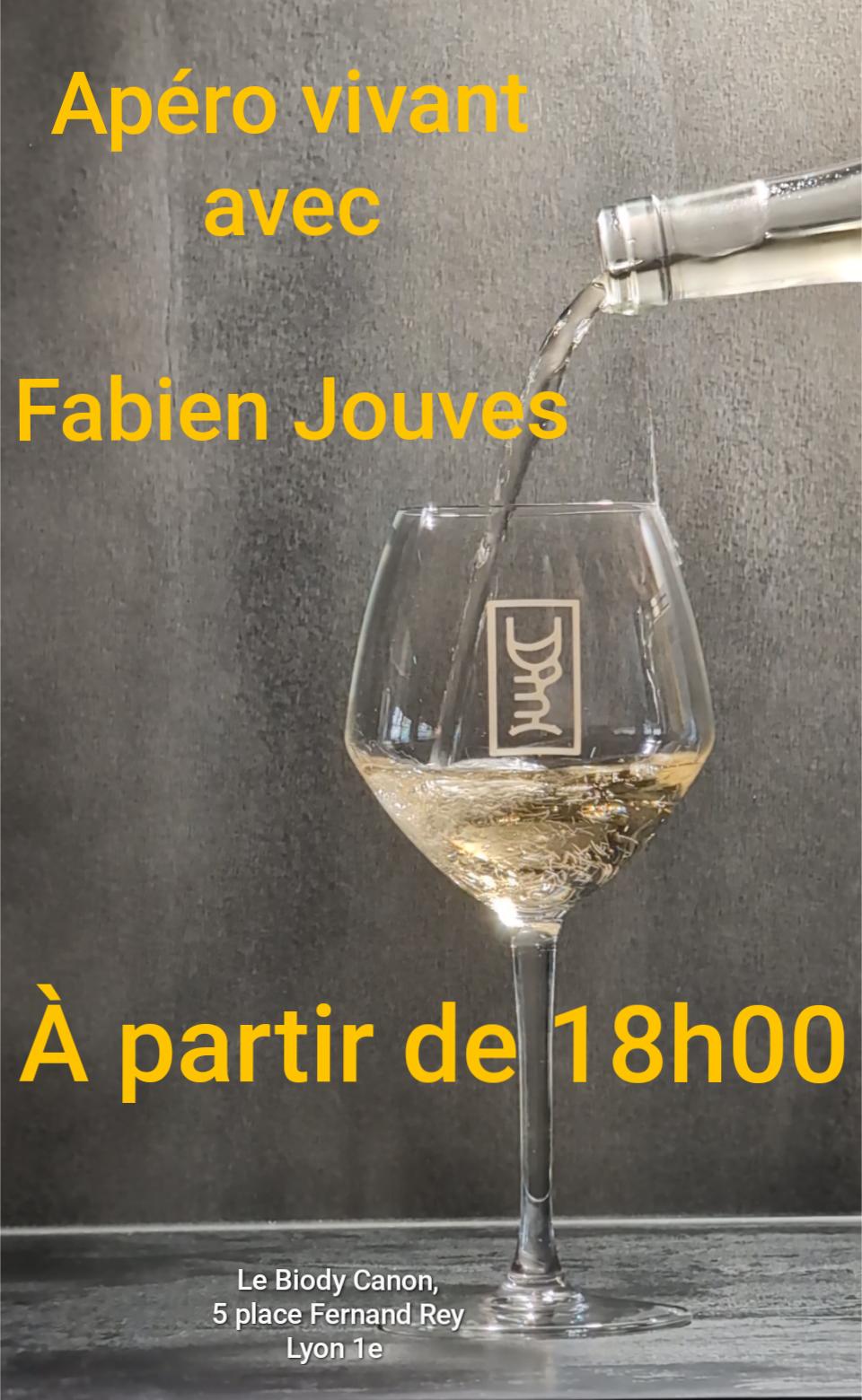
Wednesday September 23
LyonFrance
6814 KM
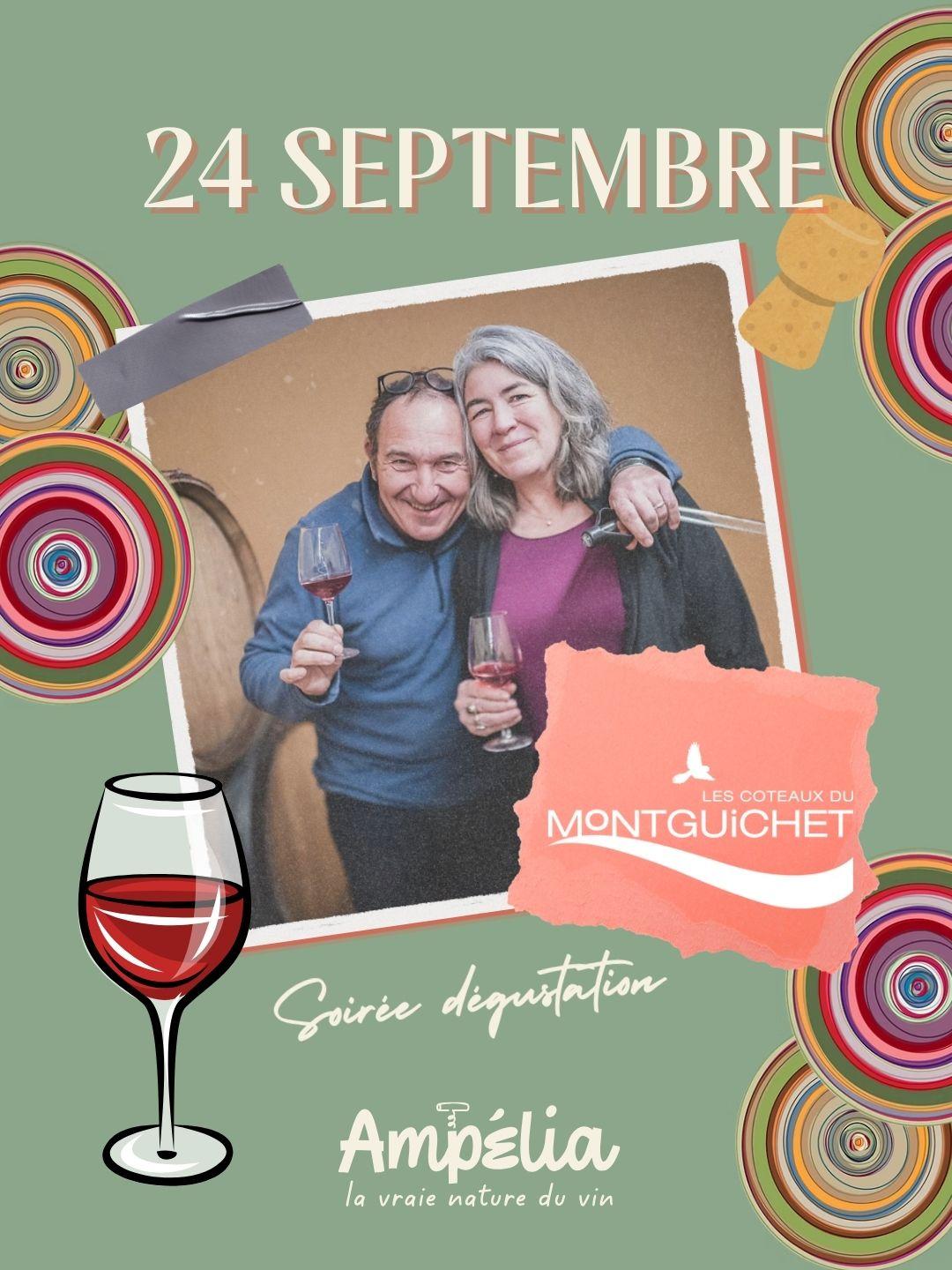
Thursday September 24
ParisFrance
6491 KM
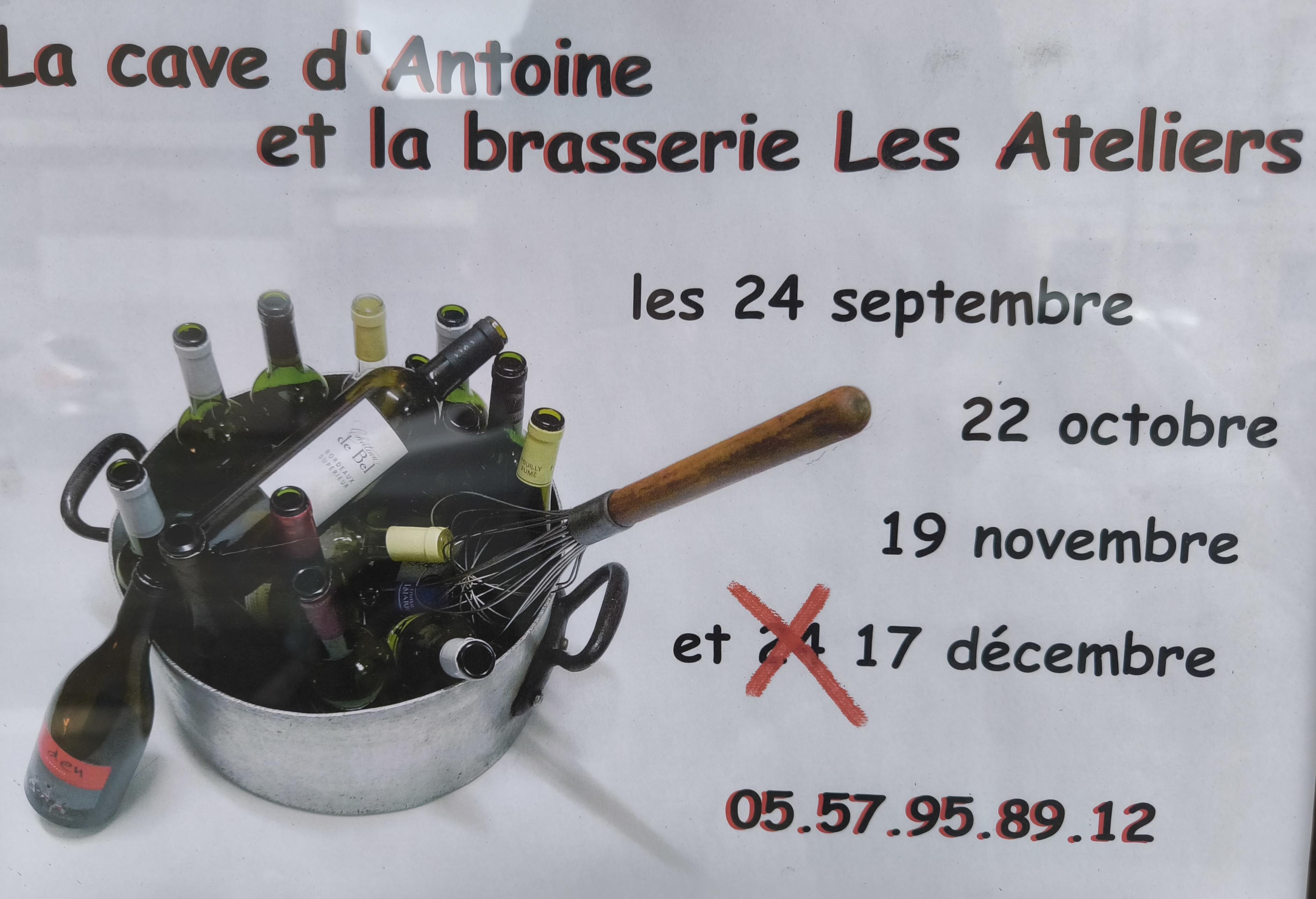
Thursday September 24
BordeauxFrance
6491 KM
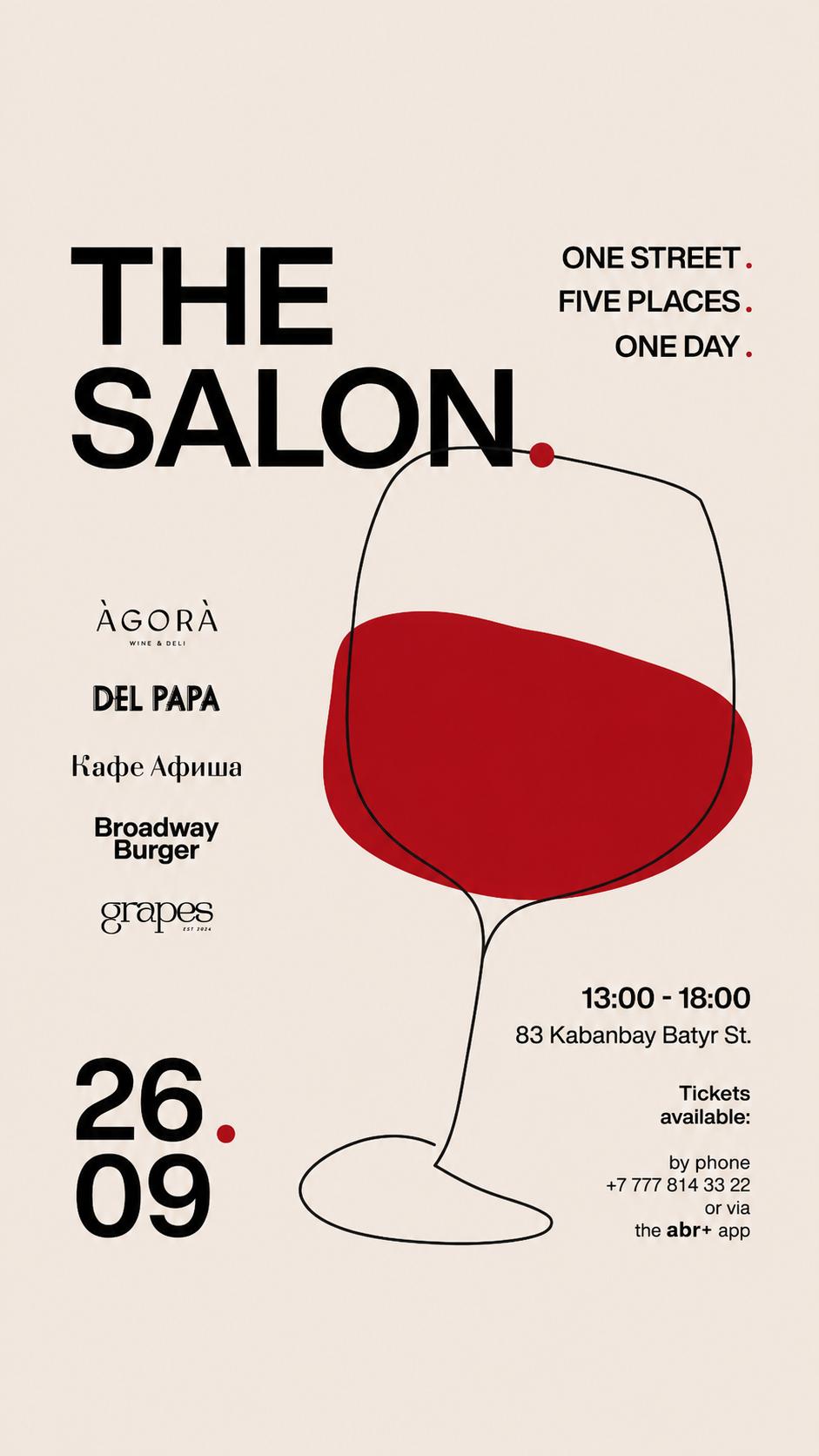
Saturday September 26
AlmatyKazakhstan
10546 KM
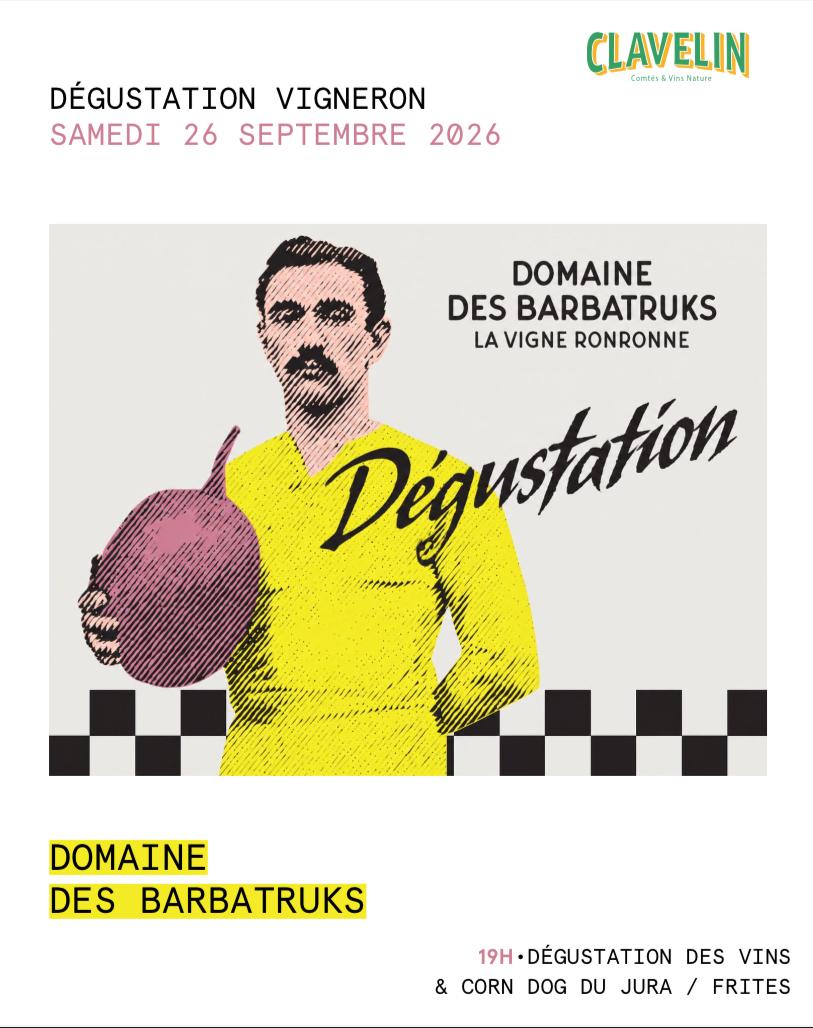
Saturday September 26
Paris
6488 KM
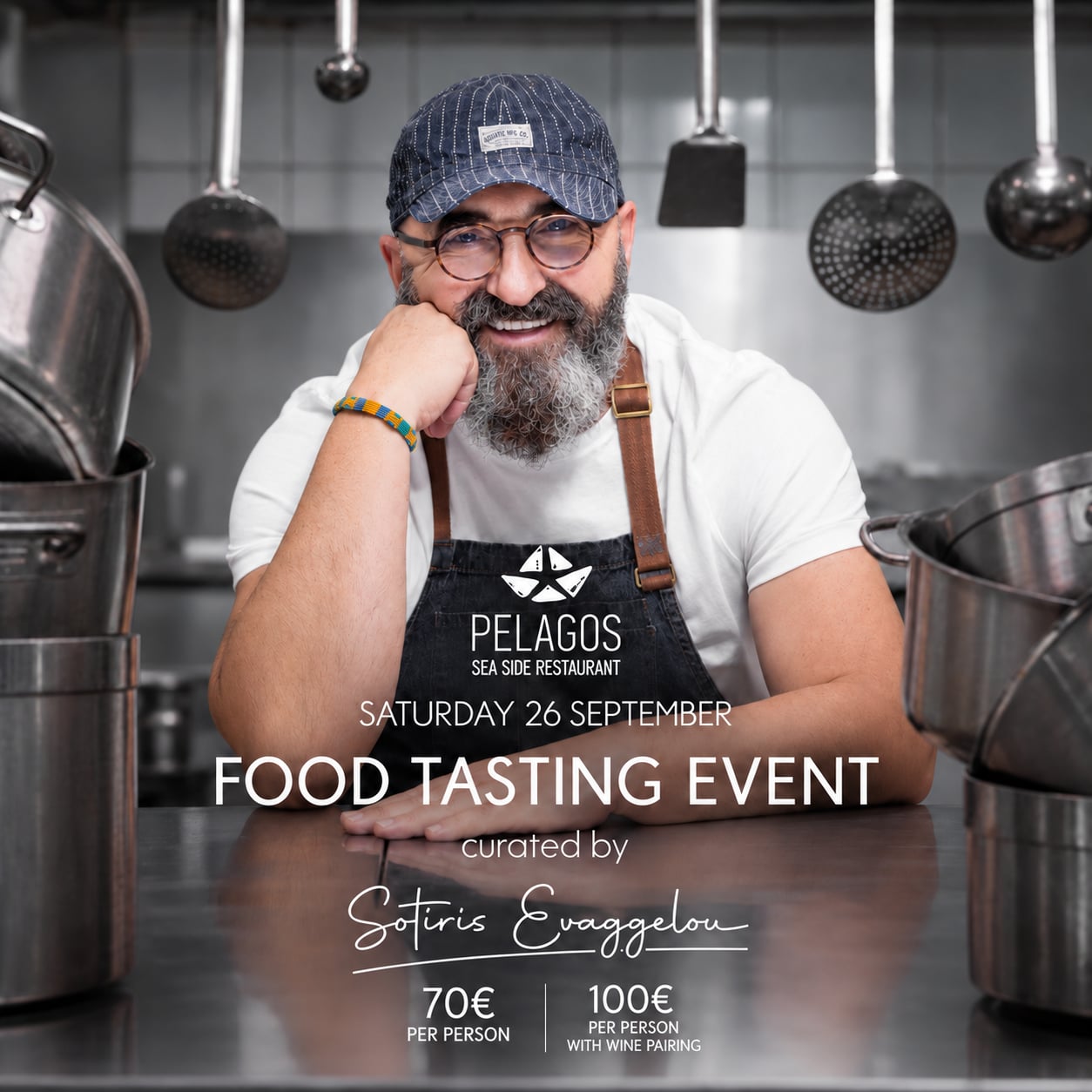
Saturday September 26
Ierapetra Municipal UnitGreece
8946 KM


 Winemakers
 Restaurants
 Bars
Bars Wine Shops
 Accommodations
 Events