Champagne Bonnet-Ponson - Cyril Bonnet
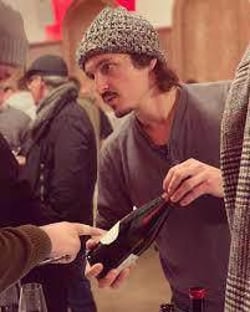
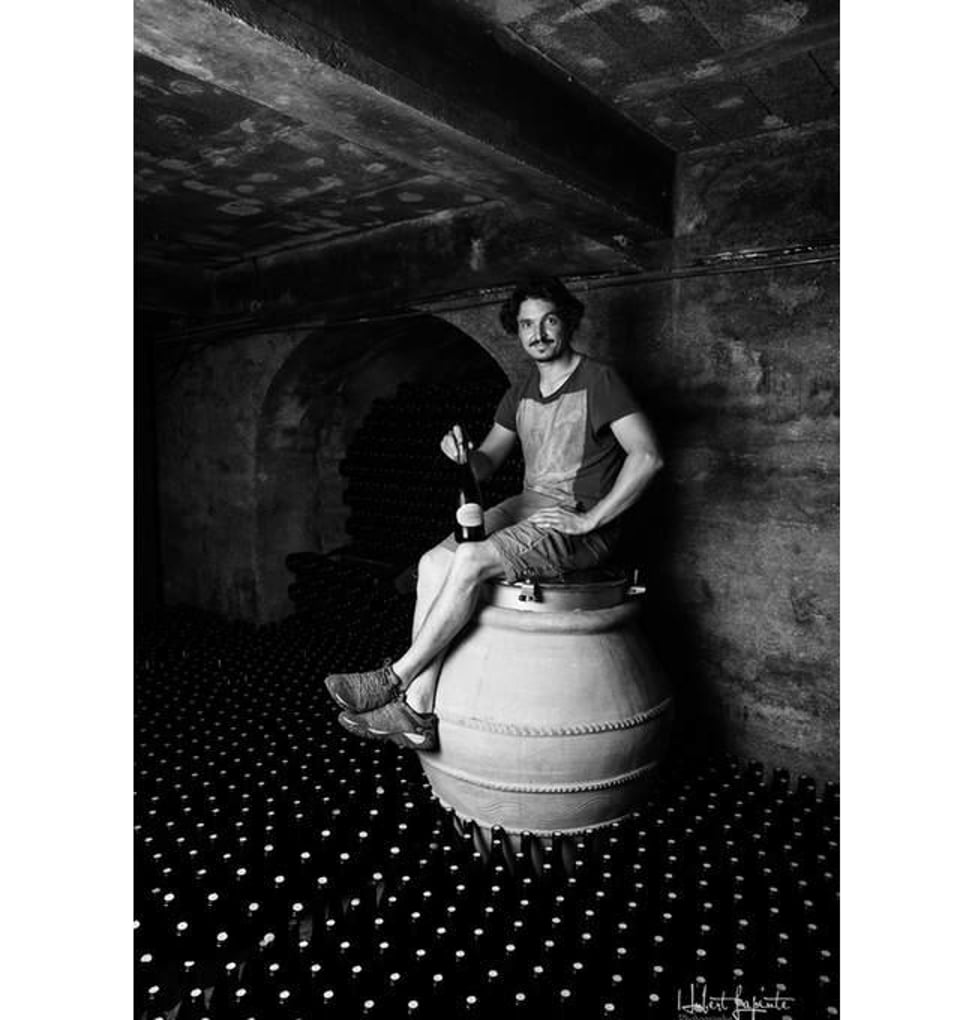
I was born in an old winemaker's family (1862), for whom the land (vine but also food crop in the past) has always been the means of subsistence; As a result, one of my primary goals is to preserve and enhance this family patrimony of which I am now responsible. This duty of sustainability has joined my ecological beliefs in the sense that organic farming remains the best way to promote the resistance and longevity of our vines, the choice of BIO was natural when I returned to the field in 2013. In a region strongly impacted by the industrialization of agriculture, it seems to me indispensable as a young winemaker to try to show that another viticulture is possible, without chemistry, and without trying to solve the problems of the vineyard by always more mechanization and a search for yield at all costs.
the course of the next 10 years is already set, with many ongoing projects such as the experimentation of agroforestry (planting a first plot in November), the experimentation of alternative techniques for the protection of the vineyard (use of plants local) and of course the development of winemaking without inputs (which already represent around 50% of the total vinified volume).
In the vineyards my main concern is the preservation of soil health, in my opinion the most important axis for healthy vines, healthy grapes and expressive wines; We are therefore trying to let the native vegetation develop, carrying out only limited and superficial tillage (5/10 cm deep max so as not to disturb the soil biology); This reflection also pushes us to limit our treatment so as not to over-pile the soil and reduce the doses of copper to the maximum (between 2 and 3 kg / HA and per year on average, below the threshold authorized by the Demeter charter). We accept the possibility of losing a percentage of harvest in favor of a reduced environmental impact. Without practicing biodynamics (I do not have a dynamizer) we regularly use macerations and infusions of local plants to further reduce the use of traditional treatments for sulfur and copper.
In the cellar, every year we prepare a homemade starter by harvesting some ten days before the harvest of the early grapes; this native trough is used to sow all our small containers (barrels of 228l, 400 l, amphoras of 300l and 1000l and stainless tanks up to 25Hl), which represent about half of our wines; fermentations taking place in larger containers (up to 10 000 l) are also started by our native leaven but I may inoculate a selected yeast during fermentation in case of difficulties.
Regarding sulfur, at least 50% of our wines do not see the color; I only use it when the harvest is too hot, on the press juice (sizes) and sometimes to protect reserve wines intended to remain in vats for several years. We compensate for the absence of sulfur by a very thorough monitoring of the wines (tasting every week), regular wetting and good hygiene of the vat room.
The wines are handled as little as possible, kept on total lees until bottling, under gas if possible and obviously never filtered.




 Winemakers
 Restaurants
 Bars
Bars Wine Shops
 Accommodations
 Events